Quick answer
If you want the short answer, moxa sticks are usually easier for beginners because you can change distance and stop quickly, while moxa cones create more fixed, concentrated heat and need more deliberate setup.
Key takeaways
- A handheld moxa stick is usually easier for beginners because distance, angle, and timing can be adjusted immediately.
- Moxa cones can make sense in trained or tool-assisted settings, but their smaller base and more fixed placement usually make them less forgiving for first-time home use.
- Neither format removes the need for ventilation, ash control, skin checks, and a reliable way to extinguish burning moxa fully.
If you are deciding between moxa sticks and moxa cones, the plain answer is this: moxa sticks are usually easier for beginners because the burning end can be moved away fast, while moxa cones create a more fixed and concentrated heat pattern. That does not make cones “wrong.” It means the learning curve is steeper, especially for someone practicing at home without hands-on instruction.
The useful comparison is not which format sounds more traditional. It is which format gives you more control over distance, heat buildup, ash, smoke, and stopping. For most first-time readers, that answer still points to the stick.
Quick beginner difference
The fastest way to understand the comparison is to focus on control style.
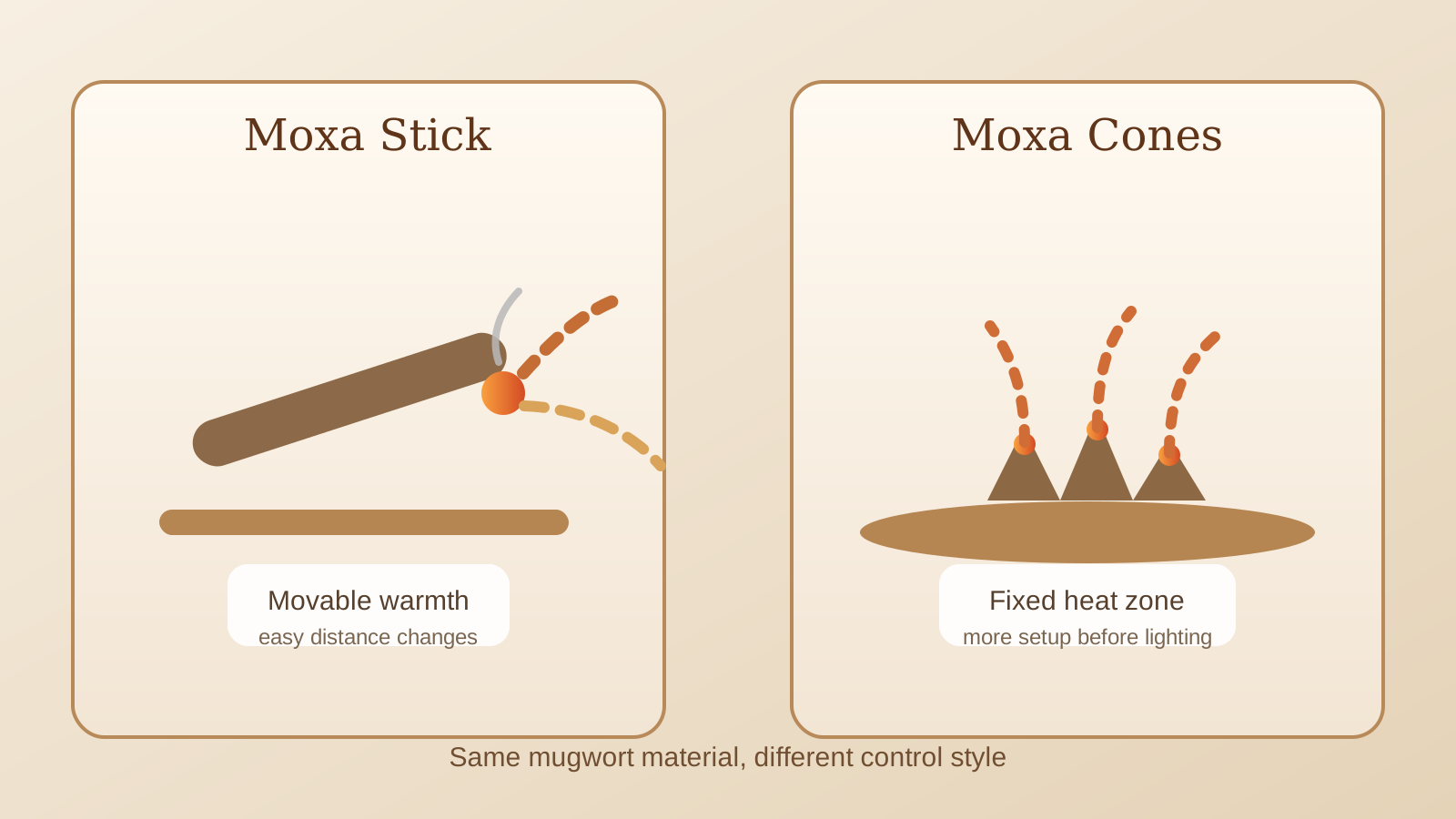
- A moxa stick is a rolled cylinder that is usually held by hand or placed in a holder.
- A moxa cone is a small shaped mound of moxa that burns from a more fixed position.
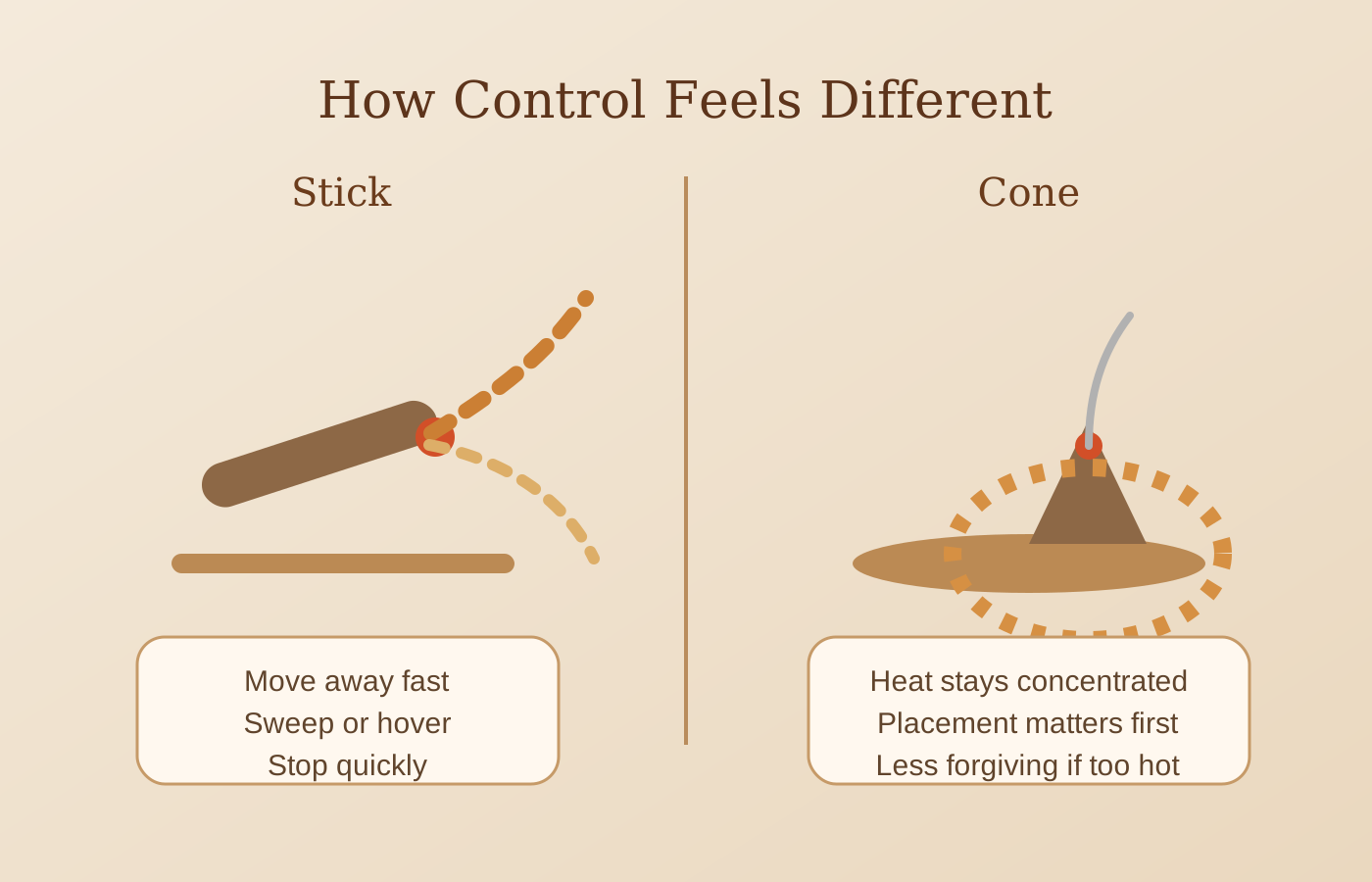
That shape difference changes everything. A stick lets you pull back the heat instantly, sweep across an area, pause, and extinguish when needed. A cone asks you to commit more of the setup before lighting it, so surface choice and timing matter more.
If you need the basic vocabulary first, read what is a moxa stick, what is moxa, and moxa vs moxibustion before going deeper into format decisions.
Why moxa sticks are usually easier
Moxa sticks are usually the better beginner format because they give immediate feedback and immediate correction. If the warmth feels too strong, you move the stick farther away. If ash looks unstable, you stop and tap or extinguish it safely. If the room starts feeling smoky, you can end the session before the heat source stays in one place for too long.
That makes a stick easier in several practical ways:
- Distance is adjustable. You control warmth by moving the burning end closer or farther away.
- Motion is adjustable. You can hover, circle, or pass over an area instead of fixing the heat in one spot.
- Stopping is simple. A snuffer cup, sand pot, or extinguisher tube lets you shut down quickly.
- Short sessions are easier to learn. You do not need a more complex placement method before you begin.
None of this means a stick is risk-free. It still creates smoke, odor, ash, ember risk, and potential burns. But it is often more forgiving because a beginner can respond faster when the setup feels wrong. That is the same reason many readers start with how to light a moxa stick safely, how to use moxa sticks at home, and moxa stick fire safety.
What changes with moxa cones
Moxa cones are still made from processed mugwort, but they behave differently because the burn is concentrated into a compact shape. For a beginner, the important point is simpler: a cone is less mobile once lit.
That creates three common challenges.
First, heat builds in one place more easily. A beginner does not have the same continuous distance control they have with a handheld stick. Second, the base area matters more. The surface, barrier, or support method has to be thought through before ignition. Third, the format can look smaller than it really feels. People sometimes assume a cone is gentler because it is small, but a small burn area can still feel intense.
The safest beginner conclusion is simply that cones are usually a second-step learning format, not the easiest first purchase.
If you want the wider category picture, moxa stick vs cone vs grain explains where cones sit among other common formats. If you are choosing tools, best moxibustion tools for beginners and moxa stick holder guide help more than chasing intensity claims.
Smoke, ash, and room setup differences
Both moxa sticks and moxa cones involve burning plant material, so neither one makes ventilation optional. The U.S. Environmental Protection Agency notes that indoor pollution sources that release particles or gases are a major indoor-air issue, and that principle applies here whether the moxa is rolled into a stick or pressed into a cone.
The difference is not “smoky” versus “not smoky.” The difference is how the smoke and ash behave during use.
- A stick may shed ash from the burning tip as it lengthens.
- A cone may leave hot material concentrated at the base.
- A stick is easier to pull away from fabric, hair, sleeves, or bedding the moment something feels off.
- A cone depends more on having the correct surface and spacing already prepared.
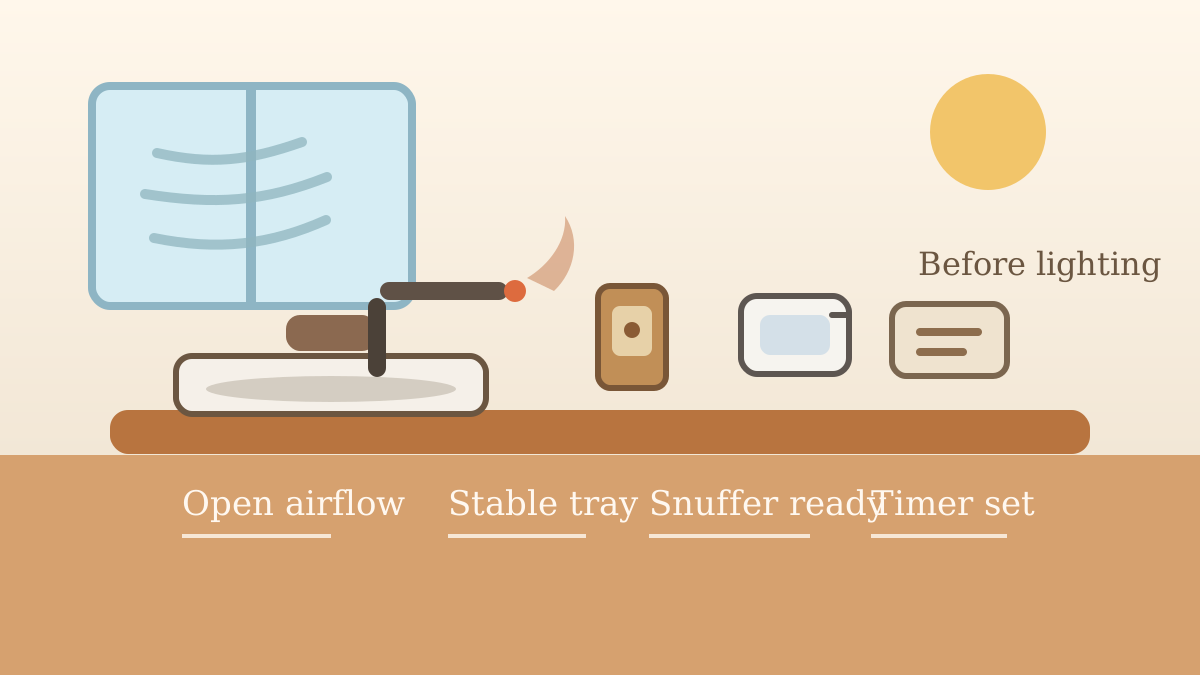
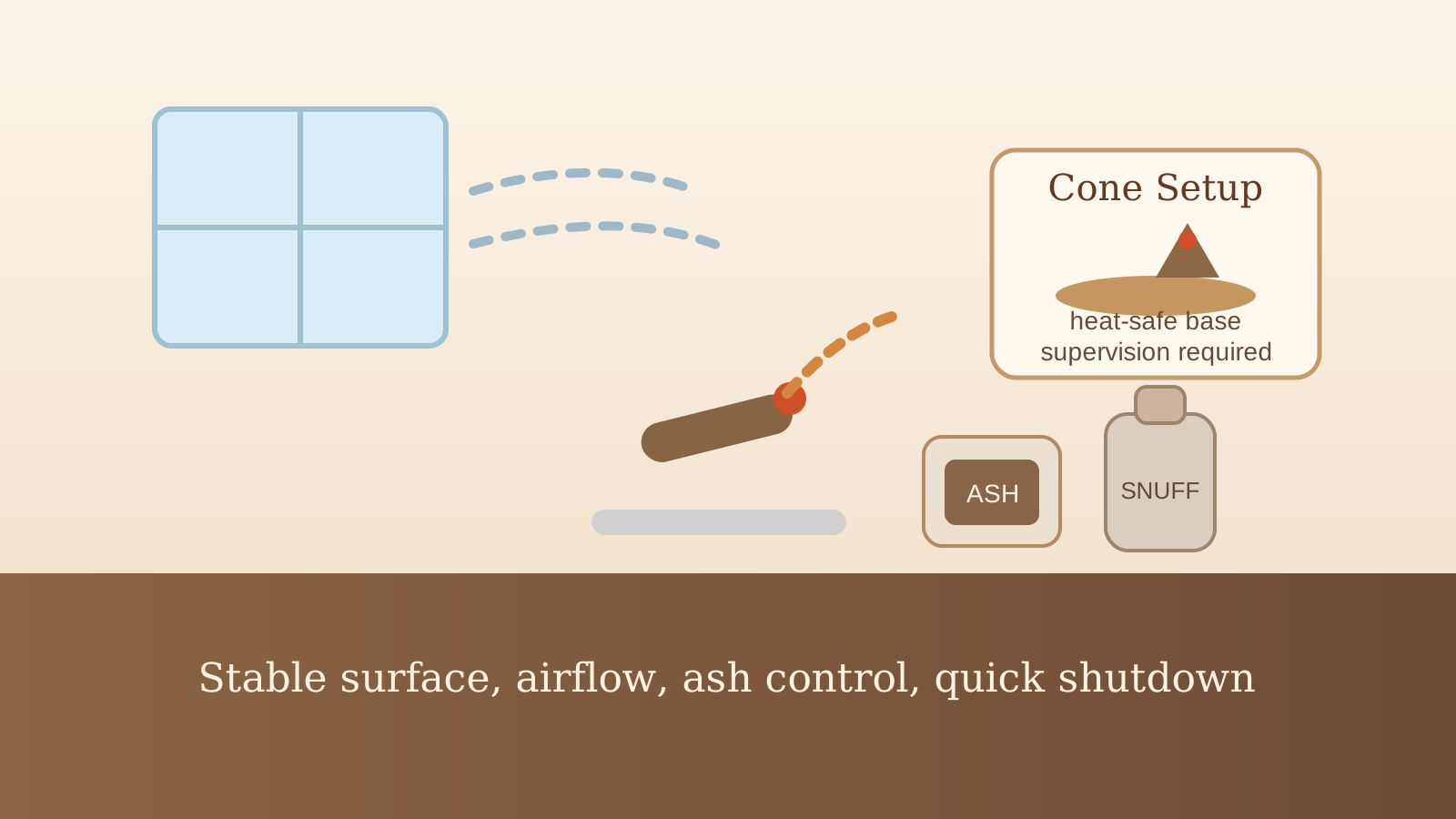
For most beginners, a good room setup matters more than the format label:
- open airflow or another realistic ventilation plan,
- a heat-safe tray or surface,
- a clear ash-drop zone,
- a dedicated extinguisher or snuffer,
- no loose papers, towels, or flammable clutter nearby.
If indoor smoke is your main concern, move next to moxa stick indoor ventilation tips, how to reduce moxa smoke, and can moxa smoke set off a smoke detector. Those pages help more than a simplistic stick-versus-cone claim.
Which format makes more sense for buying
If you are shopping rather than practicing, the decision should still be practical.
Choose a moxa stick first when you want:
- the clearest distance control,
- easier pause-and-stop behavior,
- a format that matches beginner how-to guides,
- simpler compatibility with holders and extinguishing tools.
Consider a moxa cone only when you already understand:
- how concentrated heat behaves,
- what surface or barrier method is intended,
- how the product is supposed to be supervised,
- why “small” does not mean “casual.”
Misleading product language matters here. A cone listing that skips setup, barrier, supervision, and extinguishing details is not beginner-friendly. A stick listing that ignores smoke, ash, and holder fit is not beginner-friendly either.
That is why comparison intent should stay narrow. If you are trying to judge product quality, how to choose good moxa sticks, are cheap moxa sticks safe, and how to spot fake or low-quality moxa sticks answer a different question than this page does.
When to avoid treating this as a DIY experiment
Even though this is a low-risk product comparison topic, the safety boundary still matters. Do not treat cones as a harmless shortcut just because they are compact, and do not treat sticks as safe by default just because they are easier to move.
Ask a qualified practitioner before trying moxibustion for a personal medical concern, using direct-skin methods, working near sensitive areas, or continuing if heat, smoke, or skin response feels hard to judge. A product-format article can help you understand equipment. It cannot tell you whether moxa is appropriate for your situation.
Bottom line
For most beginners, moxa sticks are easier than moxa cones because they offer quicker correction, easier stopping, and a more forgiving learning curve. Cones can still be part of traditional practice, but they ask for more deliberate setup and more respect for concentrated heat.
If your main goal is safe beginner learning, choose the format that makes control obvious. In most home settings, that is the stick.
Sources and further reading
- Beijing Hospital of Traditional Chinese Medicine: 艾灸疗法
- U.S. Environmental Protection Agency: Indoor Pollutants and Sources
- PubMed: Safety of moxibustion: a systematic review of case reports
- Britannica: Moxibustion
Common questions
Are moxa sticks easier than moxa cones?
Usually yes. Moxa sticks are easier for beginners because they let you move the heat source away quickly and change distance in real time.
Are moxa cones stronger than moxa sticks?
Not automatically, but cones often feel more concentrated because the burning moxa stays in a smaller fixed area instead of being moved continuously by hand.
Can beginners use moxa cones directly on the skin?
That is not a good beginner experiment. Direct or very close cone methods can burn skin and should only be learned from qualified instruction.