Quick answer
For most beginners, a moxa stick session should stay brief and comfort-limited. Many hospital education pages discuss roughly 10 to 15 minutes per area or point, but the real rule is to stop sooner if the heat, smoke, or room setup stops feeling controlled.
Key takeaways
- A common beginner benchmark is roughly 10 to 15 minutes per area or point, but comfort and safety matter more than a fixed timer.
- Full stick burn time and actual use time are different; most home users do not need to burn a whole stick in one session.
- Stop early if the heat feels sharp, the room gets smoky, ash becomes hard to manage, or the skin stays irritated.
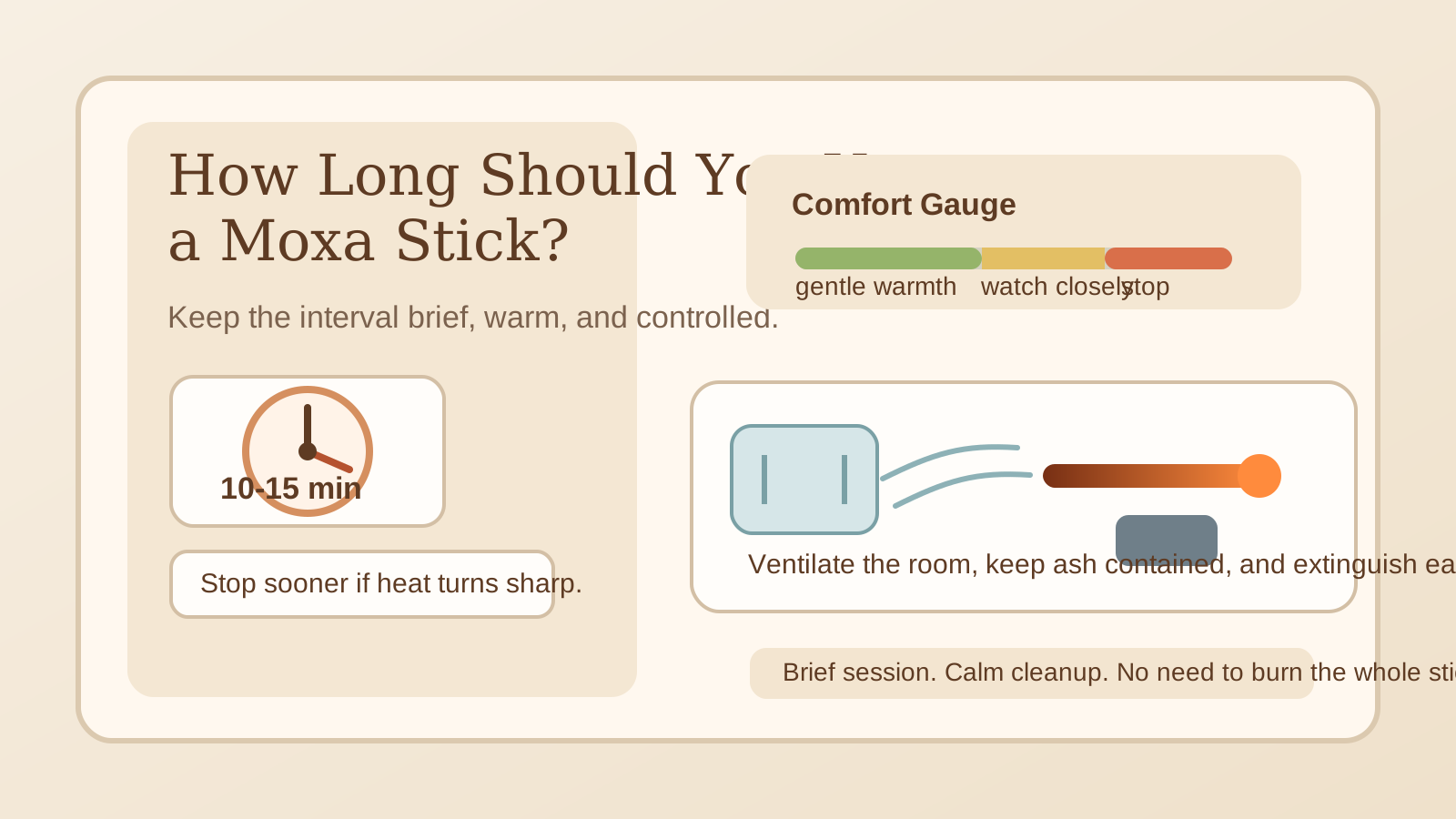
If you want a plain answer, most beginners should keep one moxa-stick interval brief, often around 10 to 15 minutes per area or point, and stop sooner if the heat feels sharp, the room gets smoky, or the skin looks irritated. That rough range appears in some public hospital education pages, but it is not a universal prescription. The better rule is to use only as long as the warmth stays gentle and the whole setup still feels controlled.
That distinction matters because people often confuse session length with total burn time. A moxa stick may stay lit much longer than a sensible home session should last.
The short beginner answer
If you are learning at home, a conservative starting range is often about 10 to 15 minutes for one area or point, with the stick held far enough away that the warmth feels noticeable but not sharp. A Beijing Hospital of Traditional Chinese Medicine public-education page gives that per-point range and says the sensation should feel warm without causing scorching pain. Another hospital education page aimed at home users suggests around 15 minutes and warns against repeatedly moxa-ing the same point in quick succession.
Those are useful guardrails, not hard rules. They tell you the session should be modest, temperature-aware, and adjustable. They do not mean every person should watch a clock and force themselves to keep going until minute 15.
If you are unsure about basic handling, start with how to use moxa sticks at home before you worry about exact timing.
Why there is no universal timer
Moxa-stick timing depends on more than the number on a clock. The same five minutes can feel mild with one setup and excessive with another.
What changes the usable time?
- how close the ember is to the skin,
- whether you keep the stick moving or hold one zone longer,
- how quickly the room fills with smoke,
- whether ash stays compact or starts dropping unpredictably,
- the thickness and density of the stick,
- your own ability to notice heat clearly.
That is why safety reviews matter here. A PubMed-indexed review of case reports found burns were the most common adverse event linked to moxibustion and noted that duration, distance from the skin, patient factors, smoke, and the environment all affect safety. In practice, that means no timer can rescue a poor setup. If the heat is too close, the air is stale, or the ash is messy, the session is already too long for that moment.
Session length is different from full burn time
This is the point most shoppers and beginners mix up. A standard stick may burn for much longer than one home session if you leave it lit continuously, which is why how long does a moxa stick burn answers a different question from this article.
Think about two separate clocks:
- The product clock: how long the stick can stay lit.
- The session clock: how long you should actually use it today.
Most home users should care more about the second one. You might light a stick, use it for a short interval, and extinguish it while plenty of material remains. That is not wasteful. It is normal.
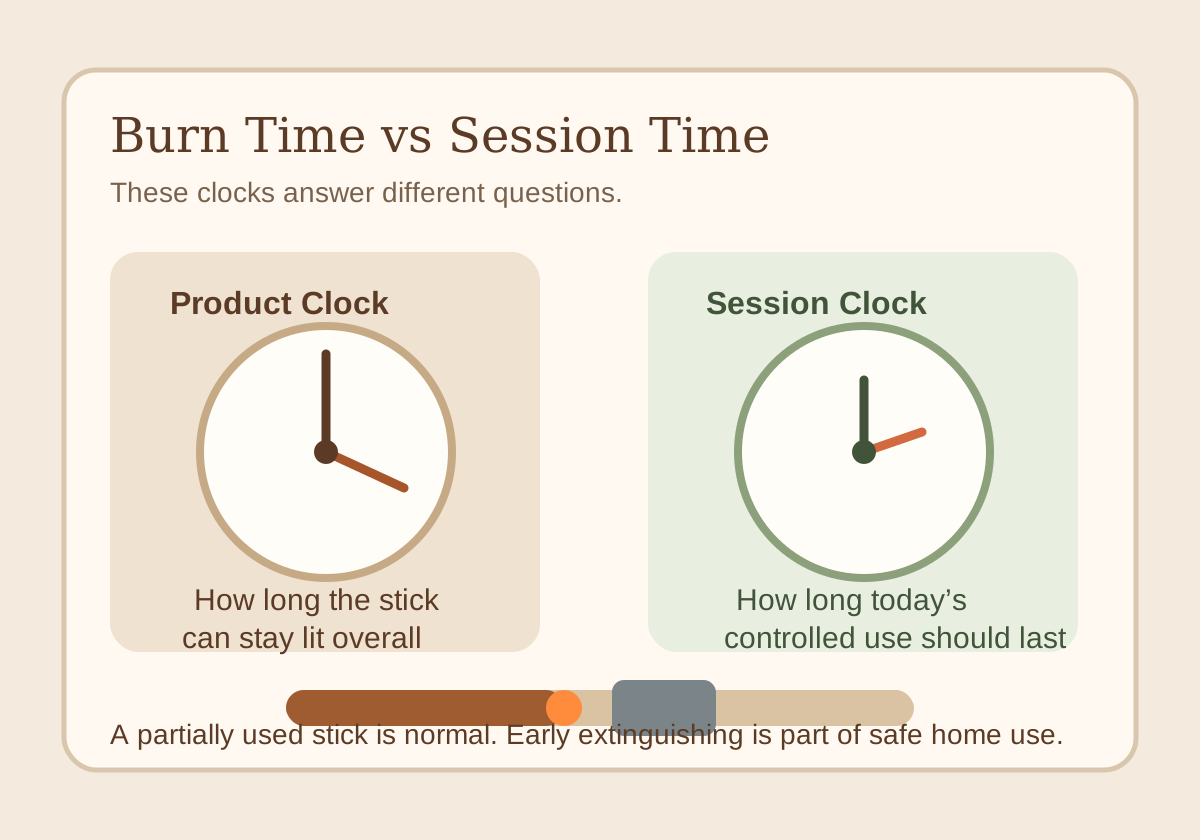
This distinction also prevents a common mistake: assuming the stick should stay near the body until it is used up. That mindset pushes people to keep going after the room is already smoky or the skin is already getting too warm.
What a sensible beginner session looks like
A good beginner session usually feels boring in the best way. The warmth stays gentle. You can still think clearly about distance. Ash is easy to manage. The room does not feel trapped or harsh.
A practical sequence looks like this:
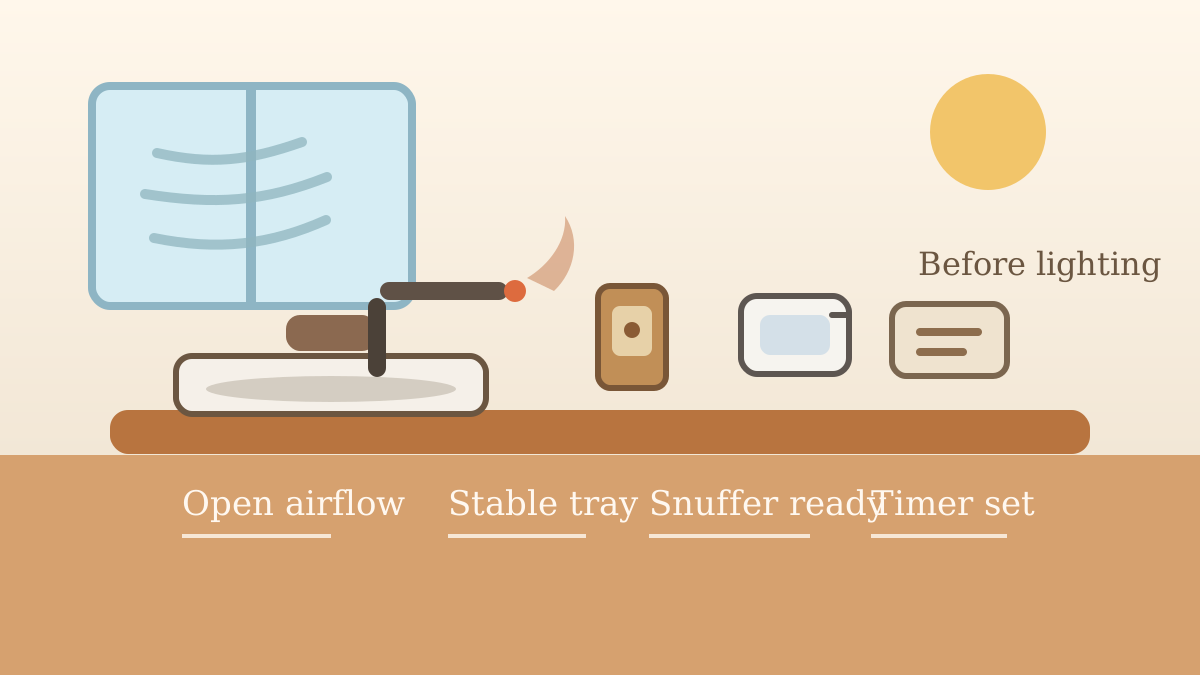
- Set up ventilation first. The EPA notes that indoor sources releasing particles can create indoor-air problems, so airflow is part of the session rather than an optional extra.
- Light the stick evenly and start farther away from the skin than you think you need.
- Let the warmth build gradually instead of chasing an immediate strong sensation.
- Recheck every minute or two: does the heat still feel comfortable, and does the room still feel manageable?
- Stop once the interval is complete or sooner if control is slipping.
If you need help with room prep, moxa stick indoor ventilation tips and how to reduce moxa smoke at home are more useful than trying to buy extra time in a stuffy room.
Signs the session is already long enough
The best stop signals are not mystical. They are practical.
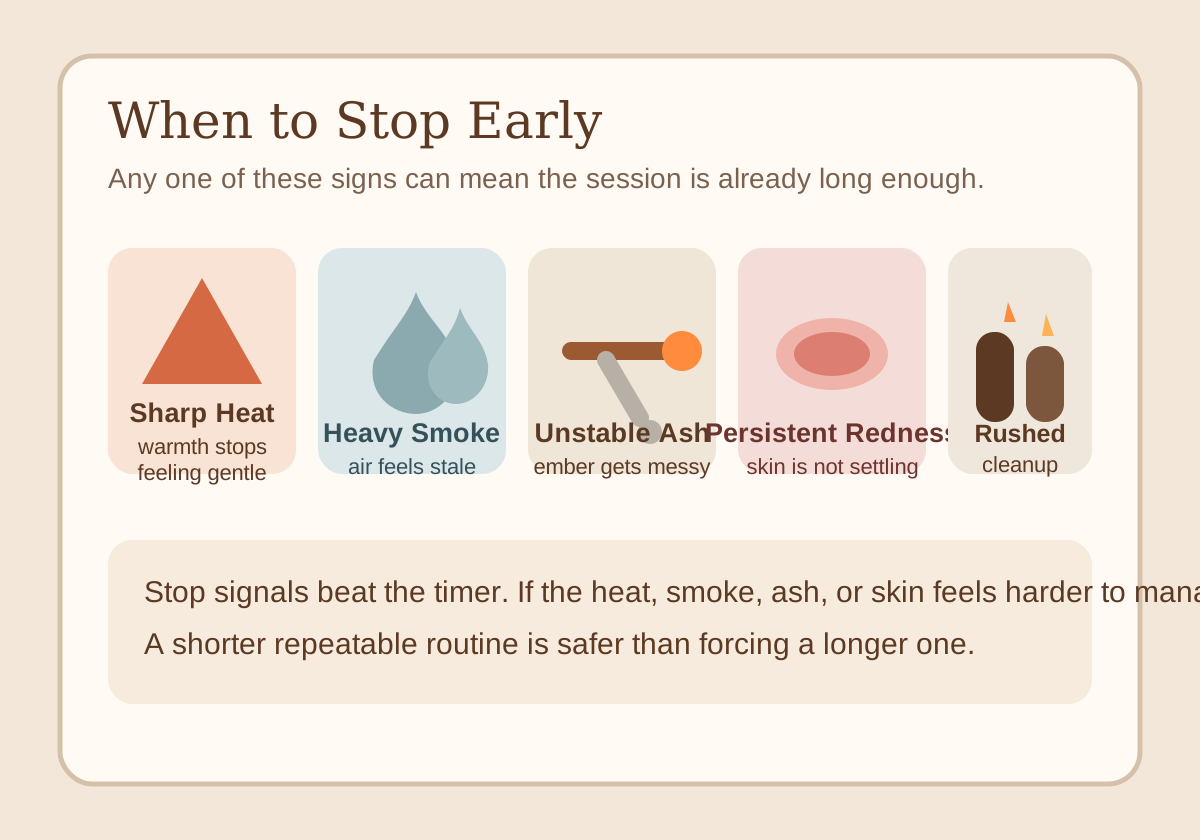
End the session if:
- the warmth turns sharp, prickly, or hard to tolerate,
- the skin stays intensely red instead of settling quickly,
- you start coughing or the air feels irritating,
- ash becomes long, flaky, or distracting,
- you are tempted to rush because cleanup feels awkward,
- you feel tired, lightheaded, or simply unsure whether to continue.
Those signals matter more than the timer because they reflect what is happening in the actual session. If you ignore them just to hit a target number, the number stops being helpful.
Should beginners repeat the same area right away?
Usually that is not the smartest way to think about progress. One of the hospital guidance pages I reviewed specifically warns against short-interval repeated moxa on the same point. For home users, that makes sense. Repeating too quickly can turn a tolerable session into an overheated one without adding any useful beginner value.
If the first interval leaves the area sensitive, or if you are not sure how the skin will look after a few minutes, move into cleanup and aftercare instead of starting another round. Moxa stick aftercare covers the cooldown checks that help you decide whether the session stayed within sensible limits.
A better rule than chasing the longest possible session
Instead of asking, “How long can I keep going?” ask these three questions:
- Is the warmth still gentle and easy to judge?
- Is the room still comfortable enough that I am not breathing stale smoke?
- Could I end the session calmly right now without scrambling to handle ash or the hot tip?
If the answer to any of those becomes no, the session is long enough.
That is the real beginner standard. A short, repeatable, well-controlled session is better than a longer one that leaves you with smoke problems, anxious cleanup, or irritated skin. Moxa is a heat-and-combustion tool, so restraint is part of using it well.
When you finish, extinguish the stick deliberately and deal with the remaining ash as a fire-safety task, not an afterthought. How to extinguish a moxa stick safely and moxa stick fire safety checklist are the right next steps if shutdown still feels improvised.
Sources and further reading
- Beijing Hospital of Traditional Chinese Medicine: 宽街·明医说 | 艾灸有讲究 快来过个有“艾”的端午节吧
- Beijing Hospital of Traditional Chinese Medicine: 宽街·明医说 | 雨水至,湿气生,中医教您化解“倒春寒”里的湿与寒
- U.S. Environmental Protection Agency: Indoor Pollutants and Sources
- PubMed Central: Safety of Moxibustion - A Systematic Review of Case Reports
- U.S. Fire Administration: Pictograph - Discard Ashes Safely
Common questions
Should I use the whole moxa stick in one session?
No. A beginner session often uses only part of a stick. Planned early extinguishing is normal and usually safer than trying to use the full roll.
Is 10 to 15 minutes a strict rule for every person?
No. It is a rough teaching range found in some hospital education pages, not a universal rule. Stop sooner if the heat feels too strong or the setup becomes hard to control.
What matters more than the timer?
Heat comfort, distance from the skin, smoke level, ash control, and whether you can end the session calmly matter more than squeezing out extra minutes.