Quick answer
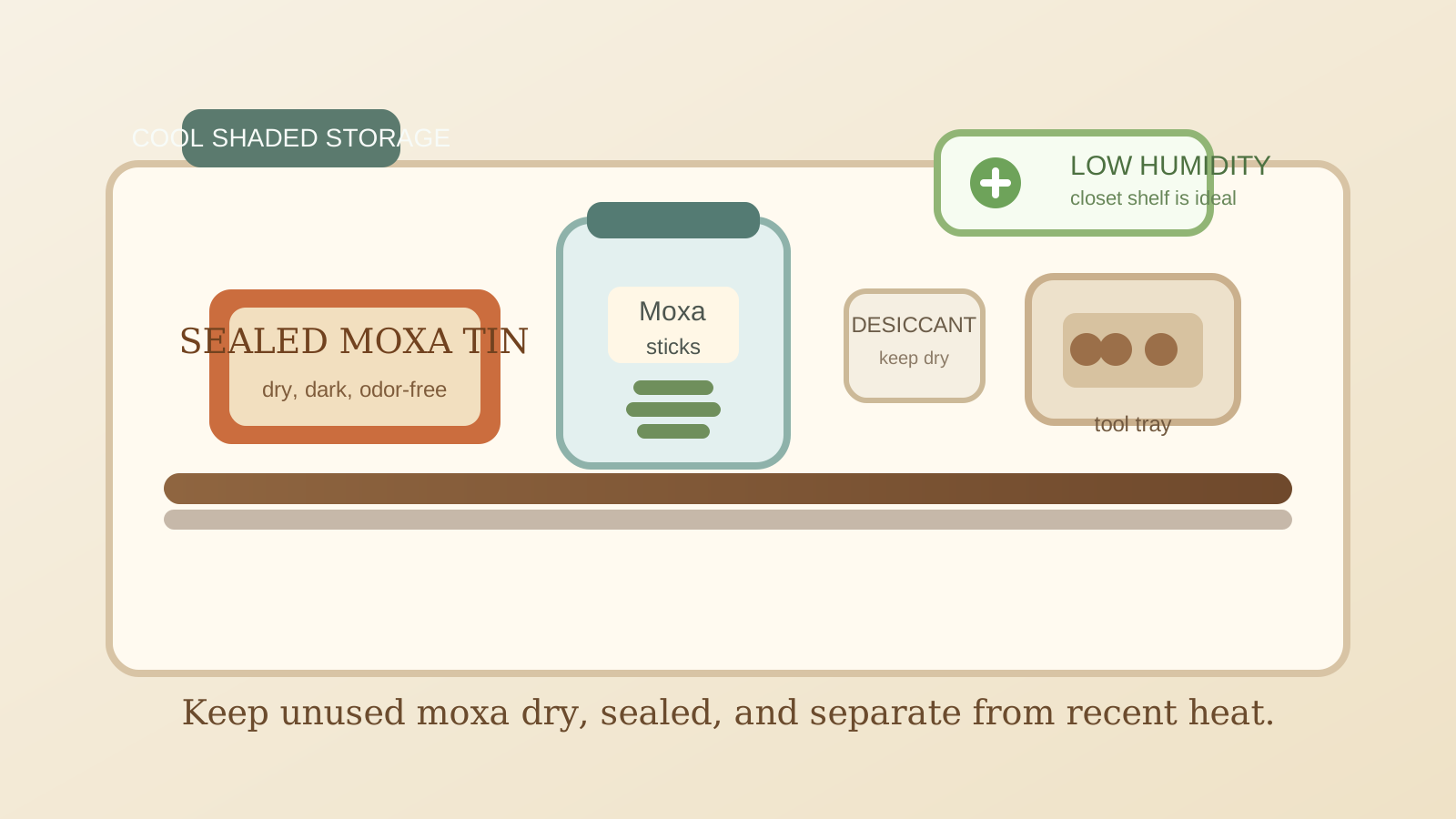
Store moxa sticks in a dry, sealed container away from bathroom humidity, kitchen odors, direct sun, and children or pets. Keep used sticks separate until they are fully extinguished and cool, because good storage is partly about product quality and partly about household fire discipline.
Key takeaways
- The best home setup is a dry, sealed container kept in a cool room away from humidity, strong odors, and direct sunlight.
- Unused sticks, tools, and recently extinguished sticks should not all share the same space until the used stick is fully out and cool.
- Musty smell, soft wrapping, visible spotting, or uneven relighting are storage warning signs worth treating seriously.
Store moxa sticks in a dry, sealed container in a cool room, away from humidity, direct sun, strong household odors, children, pets, and anything that could still be warm from a recent session. That is the plain answer. Good moxa storage is not complicated, but it does affect how easily the stick lights, how cleanly it burns, and whether your home routine stays predictable.
Because moxa is a dried mugwort product, storage is really two jobs at once: protect the material from moisture and odor transfer, and keep anything recently burned from being treated like ordinary household clutter. If those two jobs are handled well, beginners usually have fewer surprises later.
Why storage matters more than people think
Beginners sometimes treat storage like a housekeeping detail that can wait until after buying the “right” stick. In practice, storage changes the product experience quickly. A dry stick is usually easier to inspect, easier to light, and easier to burn in a controlled way. A damp or odor-soaked stick is harder to judge because the problem may show up only when you try to use it.
That is why storage belongs in the same conversation as how to choose good moxa sticks. A product can arrive looking acceptable and still become frustrating if it sits open in a humid room or next to strong kitchen smells. The point is not perfection. It is consistency.
Storage also has a safety side. NCCIH notes that moxibustion can cause burns and other adverse effects, which means home users should think about the whole handling chain, not only the minutes when the stick is lit. A careless post-session habit, such as dropping a recently extinguished stick into a crowded drawer, is still part of the risk picture.
Choose the right place before choosing the container
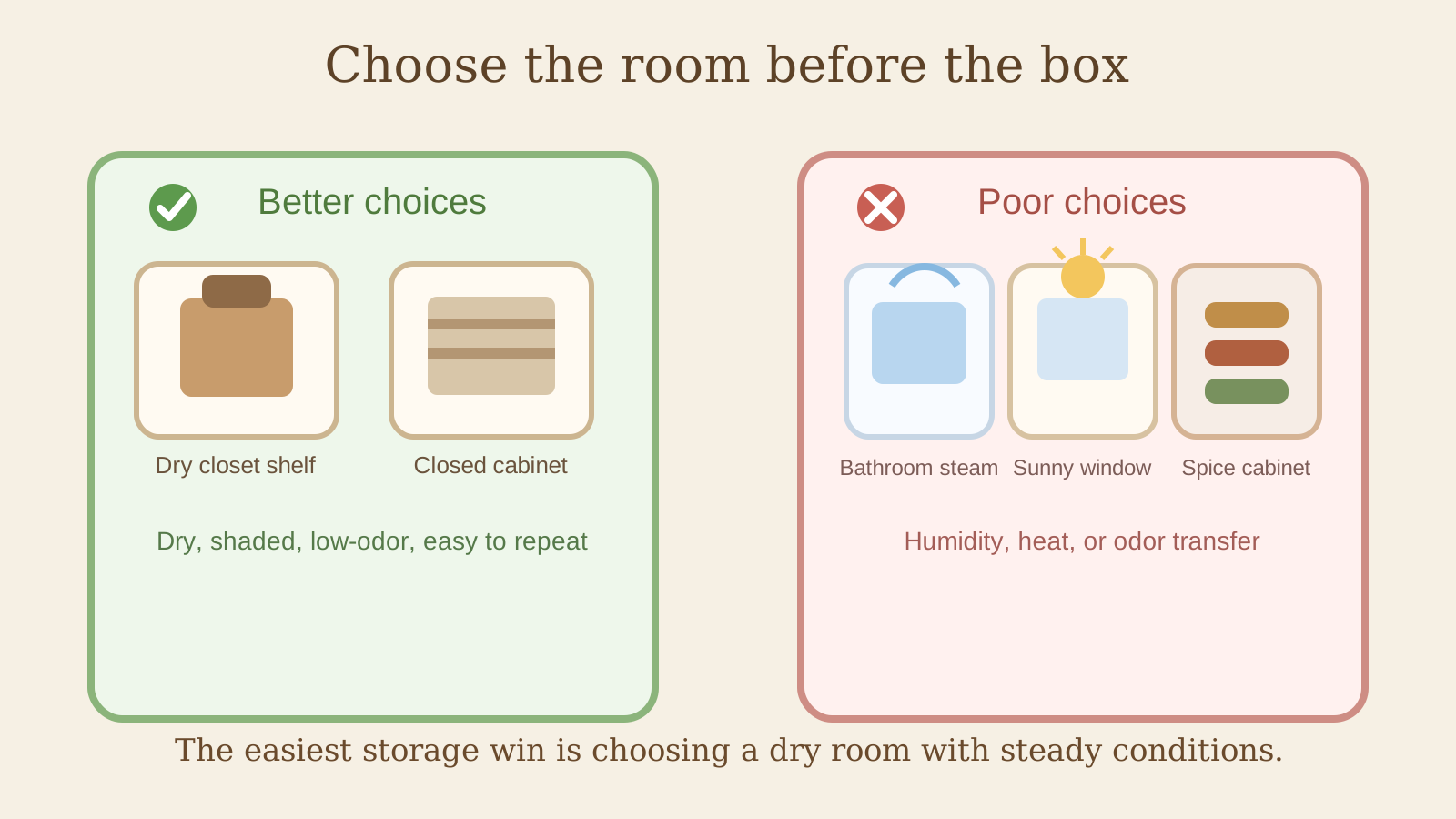
The first storage decision is location, not packaging. A mediocre container in a dry room is often better than a fancy container kept in a damp space.
Look for a place that is:
- dry most of the year,
- away from steam, condensation, and cooking grease,
- shaded from direct afternoon sun,
- easy to reach without being accessible to children or pets,
- close enough to your setup that you will actually use it consistently.
For most homes, a bedroom closet shelf, hallway cabinet, or dedicated lidded box in a study works better than a bathroom or kitchen. Bathrooms are usually poor storage spots because humidity rises and falls constantly. Kitchens bring steam, spices, and cooking odors. Window ledges can look tidy, but they often collect heat and condensation.
EPA guidance on mold and moisture supports the basic principle here: organic household materials stay in better shape when moisture is controlled early rather than corrected later. If you want the companion article for what happens when that rule is ignored, read can you use moldy moxa sticks.
Seal out humidity and household odors
Once you have the right location, use a container that keeps the moxa together, dry, and easy to inspect. The original sleeve may be fine if it is intact and stored inside a second sealed container. Many home users do well with a tin, lidded box, or glass jar with a reliable seal. The goal is not luxury storage. The goal is stable storage.
This matters because moxa can absorb surrounding smell over time. If the sticks sit near perfume, incense, detergent, essential oils, or cooking spices, the odor becomes harder to read honestly. That can make it tougher to tell the difference between normal herbal smell and a genuine warning sign like dampness or mustiness.
Practical rules that work for most beginners:
- keep new and unopened sticks together in one sealed container,
- keep the container away from strong-smelling products,
- avoid leaving the pack open between sessions,
- do not store moxa beside candles, oils, or cleaning chemicals,
- use only the amount of backup stock you can store comfortably.
If smell control is one of your main reasons for improving storage, pair this article with do moxa sticks smell and how to reduce moxa smoke at home. Storage will not remove smoke during a session, but it does help keep leftover odor from building up between sessions.
Separate unused stock from recently used sticks
This is the part many quick storage guides skip. A storage system should distinguish between unused stock and a stick that was burned today.
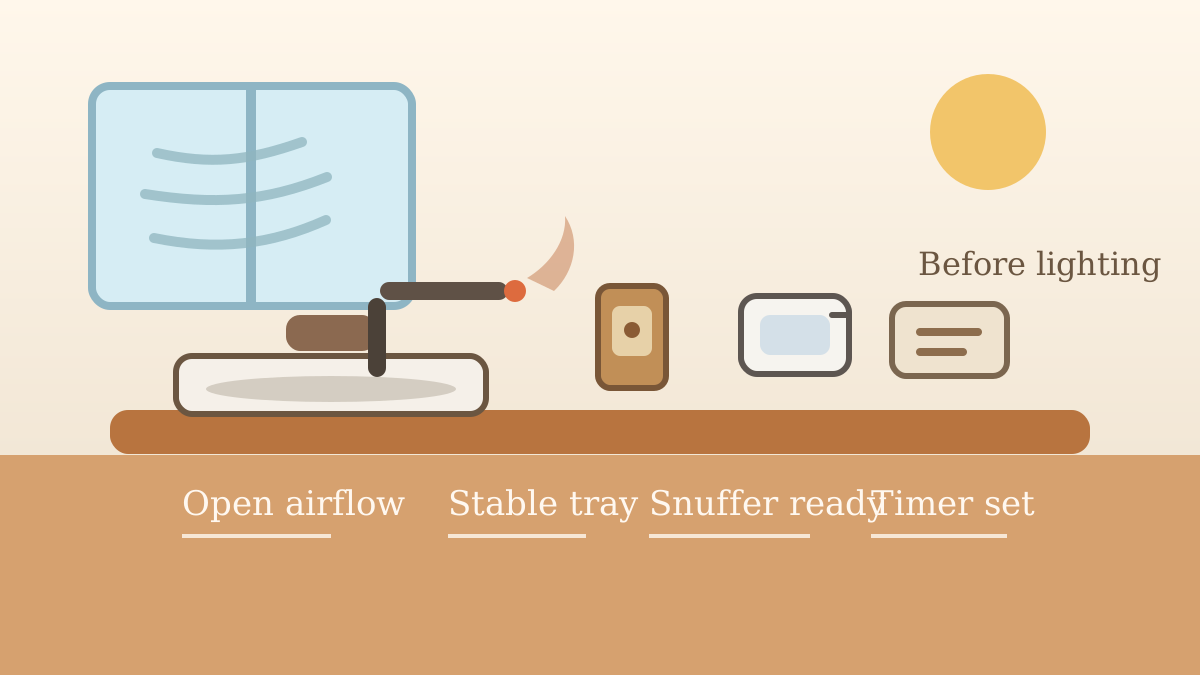
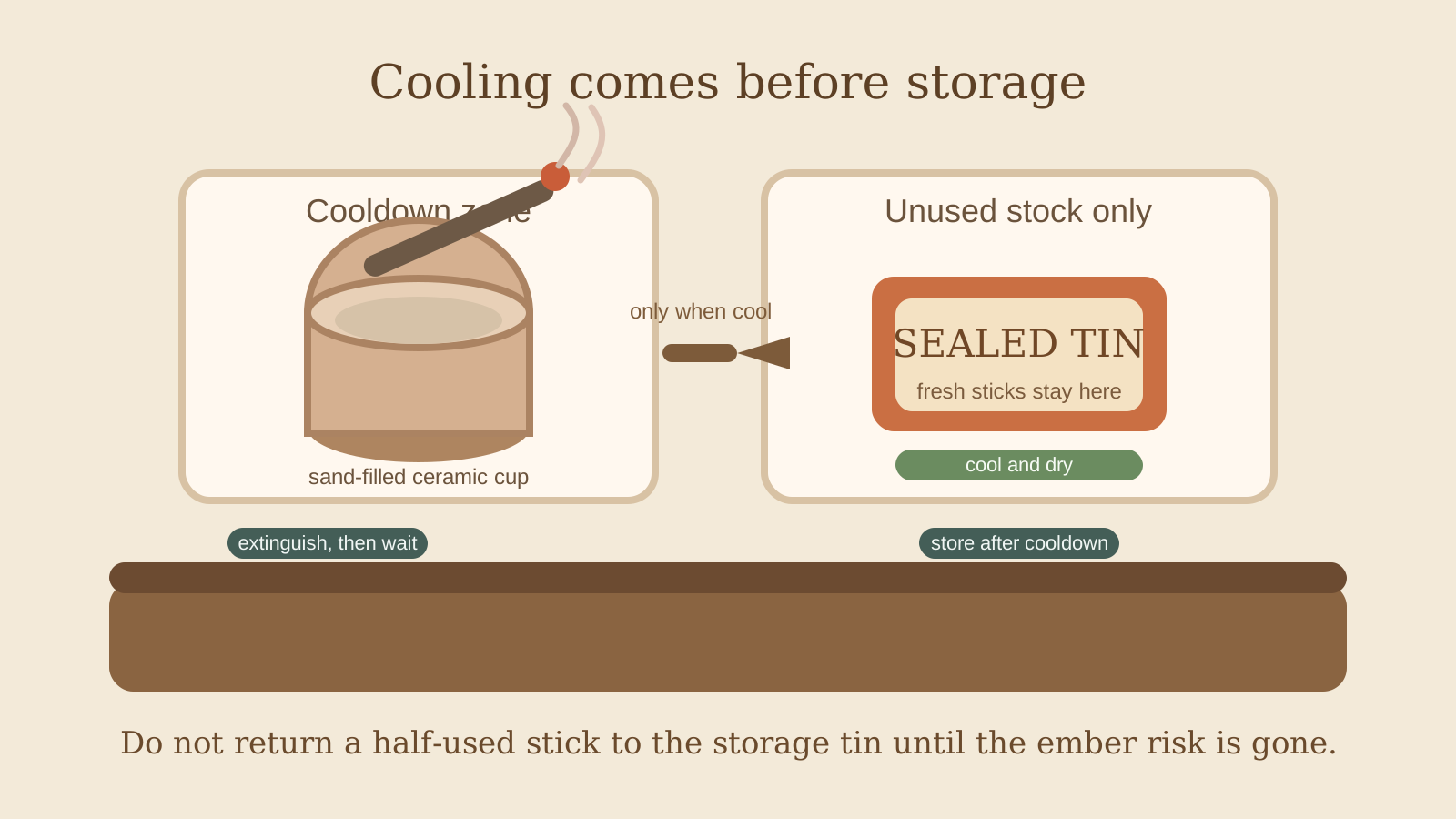
Even after a moxa stick looks out, it deserves a cooling phase in a nonflammable container before it goes anywhere near the main storage area. That might be a ceramic cup with sand, a metal snuffer, or another stable container used only for cooling and extinguishing. The U.S. Fire Administration’s cooled-ash guidance supports the same basic habit: treat hot residue cautiously until it is fully out and cold.
That means:
- extinguish the stick fully first,
- let it sit in the cooling container long enough to stop any hidden smoldering,
- brush or tap off loose ash only when it is safe to do so,
- return it to a storage tin only after it is plainly cool to the touch.
If you want the shutdown steps themselves, read how to extinguish a moxa stick safely before trying to design the perfect storage box. Storage begins after extinguishing, not instead of it.
Watch for storage warning signs instead of forcing one more session
Good storage is partly preventive and partly observational. You do not need lab-level monitoring. You just need a few simple cues.
Recheck your stock if you notice:
- a musty, sour, or basement-like smell,
- paper wrapping that feels soft or warped,
- visible spotting or unusual residue,
- sticks that crumble more than expected,
- harder lighting or more erratic relighting than usual,
- condensation inside the storage container.
Those signs do not always prove the same problem, but they all justify a pause. The conservative move is to inspect the storage area, separate questionable stock, and compare it with a dry fresh stick before lighting anything. If mold or dampness seems likely, the discard-first approach in can you use moldy moxa sticks is safer than trying to rescue the pack.
A simple home routine that stays manageable
If you want one routine to remember, use this:
- Keep unused moxa in a sealed container in a dry cabinet or closet.
- Keep tools such as holders, trays, and lighters nearby but organized separately.
- Cool used sticks in a nonflammable container before they rejoin stored stock.
- Recheck smell, wrapper feel, and dryness every time you open the container.
That routine is plain on purpose. The best storage method is usually the one you will repeat every time, not the one with the most accessories. A clean dry shelf, a sealed tin, and a proper cooldown habit outperform a decorative storage setup that ignores humidity and hot ash.
If you are building out the rest of the routine, the most relevant next reads are what is a moxa stick, how to light a moxa stick safely, and the /categories/moxa-sticks/ hub.
Sources and further reading
Source tiers: A/B. EPA and USFA support the moisture, indoor-air, and cooled-ash guidance here; NCCIH supports the broader safety context for home moxibustion handling.
- U.S. Environmental Protection Agency: A Brief Guide to Mold, Moisture and Your Home
- U.S. Environmental Protection Agency: Improving Indoor Air Quality
- U.S. Fire Administration: Discard Ashes Safely
- National Center for Complementary and Integrative Health: Traditional Chinese Medicine - What You Need To Know
Common questions
Can moxa sticks get damp even inside the wrapper?
Yes. Paper wrapping slows exposure but does not fully protect moxa from a humid room, condensation, or badly sealed storage.
Where should I avoid storing moxa sticks?
Bathrooms, laundry areas, kitchen cabinets near steam or spices, and window ledges with condensation are usually poor choices.
Can I put a half-used moxa stick back with the new ones?
Only after it is fully extinguished and completely cool. Until then, keep it in a separate nonflammable cooling container.