Quick answer
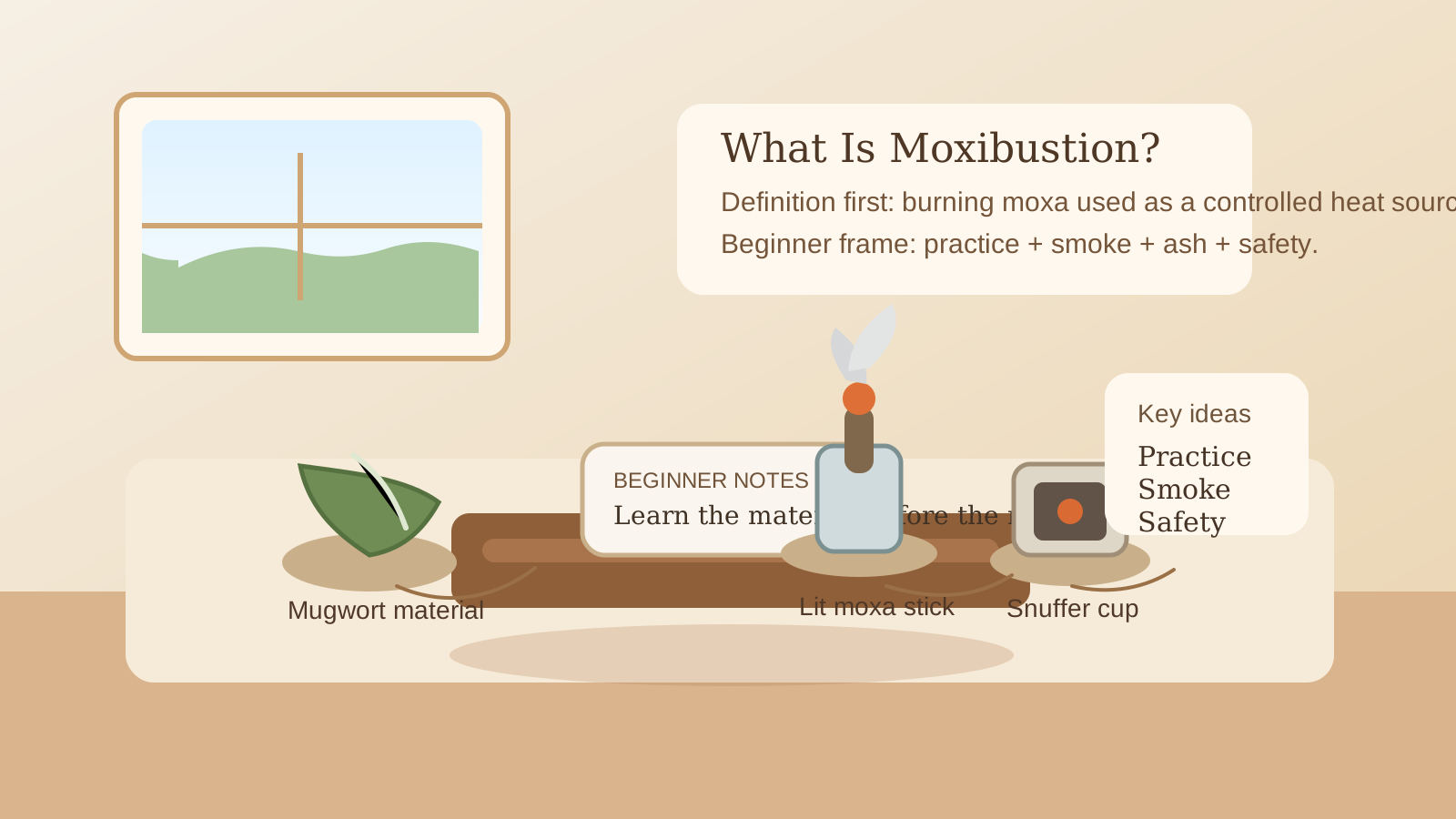
Moxibustion is a traditional practice that uses the heat of burning moxa, usually processed mugwort, near selected areas or points. For beginners, the most useful way to understand it is as a heat-and-smoke practice with cultural roots, several tool formats, and clear safety boundaries.
Key takeaways
- Moxibustion uses burning moxa as a heat source; moxa and moxibustion are related terms, but they are not the same thing.
- Beginners usually encounter moxa as sticks, cones, boxed formats, or smokeless charcoal-style products, each with different handling and ventilation demands.
- Traditional language helps explain the practice, but it does not replace modern burn, smoke, and common-sense safety rules.
If you want the plain answer first, here it is: moxibustion is a traditional practice that uses the heat of burning moxa, usually processed mugwort, near selected areas or points. For beginners, the clearest way to think about it is not as a mystery ritual and not as a medical shortcut. It is a heat-based practice with real smoke, ash, odor, and burn risk, which is why definition and safety belong together from the start.
That framing separates three questions people often mix up: what moxibustion is, what moxa is, and whether a beginner should approach home use casually. The first two are vocabulary questions. The third is a safety question.
What moxibustion means in plain English
Moxibustion is commonly described as warming selected body areas or traditional points with burning moxa. The practice is part of the wider Traditional Chinese Medicine world, which is why it is often mentioned near acupuncture, channels, and point names. UNESCO lists acupuncture and moxibustion of traditional Chinese medicine as part of China’s intangible cultural heritage, which helps explain why the practice remains widely recognized.
That still leaves a beginner question: what do you see in real life? Usually, you see a moxa product being burned so its heat can be brought near the body in a controlled way. Whatever the traditional explanation around points or warmth may be, the physical reality is simple: a combustible material is creating heat, odor, ash, and visible smoke indoors.
NCCIH describes Traditional Chinese Medicine as a long-developed system that includes different physical and herbal approaches. This site uses that broad framing carefully. It explains what moxibustion is and how beginners usually encounter it, but it does not use cultural history as proof that any home routine diagnoses, improves, cures, or prevents disease.
If you are still sorting out the vocabulary, moxa vs moxibustion is the quickest companion page because it separates the material term from the practice term directly.
What moxa is made from and why the format matters
Moxa is usually made from processed mugwort leaf material. Readers will also see the plant referred to as Ai Ye in Chinese-language contexts. That does not mean every mugwort product is automatically the same. Processing and format change how the product handles, how much smoke it creates, and how easy it is for a beginner to control.
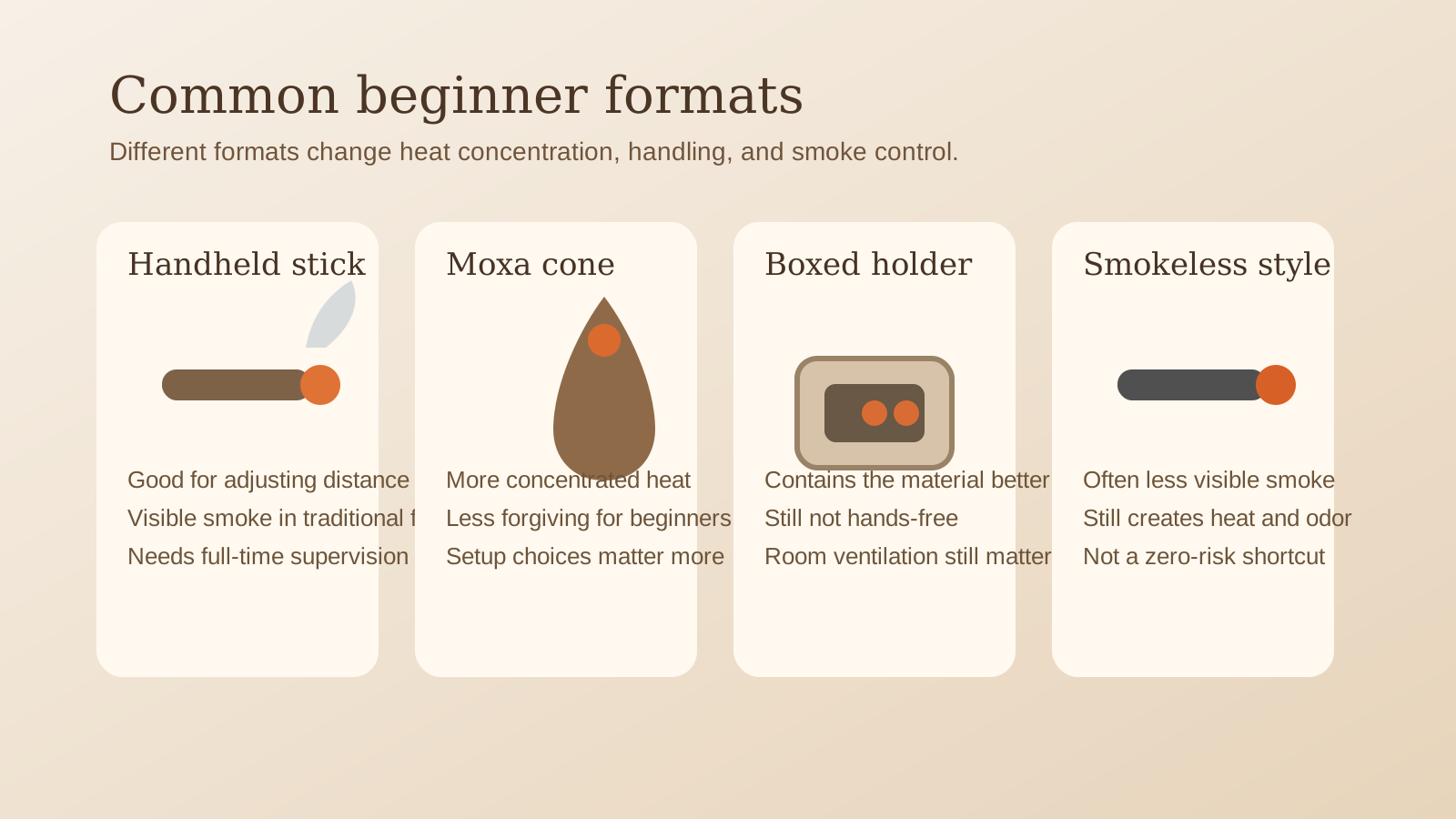
The most common beginner-facing formats are:
- moxa sticks, which are rolled cylinders that can be moved closer or farther from the body,
- moxa cones, which are smaller and can concentrate heat faster,
- boxed or holder-assisted formats, which try to contain the burning material while still requiring supervision,
- smokeless or charcoal-style products, which may reduce visible smoke but still create heat, odor, and ash.
Those differences matter because many weak overview pages present “moxibustion” as if it were one uniform experience. It is not. A handheld stick gives one kind of control. A cone gives another. A boxed setup changes the heat path again. If you want the material-side explanation first, what is moxa and what is a moxa stick are the more precise next steps.
Why people connect moxibustion with Traditional Chinese Medicine
In Traditional Chinese Medicine writing, moxibustion is usually discussed through ideas such as warming, points, channels, and the movement of qi. That is part of the traditional framework readers will see in books, hospital education pages, and practitioner language. It explains how the practice is understood inside that tradition.
What it does not do by itself is answer every modern beginner question. Traditional language can tell you why moxibustion is culturally important, but it does not eliminate the need for ventilation, distance control, extinguishing discipline, or skepticism about exaggerated health claims. That distinction is central to search intent here. People searching “what is moxibustion” often want both the cultural answer and the practical beginner answer on one page.
The cleaner way to say it is this: moxibustion belongs to a traditional medical and cultural framework, but beginners still need a modern safety frame when deciding whether to keep reading, compare tools, or ask a qualified clinician about personal health questions. That is why this site splits topics across pages such as moxibustion in Traditional Chinese Medicine, history of moxibustion, and /categories/moxibustion-guide/, rather than forcing every meaning into one paragraph.
What beginners should understand before trying it
Published safety reviews indexed in PubMed report adverse events such as burns, infection, coughing, nausea, vomiting, allergic reactions, and other complications in case reports. That does not mean every cautious session is dangerous. It means moxibustion is not a candle-like background accessory and should not be treated as one.
Start with these basics:
- ventilation has to be planned before lighting anything,
- the heat source needs constant supervision,
- the distance from skin matters more than trying to tolerate stronger heat,
- ash and half-used material still need controlled handling,
- personal health questions belong with a qualified clinician, not with guesswork from product pages.
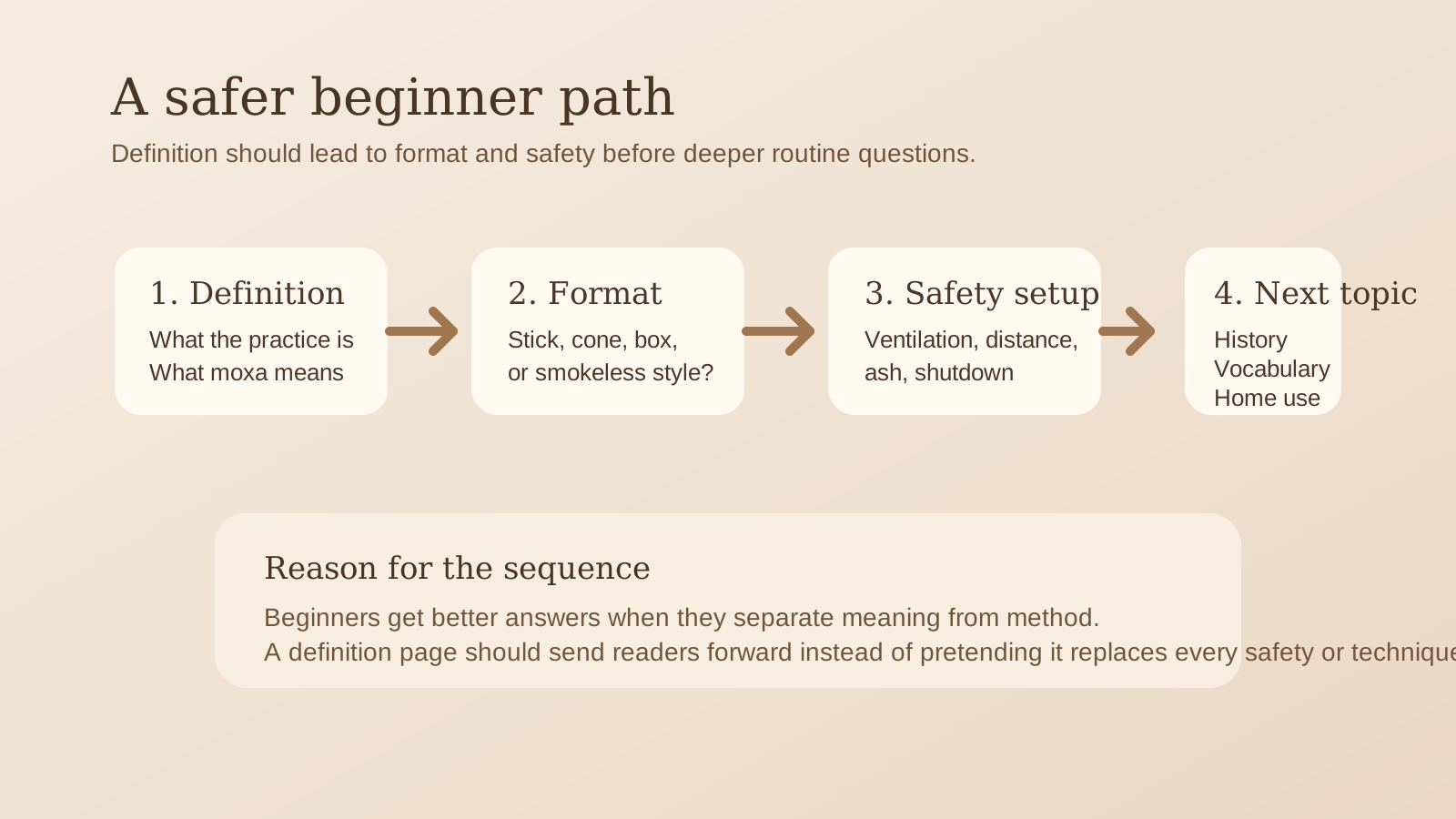
That is also why beginner readers should move from definition to setup, not from definition to ambition. The logical follow-up pages are moxibustion safety basics, how to use moxa sticks at home, and how to extinguish a moxa stick safely. They answer the room, heat, and shutdown questions that a plain definition cannot cover alone.
How to keep the topic straight without mixing up every similar page
Because moxibustion sits at the intersection of culture, product vocabulary, and home-use safety, readers often land on the wrong kind of article for the question they actually have. A better reading path is to match the page to the real intent.
Use this page when your question is basic definition: what the practice is, what it uses, and why it is discussed alongside mugwort and acupuncture.
Use other pages when the real question is narrower:
- choose what is moxa if you mainly want to understand the material itself,
- choose moxa stick vs moxa cone vs moxa grain if you are comparing product formats,
- choose moxibustion vs acupuncture if you are separating the two practices,
- choose moxibustion safety basics if you are already thinking about home use,
- choose history of moxibustion if the real question is historical or cultural.
That reading path matters for search quality too. A strong beginner overview should answer the primary question cleanly and then route readers to the more specific next questions instead of pretending one page can do every job equally well.
A short answer beginners can actually use
Moxibustion is a traditional heat practice that uses burning moxa, usually made from processed mugwort. That is the definition. The more useful beginner extension is that the practice always comes with practical handling questions about smoke, ash, ventilation, heat control, and when not to improvise.
So if you searched “what is moxibustion,” the best next step is not to chase the most dramatic claim. It is to separate meaning from method. Learn what the practice is, learn what the material is, and then decide whether you are looking for cultural background, product comparisons, or safety-first home guidance.
Sources and further reading
Source tiers: A/B. The cultural framing above comes from UNESCO and official TCM context. The safety framing comes from NCCIH’s overview of Traditional Chinese Medicine and PubMed-indexed safety reviews. The beginner reading-path recommendations are original editorial guidance based on those sources and on this site’s existing article structure.
- UNESCO: Acupuncture and moxibustion of traditional Chinese medicine
- National Center for Complementary and Integrative Health: Traditional Chinese Medicine: What You Need To Know
- PubMed: Safety of moxibustion: a systematic review of case reports
- PubMed: Adverse events of moxibustion: a systematic review
Common questions
Is moxibustion the same as acupuncture?
No. They are often discussed together in Traditional Chinese Medicine, but acupuncture uses needles while moxibustion uses heat from burning moxa.
Is moxibustion the same as moxa?
No. Moxa is the processed material, usually made from mugwort. Moxibustion is the practice that uses that material.
What should beginners understand first?
Start with the basics: what the material is, how the common formats differ, and why ventilation, supervision, and burn prevention matter before any routine questions.