Quick answer
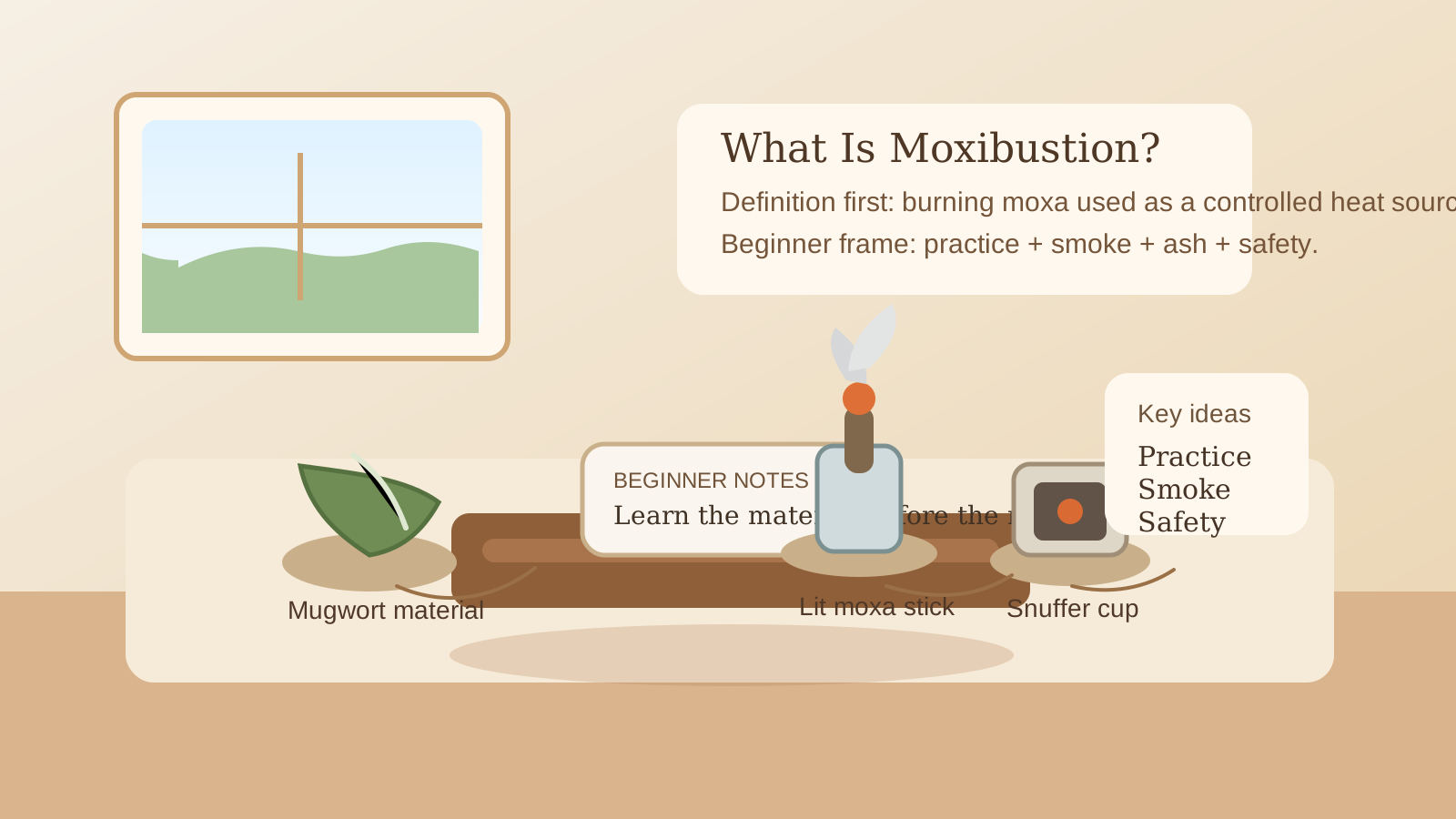
Moxa usually means the prepared mugwort material used in moxibustion or the finished products made from that material, such as loose wool, sticks, and cones. For beginners, the most useful way to understand moxa is as a material family: it starts with mugwort, becomes a processed fiber, and then appears in different product forms that still require careful handling around heat, smoke, and ash.
Key takeaways
- Moxa usually refers to prepared mugwort material or a finished product made from it, not to the entire practice of moxibustion.
- Moxa wool, moxa sticks, cones, and some smokeless formats belong to the same broader material family even though they handle differently.
- A traditional plant-based material can still create real burn, smoke, and ember risks, so beginner vocabulary should be paired with basic safety awareness.
Moxa is the prepared material used in moxibustion, and it is most commonly associated with processed mugwort. In practical beginner language, that means moxa can refer either to the soft fiber itself, often called moxa wool, or to finished products made from that material, such as sticks, cones, and rolls.
That distinction matters because many first-time readers mix up three related ideas: mugwort as the plant, moxa as the prepared material, and moxibustion as the traditional practice that uses burning moxa for warmth. Once those are separated, product pages, glossary articles, and safety guides become much easier to read.
Why the word “moxa” feels broad
Beginners often expect moxa to name one single object, but the word is wider than that. In one sentence, it may mean the prepared fiber itself. In another, it may mean a finished stick or cone. On a shop page, it may even work as an umbrella label for an entire product category.
That is why you will see related phrases grouped together:
- mugwort or ai ye as the plant source,
- moxa wool as the processed fiber,
- moxa stick or moxa cone as finished formats,
- moxibustion as the practice that uses those formats.
The overlap is normal, but the safest beginner habit is to slow the terminology down instead of assuming every word means the same thing.
How mugwort becomes moxa
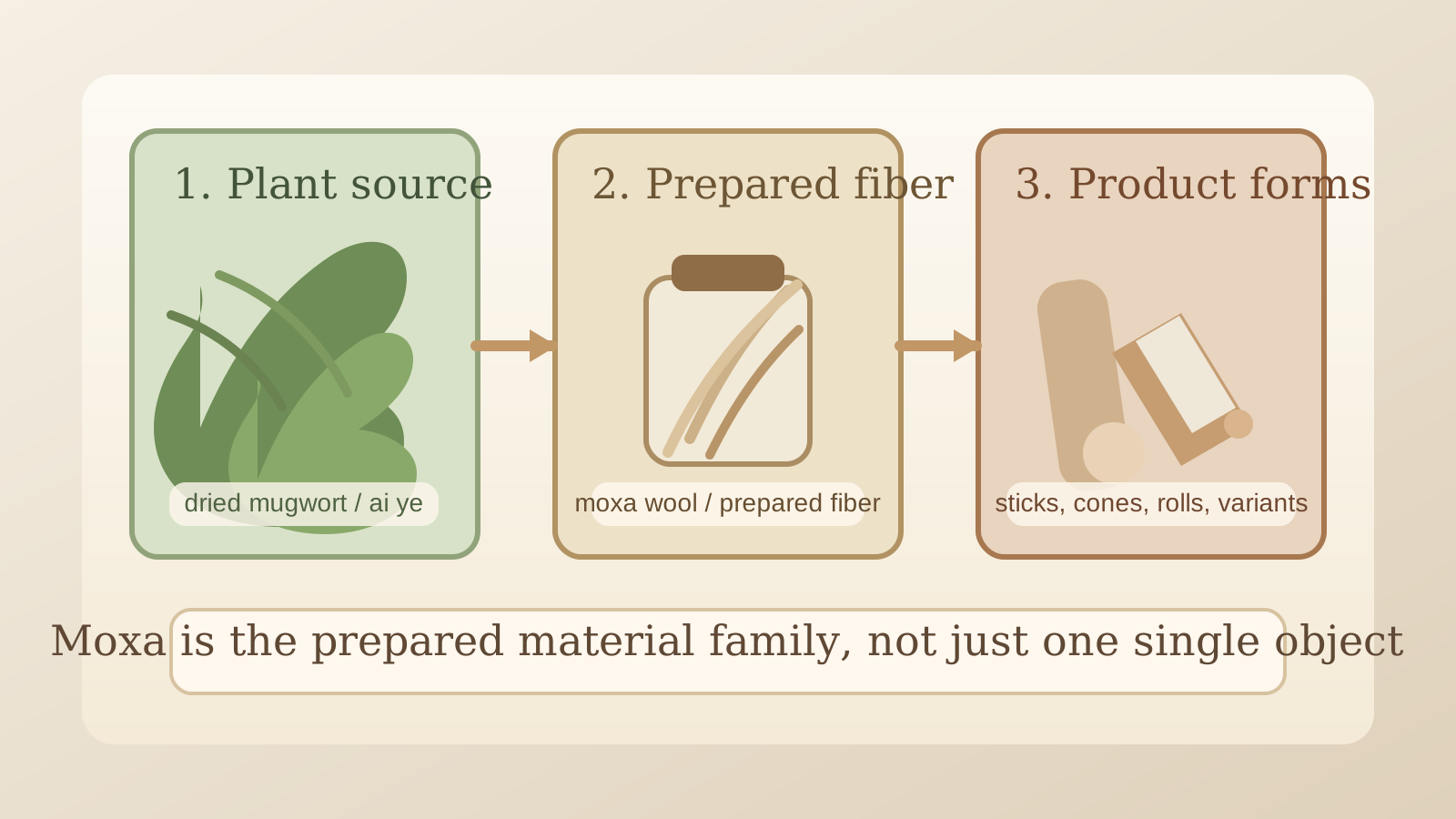
Official and hospital-based Chinese medicine explainers commonly describe moxa as being made from dried mugwort leaves that are processed into a softer, burnable material. That prepared fiber is often called moxa wool, and it can then be shaped into sticks, cones, or other formats.
For a beginner, the material story is more useful than the mythology:
- Mugwort is harvested and dried.
- The dried leaves are cleaned and processed.
- Softer fiber is separated from rougher plant matter.
- The prepared material is packed, rolled, or shaped into finished products.
This is why a listing can mention mugwort, moxa wool, and moxa sticks all at once without being inconsistent. Those terms are describing different stages of the same material chain.
Common forms of moxa
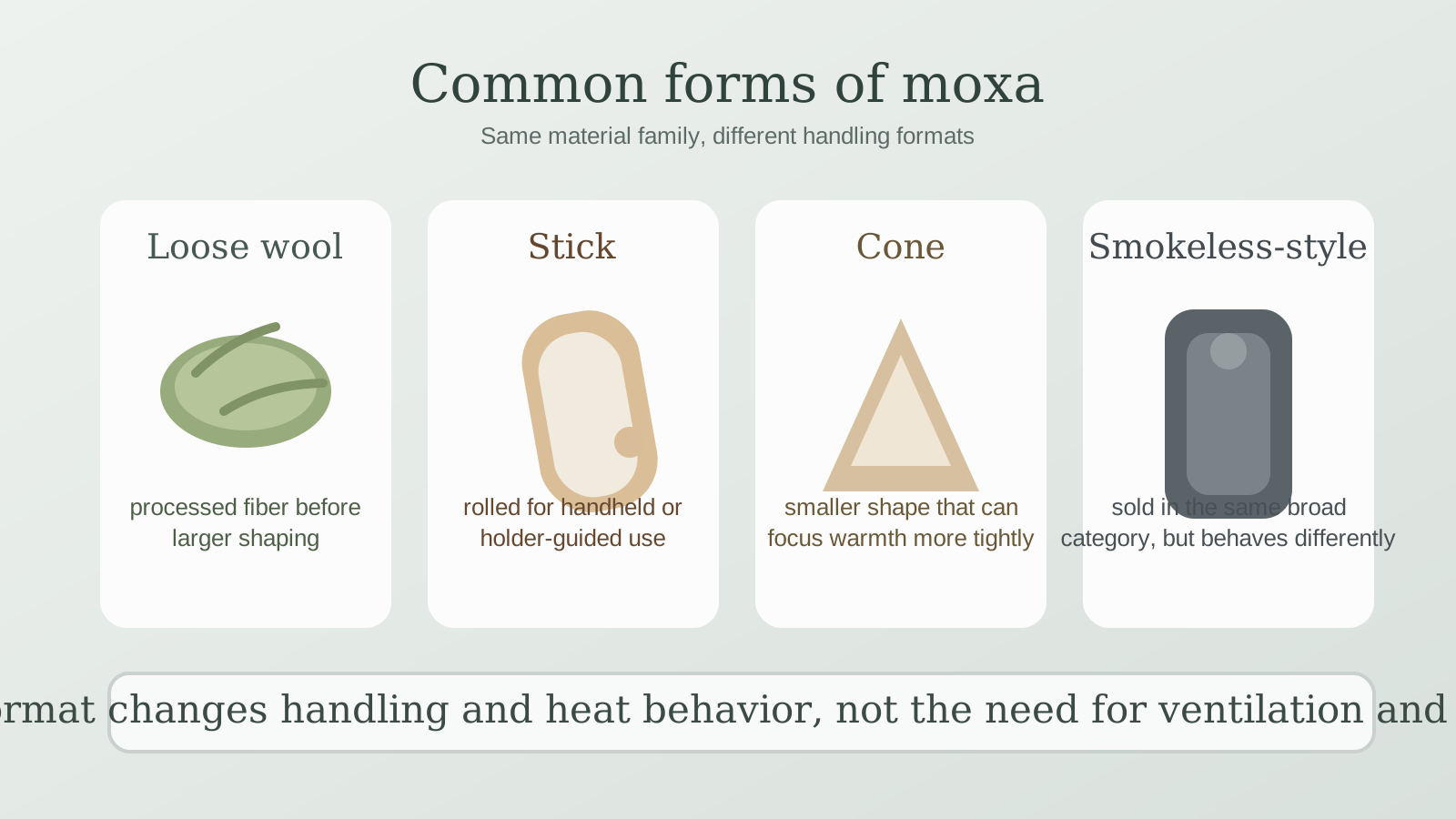
Once the fiber is prepared, it appears in several product forms. The form changes how it is handled, not the need for caution.
- Loose moxa wool is the prepared fiber before it is shaped into a larger finished product.
- Moxa sticks are rolled cylinders that many beginners recognize first because they are easier to hold and move.
- Moxa cones are smaller shaped portions that can concentrate heat in a narrower area.
- Smokeless moxa products are often charcoal-style variants sold within the same broad category, even though their smoke behavior and handling can differ from traditional sticks.
That is the key point: moxa is the material family, while the stick or cone is the specific format in your hand.
How moxa differs from a moxa stick and from moxibustion
This is where beginners usually get stuck.
A moxa stick is one product made from moxa. A moxibustion routine is the broader practice that uses burning moxa. So the relationship is:
- mugwort = plant source,
- moxa = prepared material or product family,
- moxa stick = one finished format,
- moxibustion = the practice.
If you only remember one rule, make it this one: moxa is the thing, moxibustion is the activity.
That simple rule also explains why internal links on this site have different jobs. What is a moxa stick is a product explainer. What is moxibustion is a broader practice explainer. Moxa vs moxibustion is the vocabulary bridge between them.
What beginners should notice before buying or using moxa
Glossary knowledge is useful, but it should lead to better practical questions.
Before buying or opening a product, notice:
- whether the material smells herbal rather than moldy or chemical,
- whether the product looks dry and evenly packed,
- whether the finished format matches your holder and extinguisher plan,
- whether you understand the smoke, ash, and distance issues before lighting anything.
This is where the word “moxa” stops being abstract. Once burned, even a traditional mugwort-based product becomes a source of heat, odor, smoke, ash, and embers. A product description should never be read as a promise that home use is automatically simple or suitable for everyone.
If you are still comparing products, continue with how to choose good moxa sticks, moxa stick vs moxa cone, and fresh moxa vs aged moxa.
What this definition does and does not prove
Understanding what moxa is does not prove that every traditional claim around moxibustion is established by modern evidence. It also does not replace product instructions, fire safety, or medical guidance for health concerns.
What it does do is give beginners a cleaner map:
- what the raw material is,
- how the product forms relate to each other,
- which article to read next,
- why safety guidance belongs even in a basic glossary page.
The research and safety literature around moxibustion also reinforces that basic caution. Burns, smoke exposure, and other adverse events are possible when people treat moxa as harmless background wellness décor instead of as a live heat source. So even a vocabulary article should end in the real world: ventilation, distance, ash handling, and knowing when not to improvise.
Sources and further reading
- National Administration of Traditional Chinese Medicine: “Chinese acupuncture” added to the Representative List of the Intangible Cultural Heritage of Humanity
- Beijing Hospital of Traditional Chinese Medicine: Moxibustion Therapy
- PubMed: Safety of moxibustion: a systematic review of case reports
- Britannica: Moxa treatment
Common questions
Is moxa the same as mugwort?
Not exactly. Mugwort is the plant source, while moxa usually means the prepared burnable material or a finished product made from processed mugwort.
Is a moxa stick the same as moxa?
A moxa stick is one kind of moxa product. The broader word also covers loose moxa wool, cones, and other product formats.
Does understanding moxa mean I am ready to use it at home?
No. Understanding the word helps with product research, but home use still requires ventilation, burn prevention, ash control, and a clear plan for extinguishing.