Quick answer
Fresh moxa and aged moxa are usually separated by material age, aroma, color, and handling style rather than by fixed outcomes. For beginners, the useful question is not which one is magically better, but which product is dry, honestly labeled, manageable in the room, and easy to extinguish safely.
Key takeaways
- Fresh moxa and aged moxa are product-language categories that usually describe storage time, aroma, color, and handling traits.
- Aged labels such as three-year or five-year moxa do not automatically prove better quality, lower risk, or better results.
- Beginners should compare dryness, smell, packaging, holder fit, ventilation, and extinguishing setup before focusing on the age number.
If you are comparing fresh moxa and aged moxa, the short answer is simple: fresh moxa usually refers to newer mugwort material, while aged moxa usually refers to mugwort material that has been stored before it is made into moxa wool, sticks, or cones. Sellers and hospital explainers often describe aged material as more mellow and fresh material as greener or sharper, but those descriptions are not a guarantee of product quality.
For beginners, the safer way to read the topic is to treat “fresh” and “aged” as material descriptions. They can affect smell, smoke feel, color, and marketing language, yet they do not replace the basics: dry storage, honest labeling, ventilation, ash control, and careful extinguishing.
What “fresh moxa” and “aged moxa” usually mean
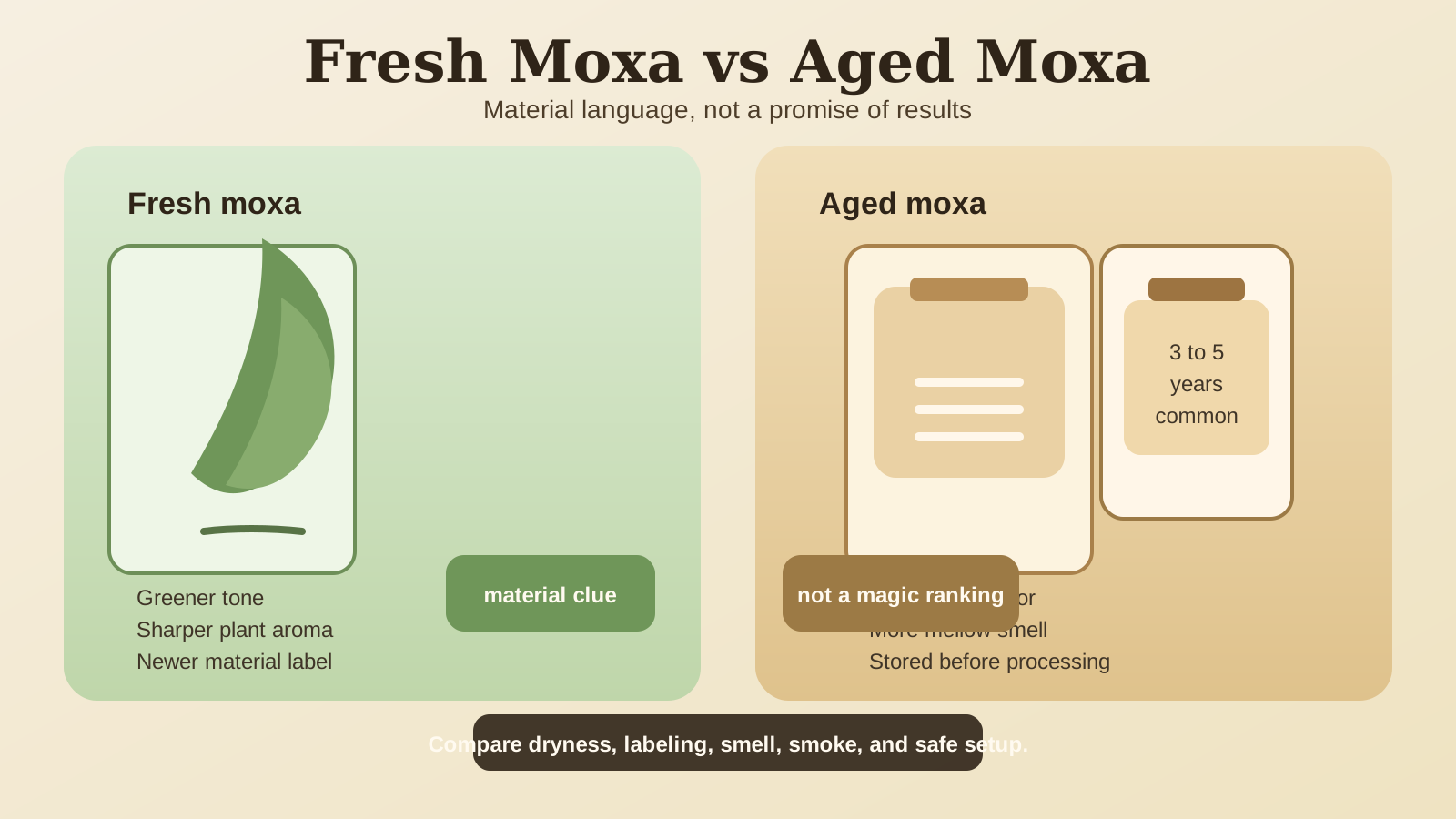
In moxa product language, fresh moxa usually means mugwort material that was processed sooner and still keeps more of its original plant aroma. Aged moxa usually means the mugwort was stored long enough for sellers or practitioners to describe it as more settled before it became moxa wool, a stick, or another format.
Official Chinese medicine explainers commonly describe that difference in practical terms:
- fresh material is often described as greener or more pungent,
- aged material is often described as yellower-tan or less sharp in smell,
- age labels are usually linked to storage time rather than to a promised wellness outcome.
That is why you will often see labels such as three-year moxa or five-year moxa. They are trying to tell you something about the material history. They are not, by themselves, proof that one product will be better for every reader.
If you have not already read it, what is aged moxa gives the background for why age labels show up so often in product listings.
A beginner comparison at a glance
The cleanest way to compare the two is to focus on tendencies instead of absolutes:
| Question | Fresh moxa | Aged moxa |
|---|---|---|
| Material age | More recently processed mugwort material | Mugwort material stored before processing |
| Typical seller description | Greener, stronger, sharper aroma | More mellow, settled, less piercing aroma |
| Color often described | More green mixed with yellow | More yellow-tan |
| Main beginner risk | Assuming strong smell means better quality | Assuming age label alone proves premium quality |
| What still matters most | Dry storage, honest labeling, safe use setup | Dry storage, honest labeling, safe use setup |
The key phrase is often described. Real products still vary because rolling density, wrapper quality, moisture exposure, smoke behavior, and storage conditions can differ from one seller to another.
Why the smell and color may differ
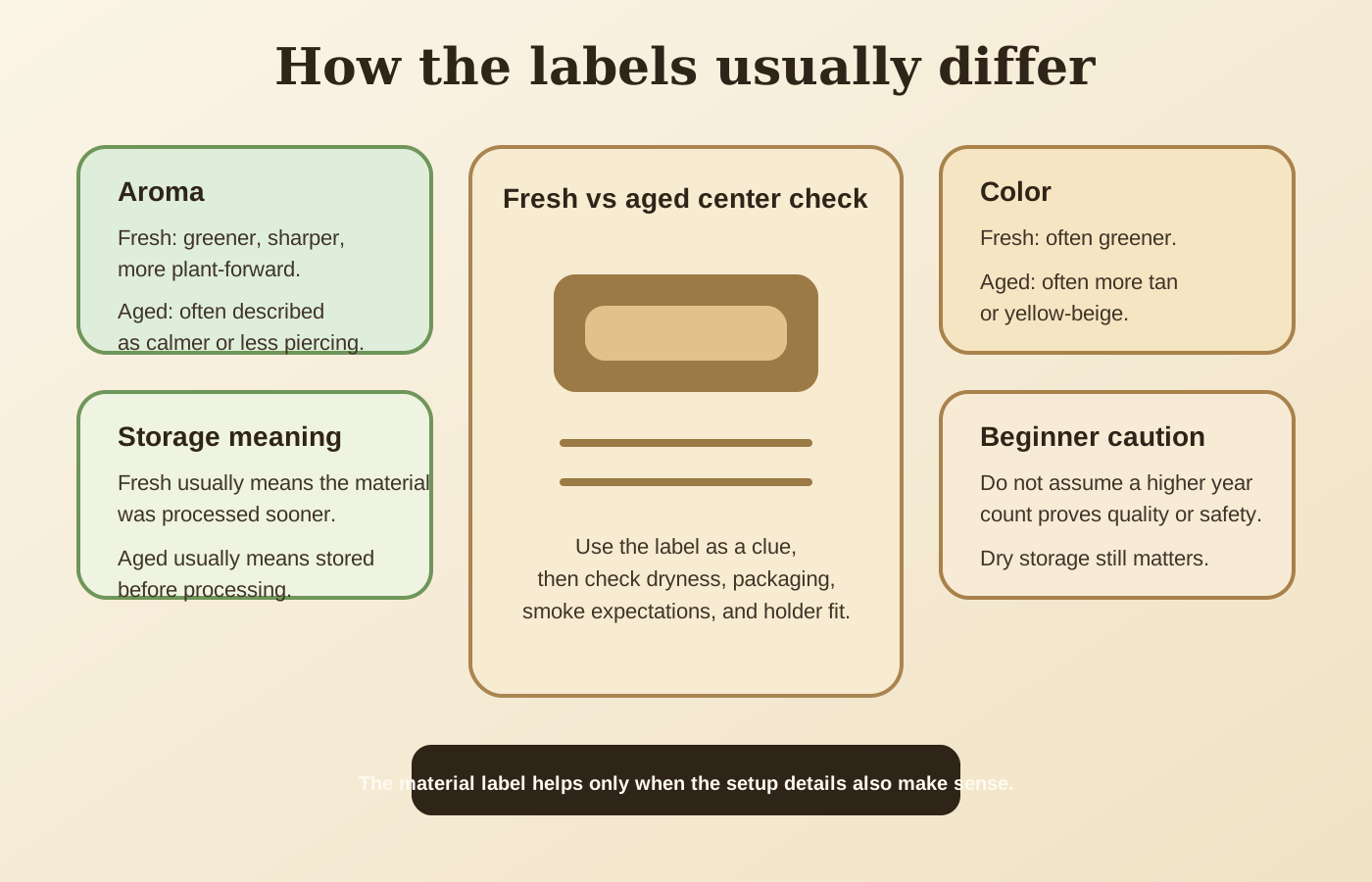
Fresh and aged moxa are usually separated by how the material is said to change over time. Public hospital and official TCM sources often explain that newer mugwort retains a stronger, sharper smell, while stored material is described as calmer because some of the stronger volatile aroma has faded during storage.
That background helps explain common buying descriptions:
- Fresh moxa may be sold as brighter-smelling, greener-looking, or more pungent.
- Aged moxa may be sold as softer-smelling, yellower, or more mature.
Those descriptions can be useful, but beginners should not turn them into a ranking system. A sharper smell does not automatically mean poor quality, and a mellow smell does not automatically prove the product was stored well. Damp storage, mold, bad packaging, or exaggerated marketing can still ruin either type.
Does aged moxa always smoke less or feel gentler?
Not always. Many sellers describe aged moxa as milder, but smoke and heat are still shaped by more than one variable:
- how tightly the stick is rolled,
- how dry the material stayed in storage,
- whether the product is loose wool, a cone, or a stick,
- room airflow,
- how long the product burns before it is extinguished.
That means an “aged” product can still feel smoky in a small room, and a “fresh” product can still be manageable if the format, session length, and ventilation are realistic.
This is where beginners should connect material choice to the rest of the setup. Articles such as how to reduce moxa smoke, do moxa sticks smell, and moxa stick storage matter more than any one label.
Which one is easier for beginners?
There is no universal answer, but there is a useful rule: the easier product is the one you can store, ventilate, and extinguish responsibly.
An aged product may suit beginners who want:
- less aggressive aroma,
- more traditional age labeling,
- a buying experience that feels less sharp or harsh.
A fresh product may still make sense when:
- the seller is transparent about what the label means,
- the material is dry and clean-smelling,
- the buyer wants to compare smaller quantities before paying for premium age claims,
- the room setup already accounts for smoke and odor.
The wrong beginner move is to assume “five-year” automatically means better than “one-year” or “fresh.” Quality is broader than the number.
What age labels do not tell you
An age label may tell you something about storage time, but it does not answer several practical questions that matter more during actual home use:
- Was the material kept dry?
- Is the packaging clear and believable?
- Does the product fit your holder and extinguisher?
- Is the room suited to smoke and odor?
- Are the seller’s claims realistic?
If those questions are unanswered, the age label is doing too much work.
That is why buyers should be cautious with listings that use long age claims as if they settle every other question. A very old-sounding label with vague packaging can still be less useful than a modest, clearly described product that explains size, storage, and handling.
A better way to shop this comparison
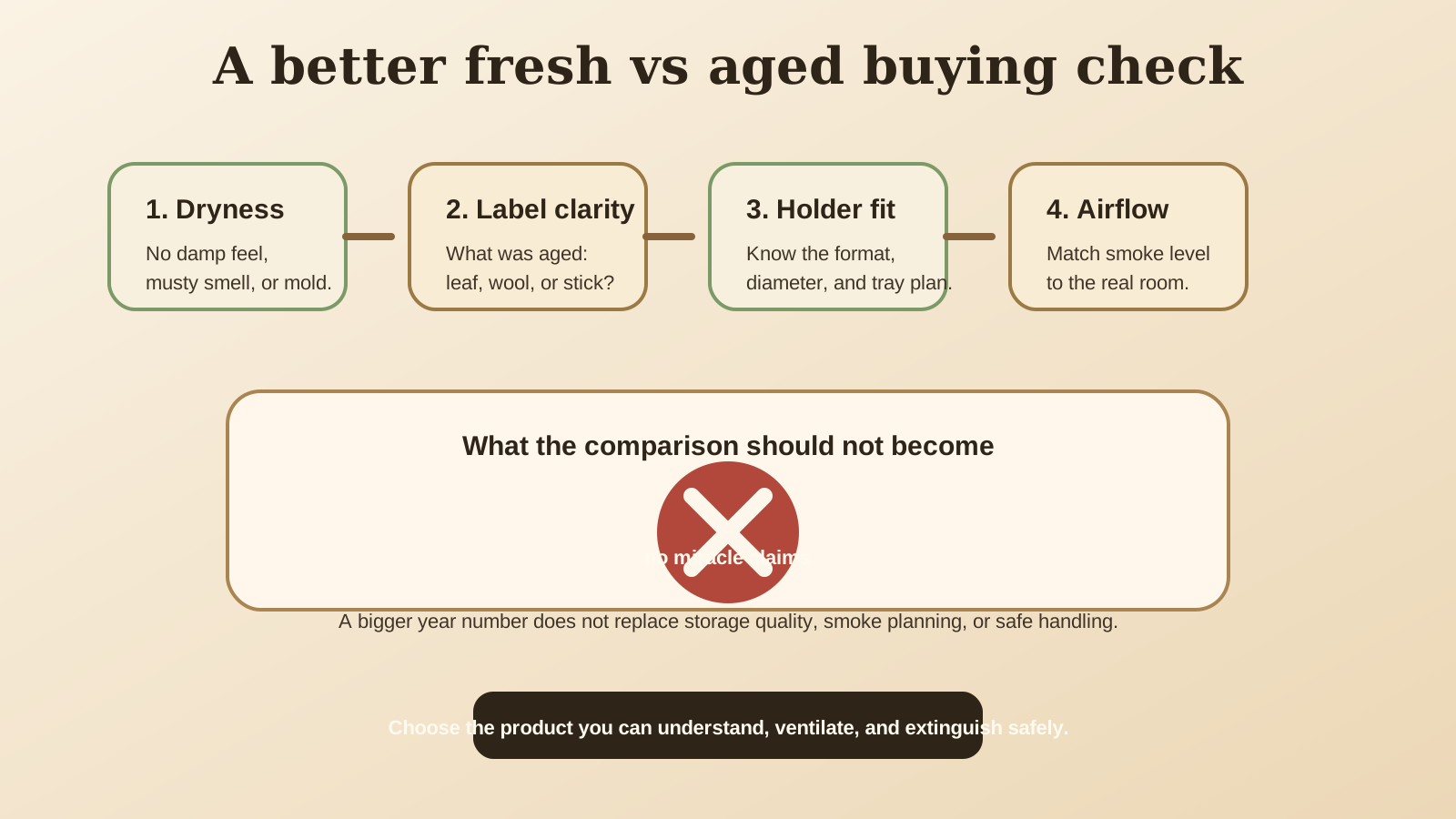
Instead of asking “Which one is best?” ask a more practical sequence:
- Is the product dry and free of musty or chemical odor?
- Does the seller explain whether the age label refers to the leaf material, the moxa wool, or the finished product?
- Do I understand the size, format, and likely smoke level?
- Do I have ventilation, a tray, and a reliable way to extinguish it fully?
- Am I comparing material traits rather than health promises?
That sequence keeps the topic grounded in product reality. It also helps you avoid listings that blur material language and medical language in the same sales pitch.
Safety and storage still apply to both
Fresh moxa and aged moxa are still part of the same larger picture: a heat-and-smoke product category used in a traditional practice. Regardless of label, both need:
- dry storage away from moisture,
- distance from fabric and paper,
- ventilation that matches the room,
- careful ash handling,
- full extinguishing before storage.
If smoke or odor causes coughing, headache, eye irritation, nausea, or breathing discomfort, stop and move to fresher air. People with smoke sensitivity, respiratory concerns, pregnancy questions, or reduced ability to sense heat should ask a qualified healthcare professional before trying home moxa.
That is the most useful beginner mindset: product labels can help you compare material traits, but they do not remove normal safety boundaries.
The short version to remember
If you only want one takeaway, use this:
Fresh moxa vs aged moxa is mainly a comparison of material age and handling style, not a promise that one category is automatically better for everyone.
If you want the next step, continue with how to choose good moxa sticks, what is a moxa stick, and moxibustion safety basics.
Sources and further reading
- National Administration of Traditional Chinese Medicine: Mugwort industry background article
- Beijing Hospital of Traditional Chinese Medicine: Dragon Boat Festival moxa explainer
- NCCIH: Traditional Chinese Medicine
- PubMed: Safety of moxibustion: a systematic review of case reports
Common questions
Is aged moxa always better than fresh moxa?
No. Aged moxa is often described as milder in smell and handling, but quality still depends on storage, processing, packaging, and whether the product fits your setup.
What does fresh moxa usually smell like?
Fresh moxa is commonly described as greener, sharper, or more pungent because it keeps more of the plant's stronger aroma.
Should beginners avoid fresh moxa completely?
Not necessarily. Beginners should be more concerned with realistic smoke expectations, dry storage, and safe handling than with treating one label as universally right or wrong.