Quick answer
Usually, a moxa roll and a moxa stick are two names for a rolled moxa product. The terms are not perfectly standardized, though: a seller may use “roll” for a charcoal-style or tightly compressed format and “stick” for a paper-wrapped traditional one. Check the material, dimensions, and holder fit instead of relying on the name alone.
Key takeaways
- In everyday product language, moxa roll and moxa stick often describe the same basic rolled format.
- The name alone does not reveal the material, smoke profile, diameter, or intended holder; those details are more useful for comparing products.
- A beginner should choose a format that can be ventilated, monitored for ash, and fully extinguished, not one marketed as stronger.
Usually, a moxa roll and a moxa stick mean the same basic thing: prepared moxa shaped into a cylinder that can be held or placed in a compatible tool. The useful catch is that the labels are not standardized. One shop may call a paper-wrapped traditional product a stick, while another uses roll for the same shape—or for a darker charcoal-style version. Before buying, compare the material, size, and safe-use setup rather than assuming the name settles it.
The plain-English difference
In ordinary English product language, roll emphasizes the shape: moxa material has been rolled into a cylinder. Stick emphasizes the finished object someone can hold. That is why the two phrases overlap so much.
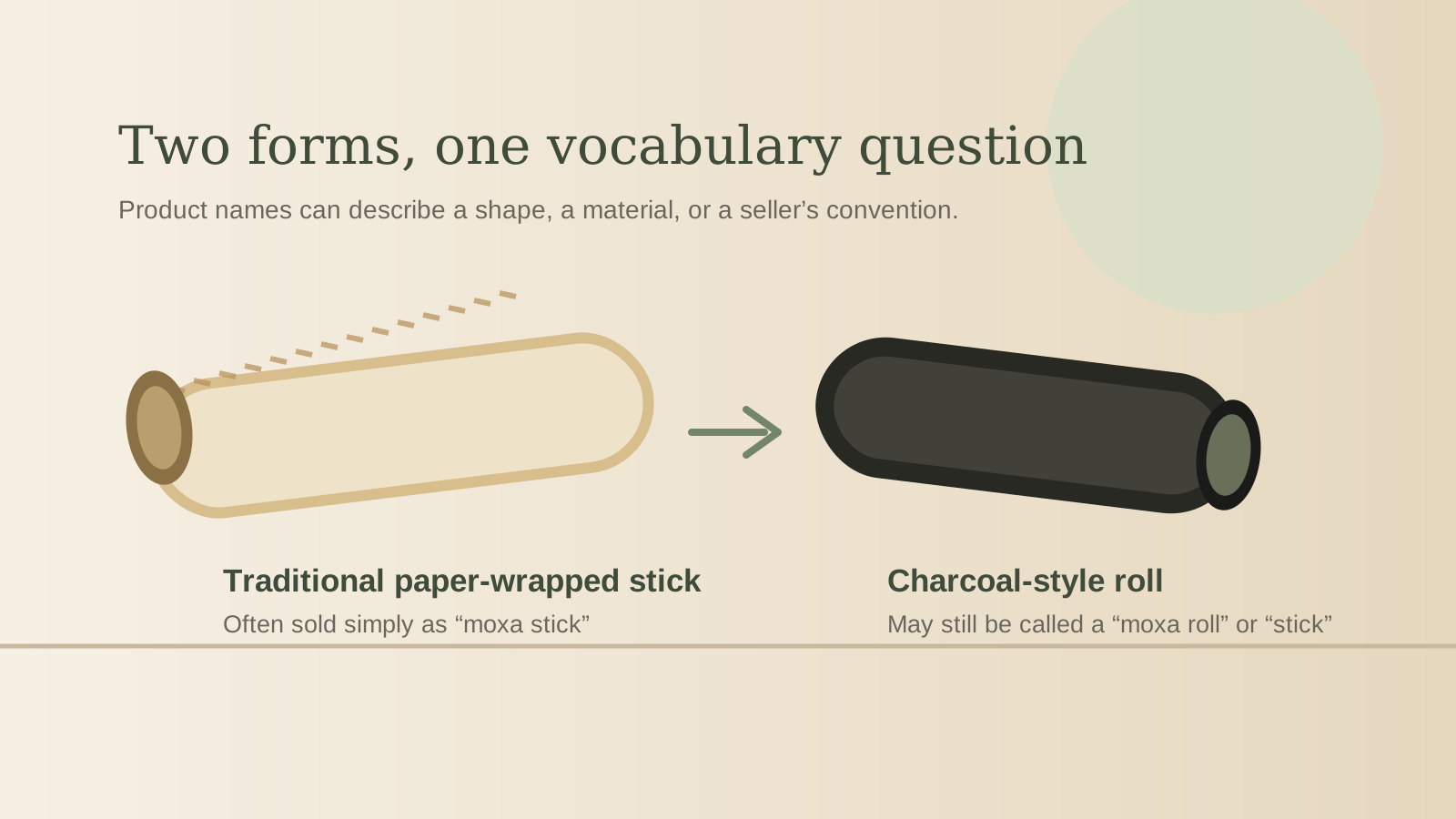
Neither term, on its own, tells you exactly what is inside. A traditional stick is often paper-wrapped and filled with prepared mugwort-based moxa. A charcoal-style roll may have a darker, more compressed core and can be marketed as lower-smoke. Both may be listed as a “moxa stick,” a “moxa roll,” or both.
This is a terminology question, not proof that one format is more effective. The National Administration of Traditional Chinese Medicine uses moxibustion terminology in a broad cultural and clinical context; retail naming is much looser. For the material vocabulary behind the label, start with what is a moxa stick and what is moxa.
Why product listings use both names
Sellers write for different audiences. “Moxa stick” is familiar to a first-time shopper who wants a ready-made roll. “Moxa roll” can sound more descriptive when a product is sold in several lengths, diameters, or materials. Some listings also use roll to distinguish a charcoal-style product from a fluffy loose material such as moxa wool.
That wording is helpful only up to a point. It can hide meaningful differences:
- Traditional paper-wrapped rolls commonly show a pale wrapper and fibrous moxa at the end.
- Charcoal-style rolls are often darker and more compact-looking.
- Short rolls may suit a particular holder or moxa box, while longer rolls may not.
- Loose moxa wool is related processed material, but it is not automatically a finished stick or roll.
So, a listing titled “premium moxa roll” is not enough information for a sound comparison. Look at the photographs, the dimensions, the material description, and the manufacturer’s instructions. If the item is actually loose fiber, read moxa wool vs moxa stick instead of forcing it into a stick-versus-roll choice.
What to compare instead of the name
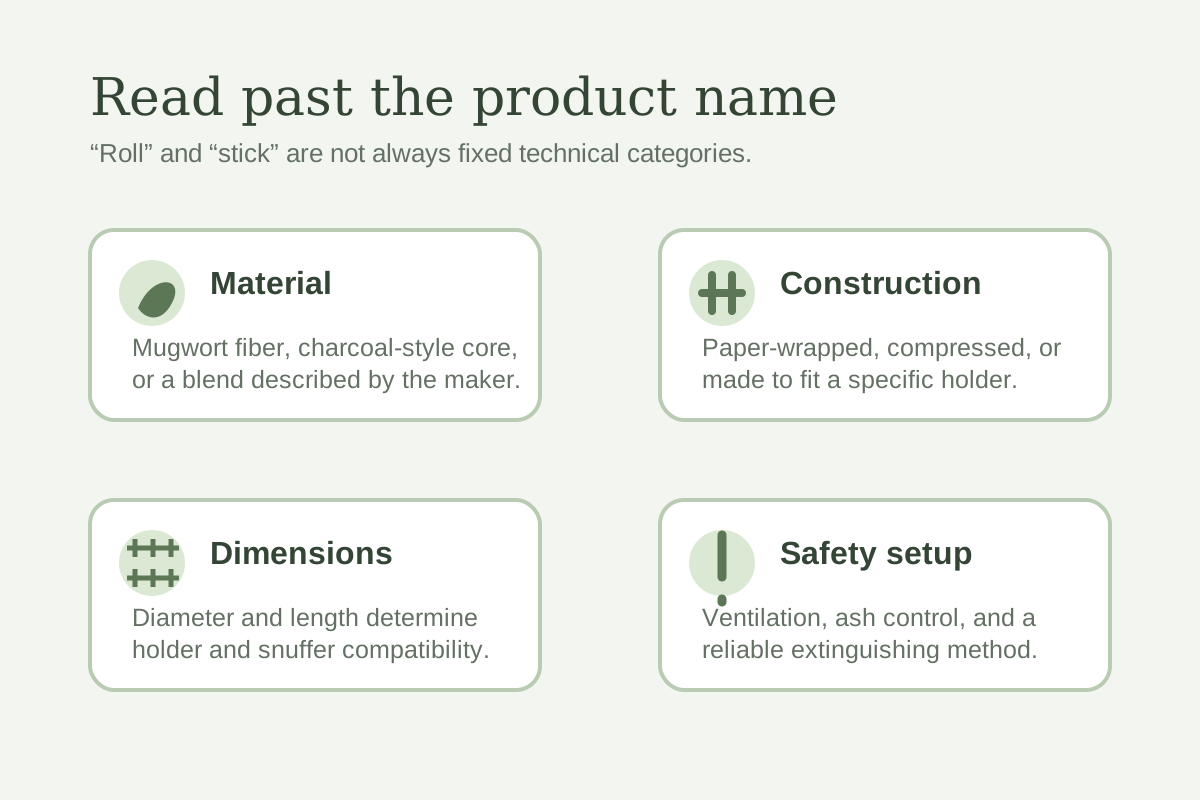
The best buying questions are practical. First, ask what construction you are looking at. Paper-wrapped traditional moxa and charcoal-style moxa may both be rolls, but they can behave differently in a room. A “smokeless” description should be read as a relative product claim, not a promise of no particles, odor, ventilation needs, or fire risk.
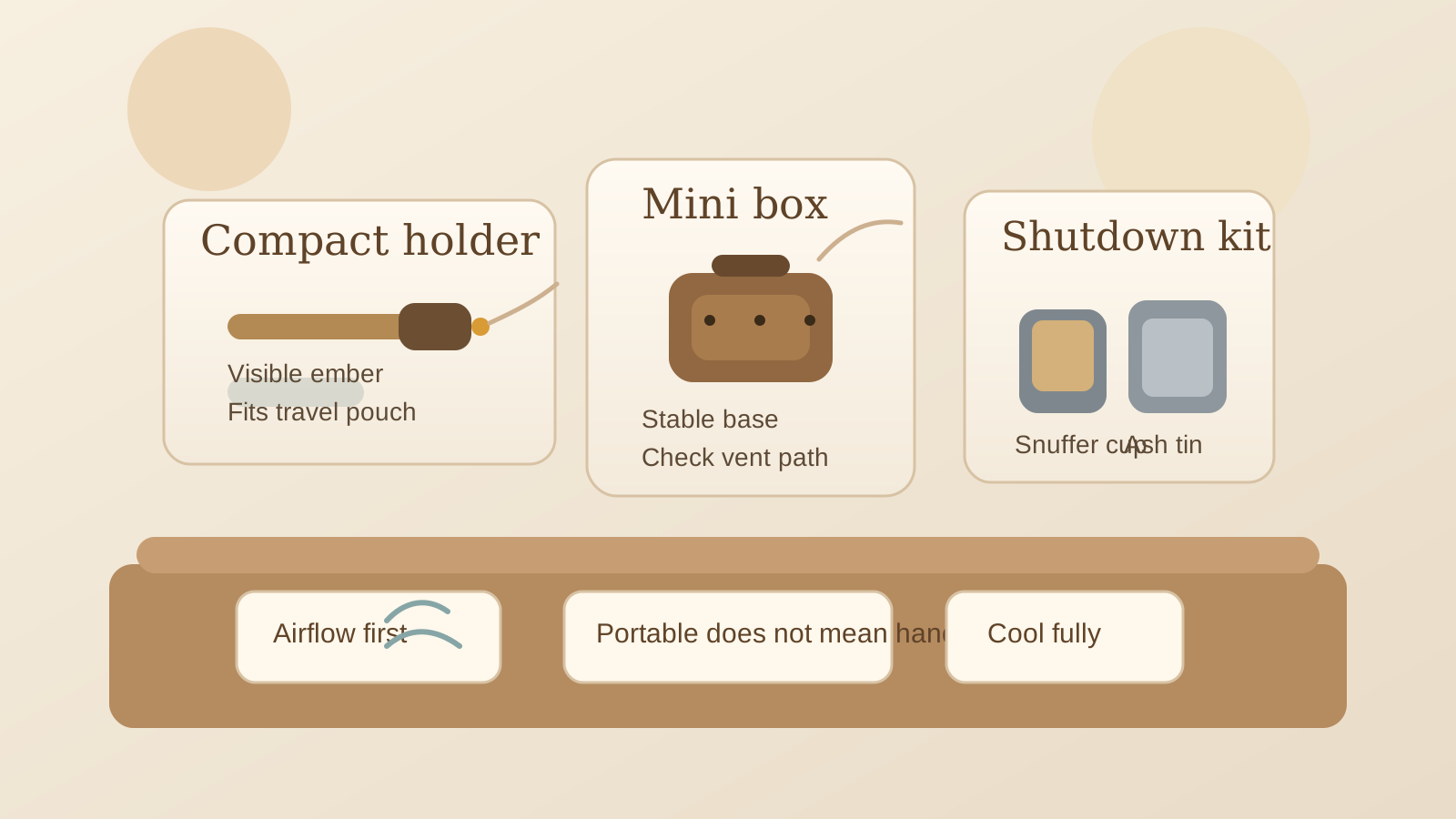
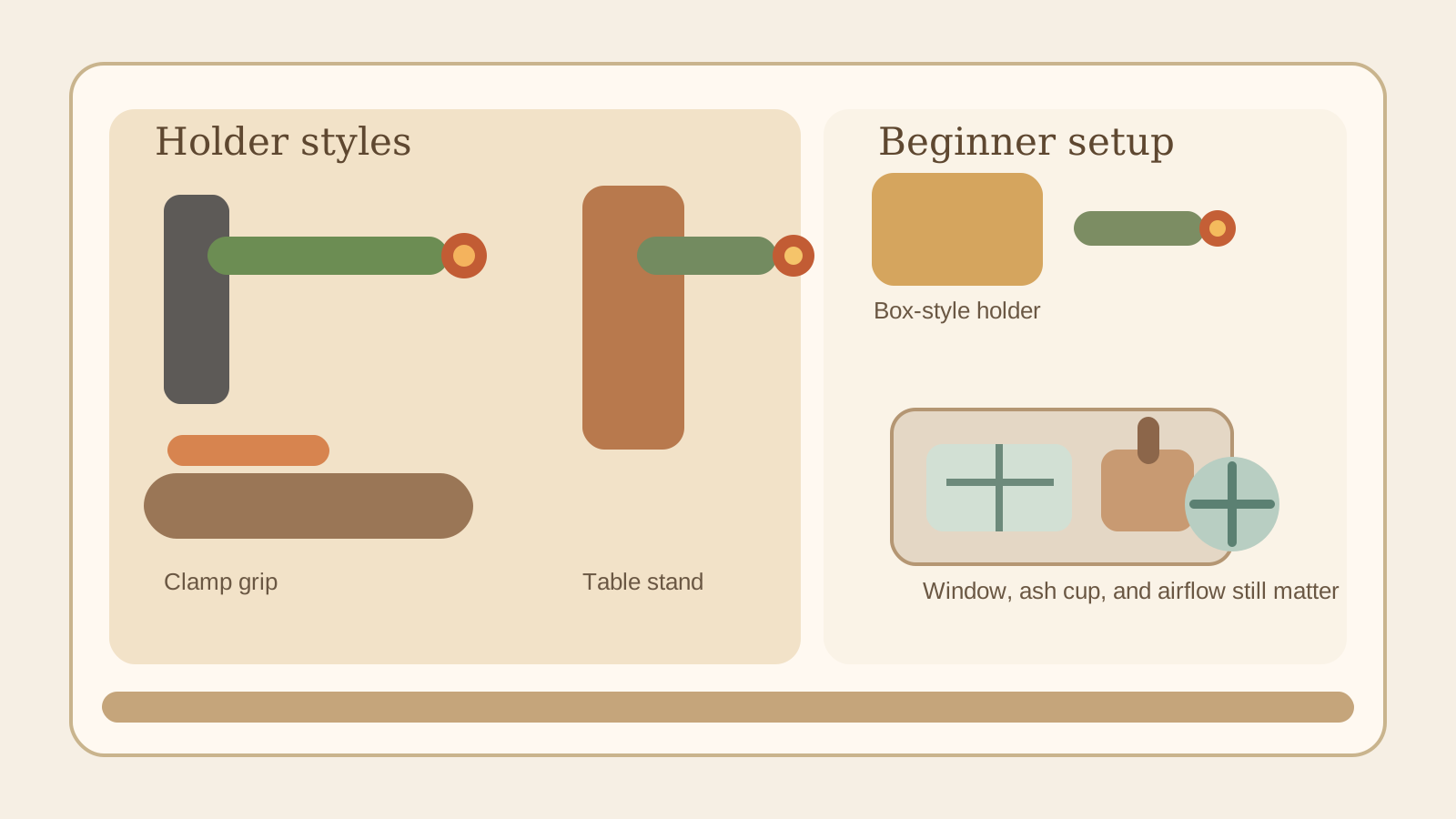
Next, check the diameter and length. These numbers affect whether the roll fits a holder, box, or snuffer cup. Do not force a too-wide roll into a holder or balance it on a makeshift surface. A compatible tool should keep the active end stable and leave room for ash to fall into a nonflammable tray.
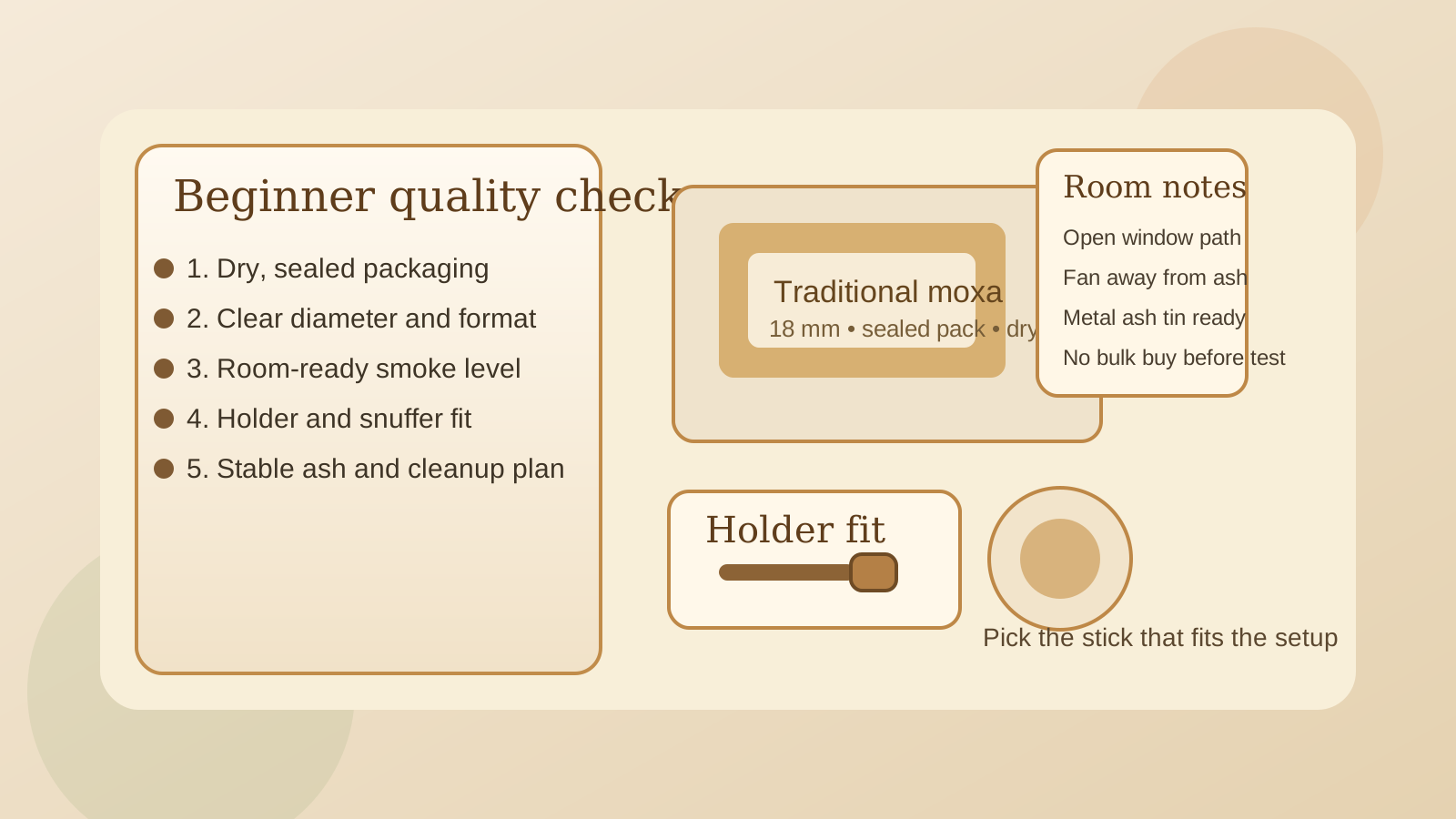
Then consider storage. A dry, intact package and a clean plant-like smell are more informative than grand language about grade or power. Mustiness, visible moisture, or crumbling can be a reason to pause rather than light the product. How to store moxa sticks at home explains the simple dry, odor-separated setup that supports a safer comparison.
Traditional and charcoal-style rolls are not interchangeable labels
It is tempting to reduce the choice to “traditional equals stick” and “charcoal equals roll.” Real listings do not follow that tidy rule. A charcoal-style product may be sold as a smokeless moxa stick, and a traditional paper-wrapped product may be called a moxa roll. Treat the visible construction as the clearer signal.
Traditional rolls usually make the plant-material identity more obvious. They may produce more visible smoke and a stronger herbal odor, depending on the product and room. Charcoal-style products are often selected by shoppers trying to reduce visible smoke, but indoor burning still calls for ventilation, ash control, and a way to stop immediately.
If that distinction is your real shopping question, use smokeless moxa vs traditional moxa for the room-fit comparison. It covers visible smoke, odor, and tool compatibility rather than treating “smokeless” as a safety exemption.
A beginner decision rule
Choose the listing that makes safe handling easiest to understand. A good product page should state the roll’s size, explain what it is made of in ordinary language, and show whether it needs a specific holder or box. It should not rely mainly on promises that the product is stronger, cures more, or needs no precautions.
Before purchasing either name, make sure you can answer four questions:
- Will this roll fit a stable holder or tray I already have?
- Can I set up real ventilation before lighting it?
- Do I have a nonflammable place for ash and a reliable snuffer?
- Can I stop and extinguish it fully if the heat, smoke, or room setup is not working?
If any answer is no, buying a different label will not solve the underlying setup problem. Review moxa stick fire safety and how to extinguish a moxa stick before trying a new rolled format.
When the terminology matters most
The wording matters when you are matching a product to a tool. Search by the dimensions your holder accepts, not just “moxa roll” or “moxa stick.” It also matters when comparing traditional and charcoal-style construction, because that can change how you plan ventilation and cleanup.
For most other cases, the distinction is minor. A moxa roll can be a moxa stick, and a moxa stick can be a moxa roll. The better question is: “What is this particular product made of, how large is it, and can I use it in a controlled setup?” That keeps the comparison grounded in observable details instead of sales vocabulary.
Sources and further reading
- National Administration of Traditional Chinese Medicine: Acupuncture and moxibustion heritage overview — source tier A, terminology and cultural context.
- NCCIH: Traditional Chinese Medicine: What You Need To Know — background on Traditional Chinese Medicine and moxibustion.
- U.S. Environmental Protection Agency: Indoor Air Quality — general context for indoor combustion particles and ventilation.
Common questions
Is a moxa roll the same as a moxa stick?
Often yes. Both usually refer to a cylindrical roll of prepared moxa. Product naming varies, so compare the material and dimensions before assuming two listings are identical.
Are charcoal moxa rolls still moxa sticks?
Many sellers use both terms for charcoal-style products. They may look and burn differently from paper-wrapped traditional sticks, so read the listing for construction and ventilation guidance.
Can one holder fit every moxa roll?
No. Diameter and length vary. Check the holder’s stated range and keep a stable, nonflammable ash-catching setup regardless of the product name.