Quick answer
A moxa stick is a rolled cylinder of prepared moxa, usually made from processed mugwort, that is used as a controlled heat source in traditional moxibustion. For beginners, the most useful way to understand it is as a practical product format: easier to hold than loose moxa, different from cones, and still dependent on ventilation, ash control, and careful distance from skin.
Key takeaways
- A moxa stick is usually a paper-wrapped roll of processed mugwort material used as a heat source in moxibustion.
- It is one moxa format among others such as cones, loose moxa wool, boxes, and smokeless charcoal-style products.
- Even a simple unlit stick should be understood as part of a burn-and-ash setup, not as a casual wellness accessory.
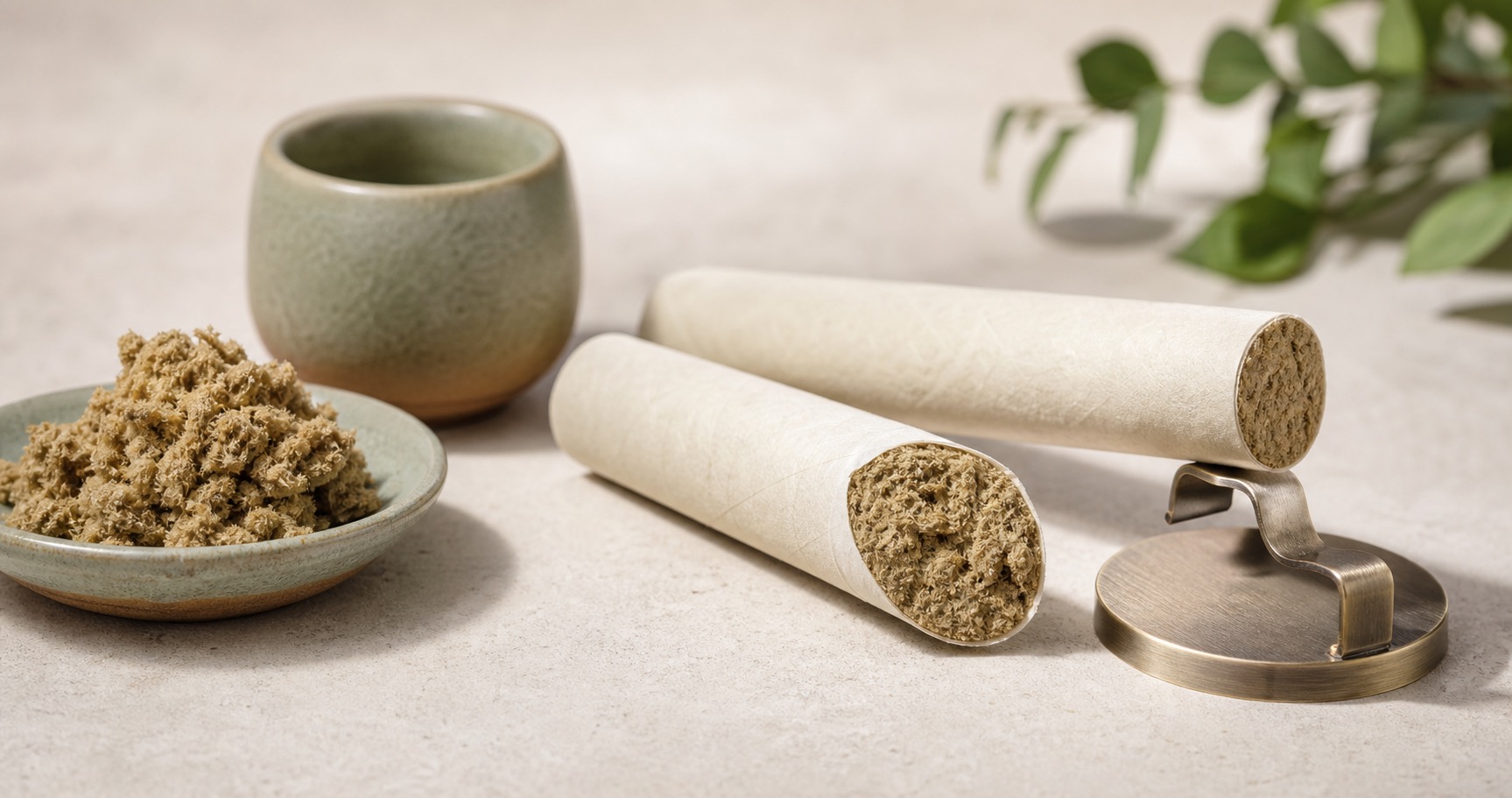
A moxa stick is a roll of prepared moxa that is burned as a heat source in moxibustion. If that sounds abstract, the practical version is simpler: it usually looks like a short paper-wrapped cylinder, somewhat like a cigar, and it is meant to be held or mounted so warmth can be directed toward an area from a safe distance.
For beginners, that product-level definition matters more than dramatic marketing language. A moxa stick is not a cure, a diagnosis, or a magic ritual object. It is a traditional warming tool made from plant-based material, and it should be approached with the same seriousness you would give any item that creates heat, smoke, odor, ash, and embers.
What a moxa stick is made from
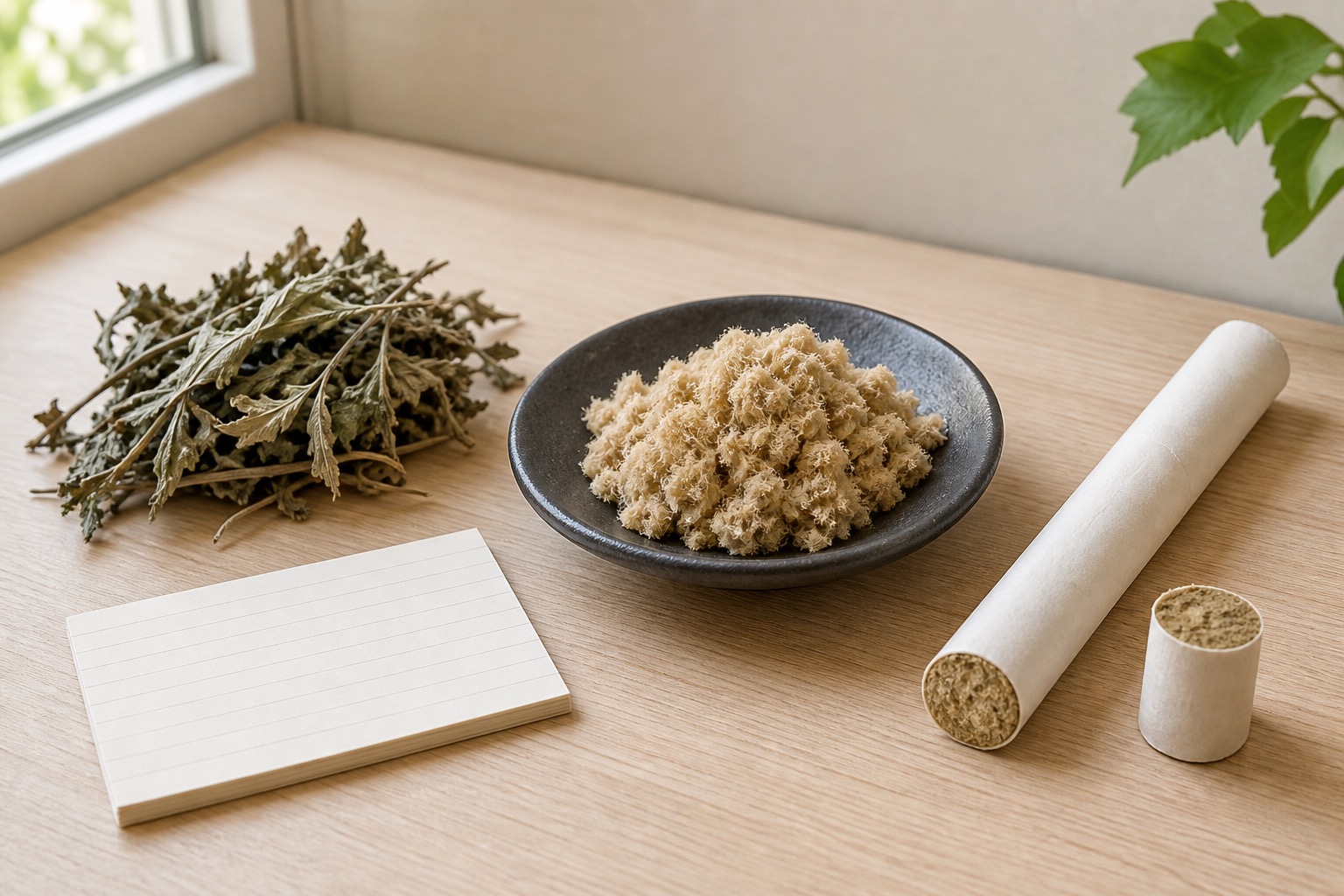
Most moxa sticks are made from prepared moxa material that comes from dried mugwort leaves. The raw plant is processed into a softer fiber often called moxa wool, and that fiber is then rolled or packed into a finished stick.
That is why product pages may use several related terms at once: mugwort, ai ye, moxa wool, moxa roll, and moxa stick. They are not all identical, but they belong to the same material chain. Mugwort is the plant source. Moxa is the prepared burnable material. A moxa stick is one finished format made from that material.
For shoppers, this distinction helps decode labels. A stick is not a completely different substance from loose moxa or a cone. It is a different way of shaping the same general material so it can be handled more easily.
Why the stick format exists
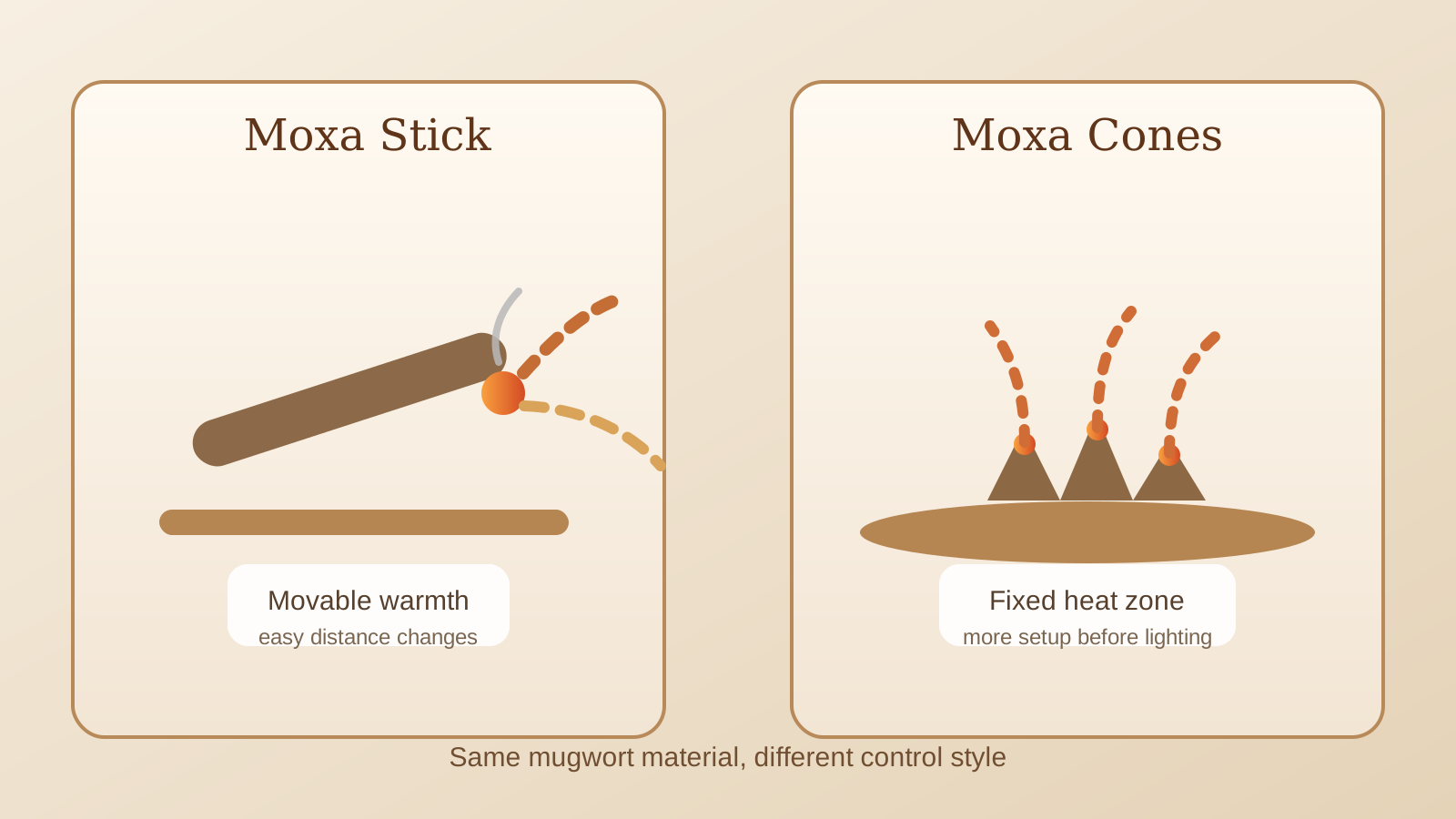
Loose moxa can be hard for a beginner to picture, and small cones can feel more advanced because they concentrate heat in a compact form. A stick solves a practical problem: it gathers the material into one roll that can be held, moved, paused, and extinguished more predictably.
That does not make it harmless. It just makes the format easier to understand.
Beginners often prefer sticks because they can:
- see where the burning end is,
- adjust warmth by changing distance,
- use simple holders or snuffers,
- stop the session more easily than with loose material.
In other words, the stick format is about handling and control, not about making safety concerns disappear.
How a moxa stick differs from other moxa products
A moxa stick is only one format in the wider moxa category.
- Moxa sticks are rolled cylinders designed for handheld or holder-assisted use.
- Moxa cones are smaller shaped portions that can focus warmth more narrowly.
- Loose moxa wool is unshaped prepared fiber that may be used in more specialized ways.
- Smokeless moxa sticks are often charcoal-style products that aim to reduce visible smoke, though they are not odor-free or risk-free.
- Moxa boxes or holders are accessories or tools that contain burning moxa and change how warmth is delivered.
This matters because beginners sometimes assume that “moxa” and “moxa stick” mean the same thing. They do not. A moxa stick is a subset of the broader moxa world.
What a beginner should notice when looking at one
A useful beginner habit is to look at a moxa stick as an object before thinking about use. Notice the wrapper, the density of the material, the cut end, the smell of the unlit product, and whether the stick seems dry and intact.
Questions worth asking include:
- Does the wrapper look even and secure?
- Does the material inside look dry rather than damp or moldy?
- Does the product smell herbal and plant-like rather than musty or chemical?
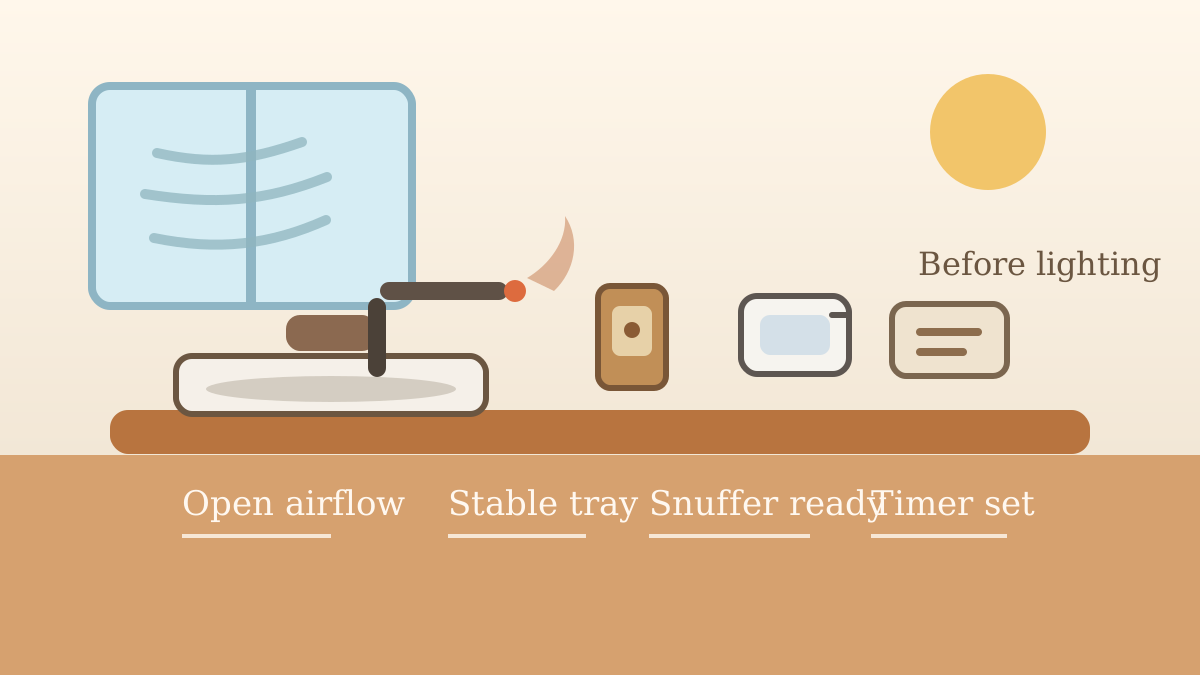
- Is there a clear plan for a holder, ash tray, snuffer, and ventilation before it is ever lit?
These are not glamorous questions, but they are the right questions. A beginner usually learns more from product condition and setup quality than from exaggerated claims on packaging.
What a moxa stick is not
A moxa stick is not the same thing as a diagnosis, a treatment plan, or proof that a home routine is suitable for every person. It is also not automatically “gentle” just because it is made from mugwort.
Once burned, a moxa stick becomes a source of:
- heat near skin,
- visible or invisible smoke,
- odor that can linger indoors,
- falling ash,
- embers that must be fully extinguished.
That is why safety language belongs even in a basic product explainer. The product format is simple, but the real-world use conditions still matter.
Why this definition helps before you buy
People often search “what is a moxa stick” when they are deciding whether to buy one, compare it with cones, or understand what sellers mean by terms like moxa roll, aged moxa, or smokeless moxa. A clear definition keeps that early research grounded.
The best next step is usually not to chase stronger claims. It is to keep building vocabulary:
- read what is moxibustion for the broader practice,
- compare moxa stick vs moxa cone if you are choosing a format,
- learn what is mugwort used for in moxa for the material background,
- review how to use moxa sticks at home only after the basic product terms are clear.
The main takeaway is simple: a moxa stick is a traditional mugwort-based heat tool in a rolled format. Understanding that format first makes every later decision, from buying to storage to safety planning, easier to evaluate.
Sources and further reading
- National Administration of Traditional Chinese Medicine
- Britannica: Moxibustion
- NCCIH: Traditional Chinese Medicine: What You Need To Know
- PubMed: Safety of moxibustion: a systematic review of case reports
Common questions
Is a moxa stick the same as moxibustion?
No. A moxa stick is the product or tool. Moxibustion is the broader traditional practice that uses burning moxa to provide warmth.
What is a moxa stick made from?
Most moxa sticks are made from processed moxa, which is commonly prepared from dried mugwort leaves. Different products may vary in density, smoke level, and wrapper style.
Are moxa sticks beginner-friendly?
They are often easier for beginners to understand than loose moxa or small cones because the format is simple to hold and move, but they still require ventilation, ash control, and careful heat management.