Quick answer
Mugwort is used in moxa because its dried leaves can be processed into the soft combustible material known as moxa wool, which is then shaped into sticks, cones, and other formats. For beginners, the key distinction is simple: mugwort is the plant material, moxa is the prepared product, and moxibustion is the warming practice.
Key takeaways
- Mugwort is the traditional plant material behind most moxa wool, moxa sticks, and moxa cones.
- Processing matters: dried leaves are cleaned, sifted, and shaped into different moxa formats for different handling styles.
- A mugwort-based product still creates heat, smoke, and ash, so material tradition does not replace safety checks.
Mugwort is used in moxa because it is the traditional plant material behind the soft fiber that becomes moxa wool, moxa sticks, and moxa cones. For a beginner, this topic is less mysterious than it sounds: dried mugwort leaves are processed into a burnable material that can be shaped into practical warming tools.
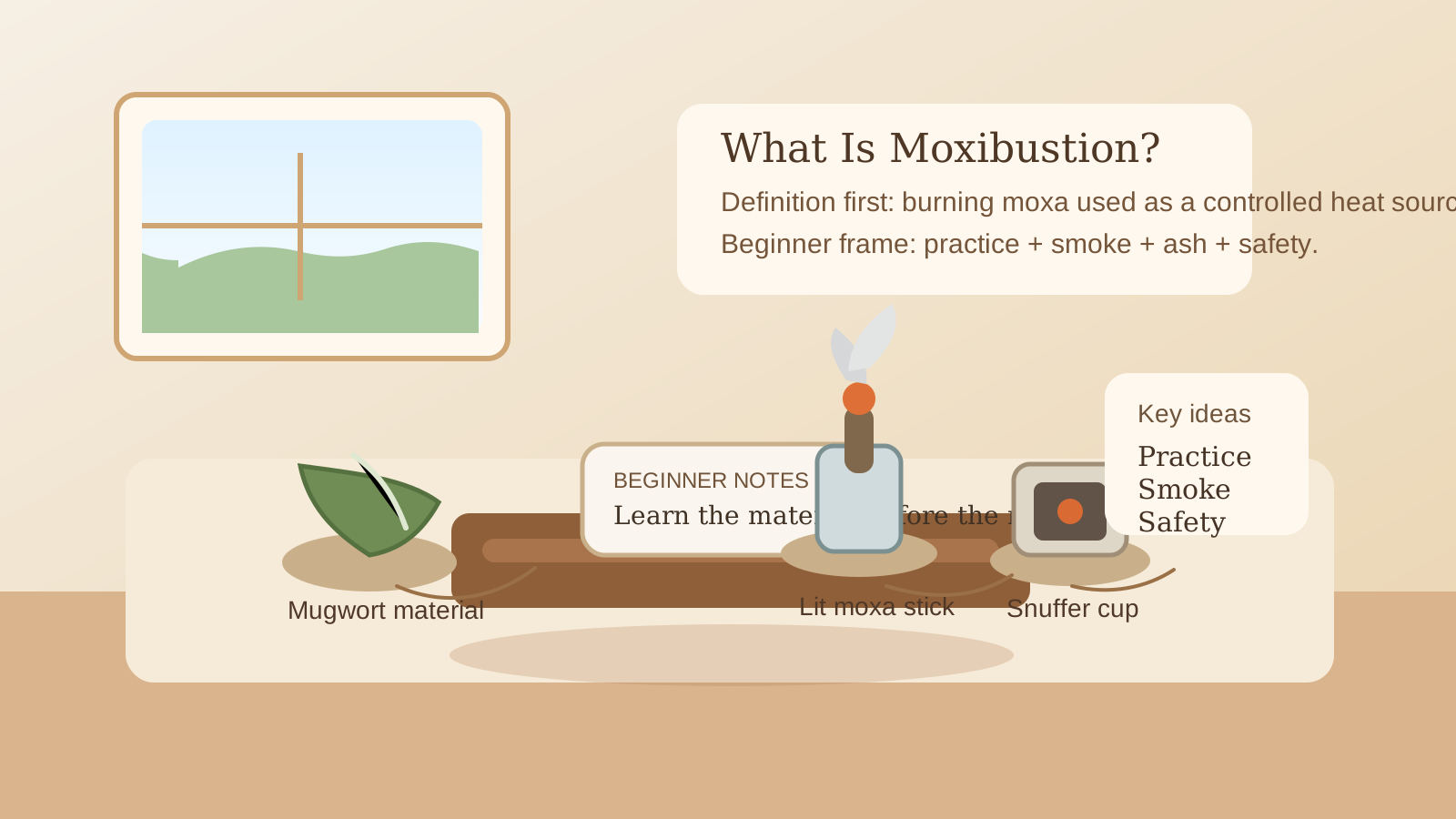
That distinction helps clear up a common confusion. Mugwort is the plant. Moxa is the prepared material or finished product. Moxibustion is the practice of using burning moxa as a warming method. Once those three terms are separated, product labels and beginner guides start to make much more sense.
Why mugwort became the main moxa material
Traditional Chinese medicine sources commonly describe moxa sticks and moxa cones as being made from dried mugwort leaves. Over time, mugwort became the plant most closely associated with moxibustion in both practical use and cultural language.
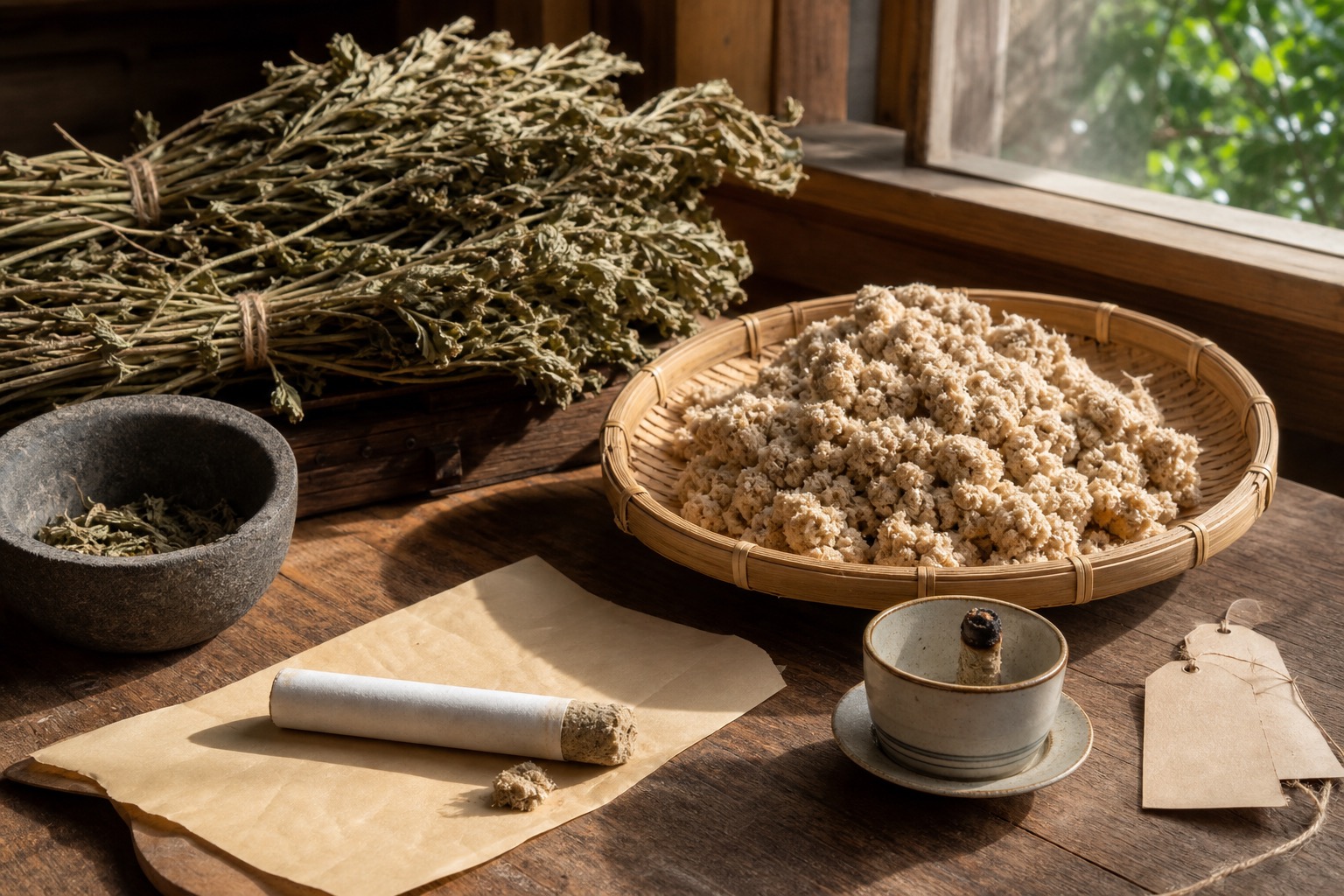
For beginners, the most useful explanation is a material one. Mugwort can be dried, stored, processed, and shaped into forms that people can actually handle: loose wool, compact cones, or cigar-like sticks. That makes it more than a symbolic herb. It becomes a workable fuel for a controlled heat practice.
Mugwort also carries cultural meaning beyond the product itself. In Chinese wellness traditions, it is linked with seasonal household care, herbal knowledge, and the broader history of moxibustion. That cultural background is worth understanding, but it should not be turned into exaggerated health promises.
How mugwort becomes moxa
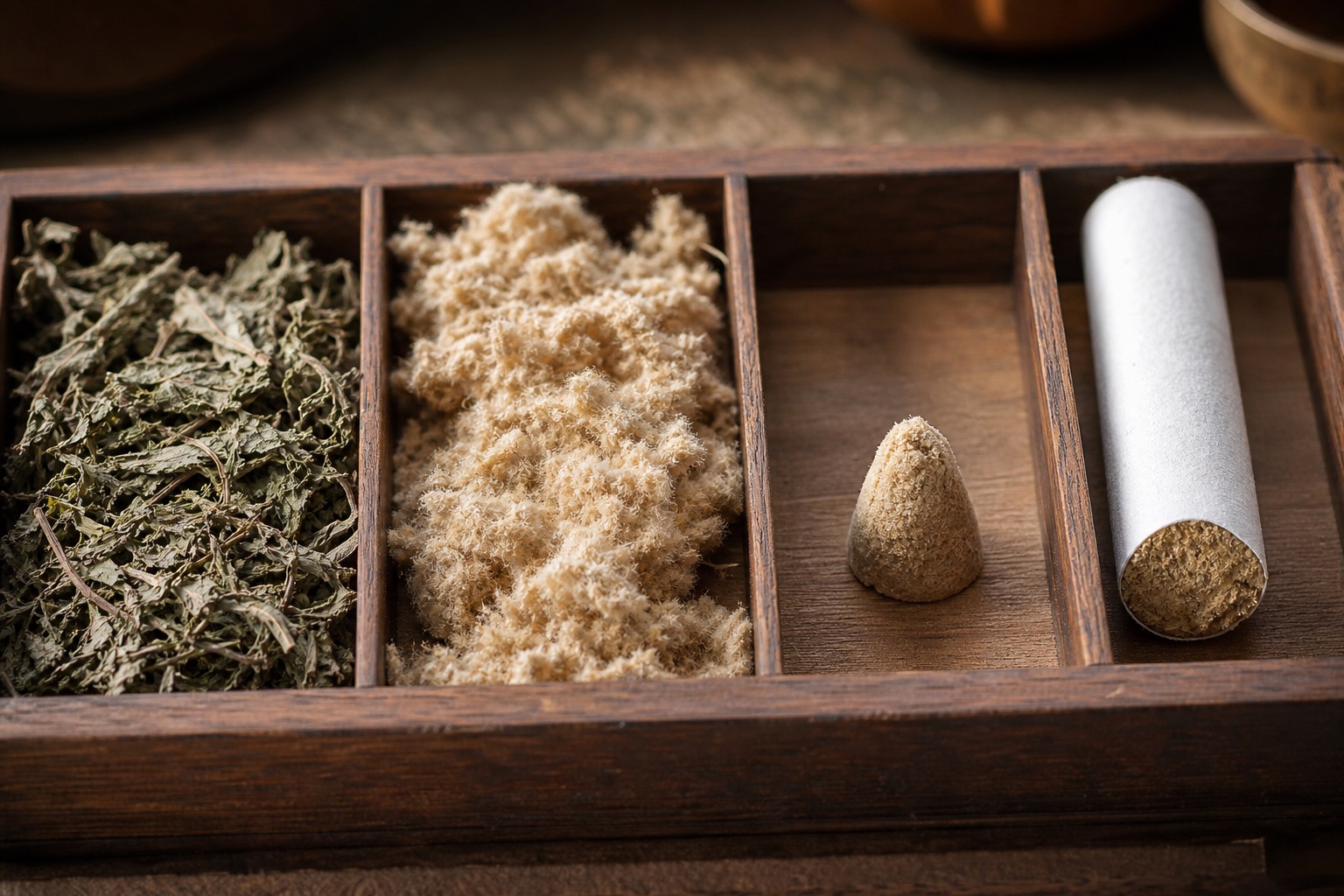
The phrase “moxa wool” sounds technical, but the idea is simple. After mugwort leaves are dried, they can be processed into a softer, finer fiber. That processed material may then be used loose, pressed into cones, or rolled into sticks.
The exact production method varies by maker, but beginners will usually see the same broad chain:
- Mugwort is harvested and dried.
- The dried material is cleaned and broken down.
- The soft fiber is separated from rougher plant matter.
- The processed fiber is shaped into the final format.
That is why a product listing may mention mugwort, moxa wool, aged moxa, cones, rolls, or sticks in the same breath. These are not all separate traditions. They are often different stages or formats of the same material story.
What mugwort contributes to a moxa product
When people ask what mugwort is “used for” in moxa, they often mean two things at once: what role it plays physically and what role it plays traditionally.
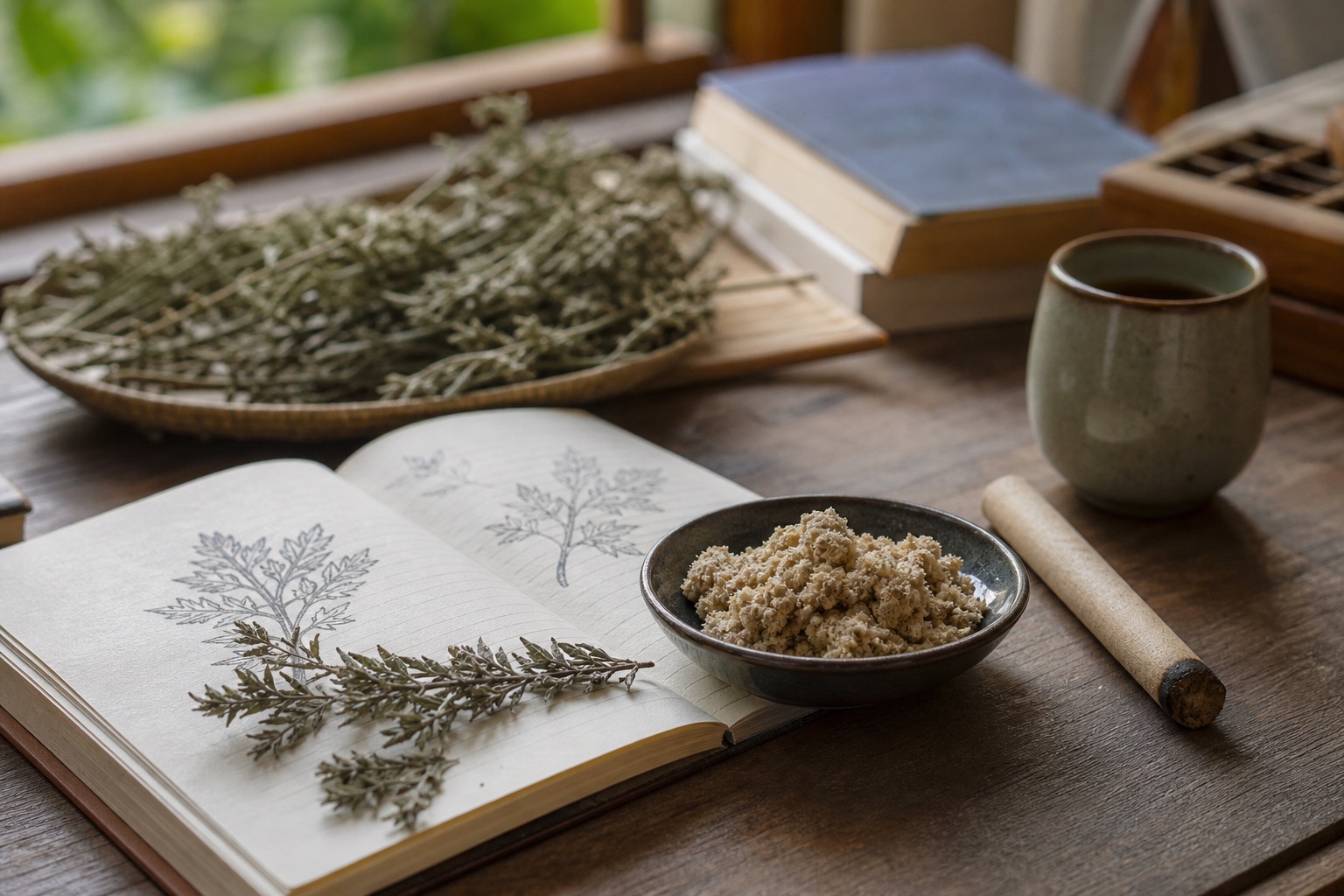
Physically, mugwort is the source material that is prepared for burning. Once processed into moxa wool or rolled into a stick, it becomes the part that gives off heat, odor, smoke, and ash during use.
Traditionally, mugwort is the herb most closely identified with moxibustion. So when a beginner sees words like “moxa,” “ai ye,” or “moxa wool,” the reference is usually back to mugwort-based material rather than to a random herbal blend.
This is also why quality descriptions focus on material traits instead of dramatic wellness claims. Dryness, storage, density, smoke level, odor, and handling matter more than slogans about stronger results.
Common beginner misunderstandings
One common misunderstanding is assuming that every mugwort product is automatically moxa. That is not true. Mugwort can appear in other traditional products too, such as foot soaks or seasonal household uses. In a moxibustion context, though, the conversation is usually about processed mugwort intended for burning.
Another confusion is treating “moxa” and “moxibustion” as the same word. They are related but not identical:
- mugwort is the plant,
- moxa is the processed material or finished product,
- moxibustion is the practice.
Beginners also sometimes assume that a more aged, darker, or more strongly described mugwort product must be better in every way. That is too simple. Different products may differ in odor, smoke, density, ash behavior, and handling, but none of those details remove the need for ventilation or careful use.
Safety notes before buying or burning mugwort-based moxa
Because mugwort is a plant, some readers assume it must be gentle by default. That is not a safe assumption. Once the material is burned, the practical issues are the same ones found in any careful moxa guide: heat, smoke, falling ash, odor, and skin distance.
Before using a mugwort-based moxa product at home, check that it is dry, stored well, and easy to extinguish. Do not use damp or moldy material. If smoke, smell, or heat feels hard to manage, stop and reassess the setup instead of pushing through.
For a practical next step, read what is moxibustion, how to choose good moxa sticks, and moxibustion safety basics. The tradition around mugwort is interesting, but safe handling matters more than romantic language.
Sources and further reading
- National Administration of Traditional Chinese Medicine: Acupuncture and moxibustion of Traditional Chinese Medicine
- National Administration of Traditional Chinese Medicine: Mugwort industry background article
- Britannica: Moxibustion
- PubMed Central: The Safety of Moxibustion
Common questions
Is mugwort the same as moxa?
Not exactly. Mugwort is the plant material, while moxa usually means the processed fiber or finished product made from dried mugwort leaves.
Why is mugwort used instead of another herb?
In traditional practice, mugwort became the standard moxa material because it could be dried, processed into soft fiber, and shaped into practical burning formats such as wool, cones, and sticks.
Does mugwort in moxa mean it is automatically safe?
No. Even a traditional plant-based material can create smoke, heat, odor, and falling ash, so ventilation and burn prevention still matter.