Quick answer
Yes, some adults can learn home moxibustion conservatively, but only when the room, heat level, and shutdown plan are controlled from the start. The safest beginner version is short, supervised, easy to extinguish, and clear about who should ask a clinician before trying it.
Key takeaways
- Home moxibustion is less about point theory and more about controlling heat, smoke, and embers every single time.
- Beginners should build the room setup and extinguishing routine before lighting the stick, not after the session starts.
- Pregnancy, reduced skin sensation, significant breathing problems, broken skin, and medically complicated situations are good reasons to ask a clinician before home use.
If you want the direct answer first, here it is: home moxibustion can be reasonable for some adults, but only when the setup keeps heat mild, smoke controlled, and shutdown simple. It is not a casual bedtime ritual, and it is not the right do-it-yourself project for everyone. If you cannot ventilate the room well, cannot monitor the skin closely, or have pregnancy, reduced sensation, broken skin, a significant breathing condition, or another medical concern, ask a qualified clinician before trying it at home.
That answer may sound cautious, but that is exactly the point. Moxibustion uses a burning material on purpose. The practical questions are therefore not abstract: where will the smoke go, how mild is the heat, what happens to the ash, and how fast can you stop if something feels wrong?
What safe home moxibustion actually means
For this search intent, “safe at home” should not mean “safe if you are brave enough” or “safe if a product page says premium.” It means the routine stays controlled from beginning to end. The stick stays supervised. The warmth stays comfortable rather than sharp. The room can clear. The used stick has an obvious place to go. Nothing in the setup depends on improvising after the ember is already glowing.
That framing matters because beginners often search for point locations or session length before they have built the safety system around them. The better order is the opposite. First understand what is moxibustion and the basic session flow in how to use moxa sticks at home. Then ask whether your room, tools, and attention level actually support a conservative home session.
The National Center for Complementary and Integrative Health advises people to discuss traditional Chinese medicine approaches with their health care providers and not to use them to replace or delay conventional care. That is a useful baseline for home moxa. Once the session is tied to a medical concern rather than a general educational interest, safety gets more individualized.
Set up the room before you light anything
The U.S. Environmental Protection Agency says indoor air quality improves through source control, ventilation, and filtration. For moxa, that translates into one simple rule: regard the burning stick itself as the source that must be managed from the start. If the room is small, closed, crowded with fabrics, or hard to air out afterward, the space may not be a good fit for traditional burning moxa.
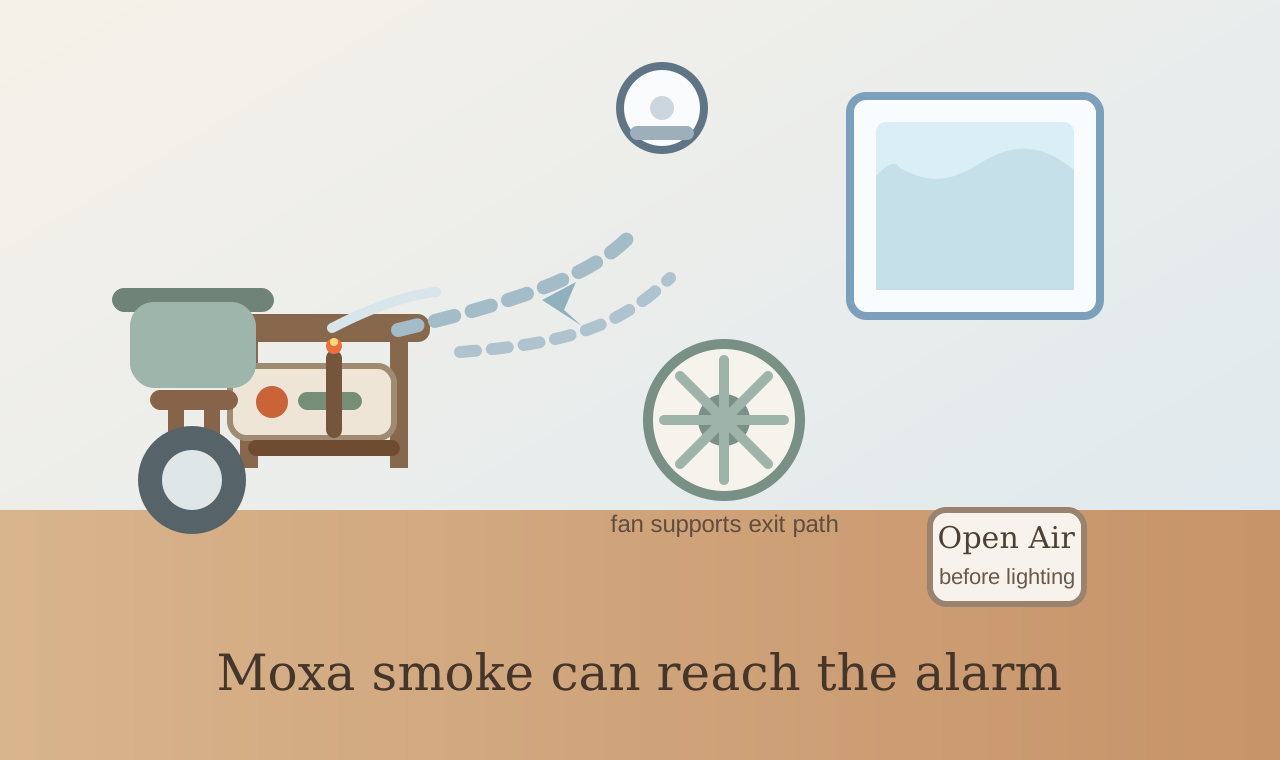
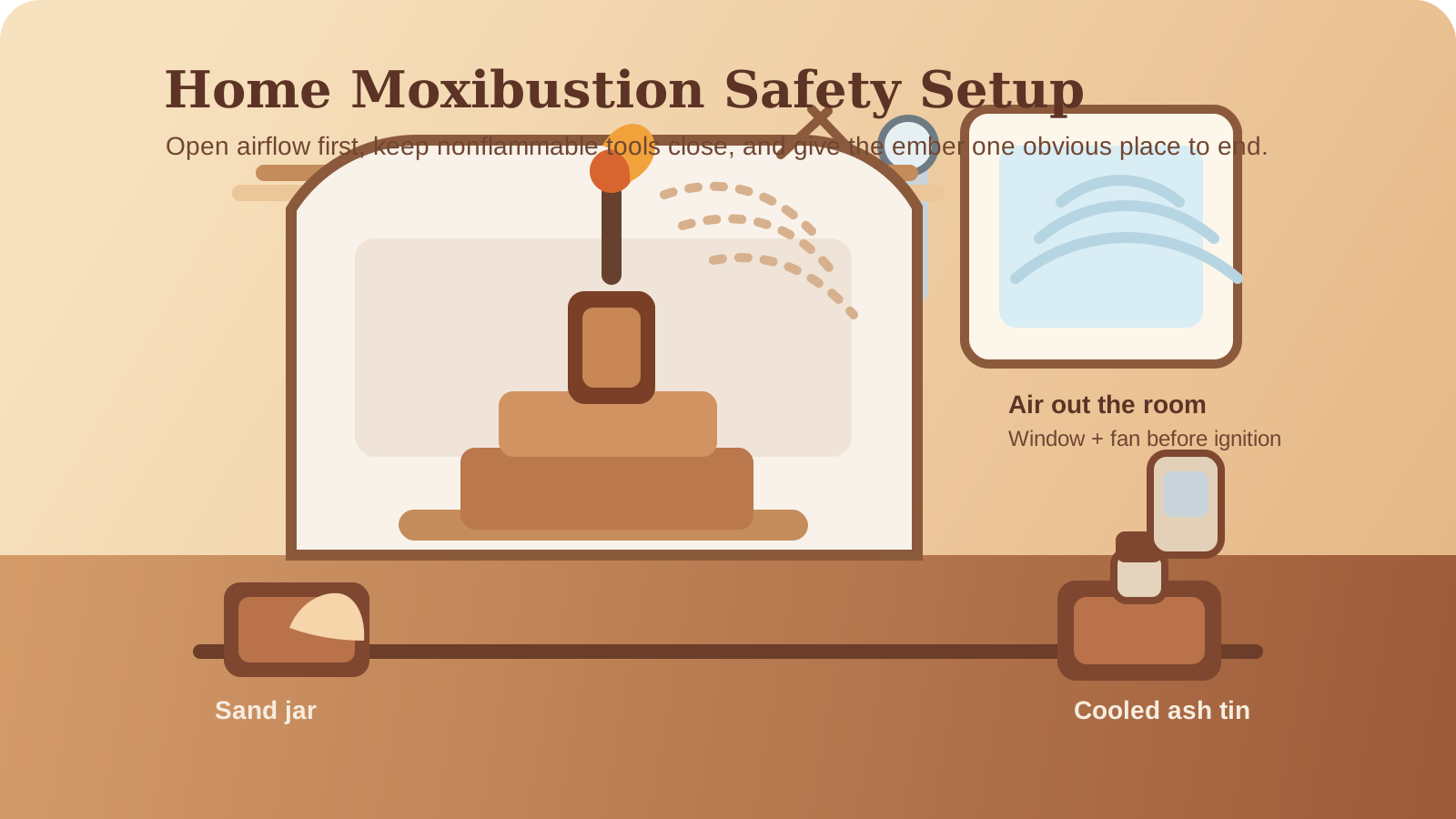
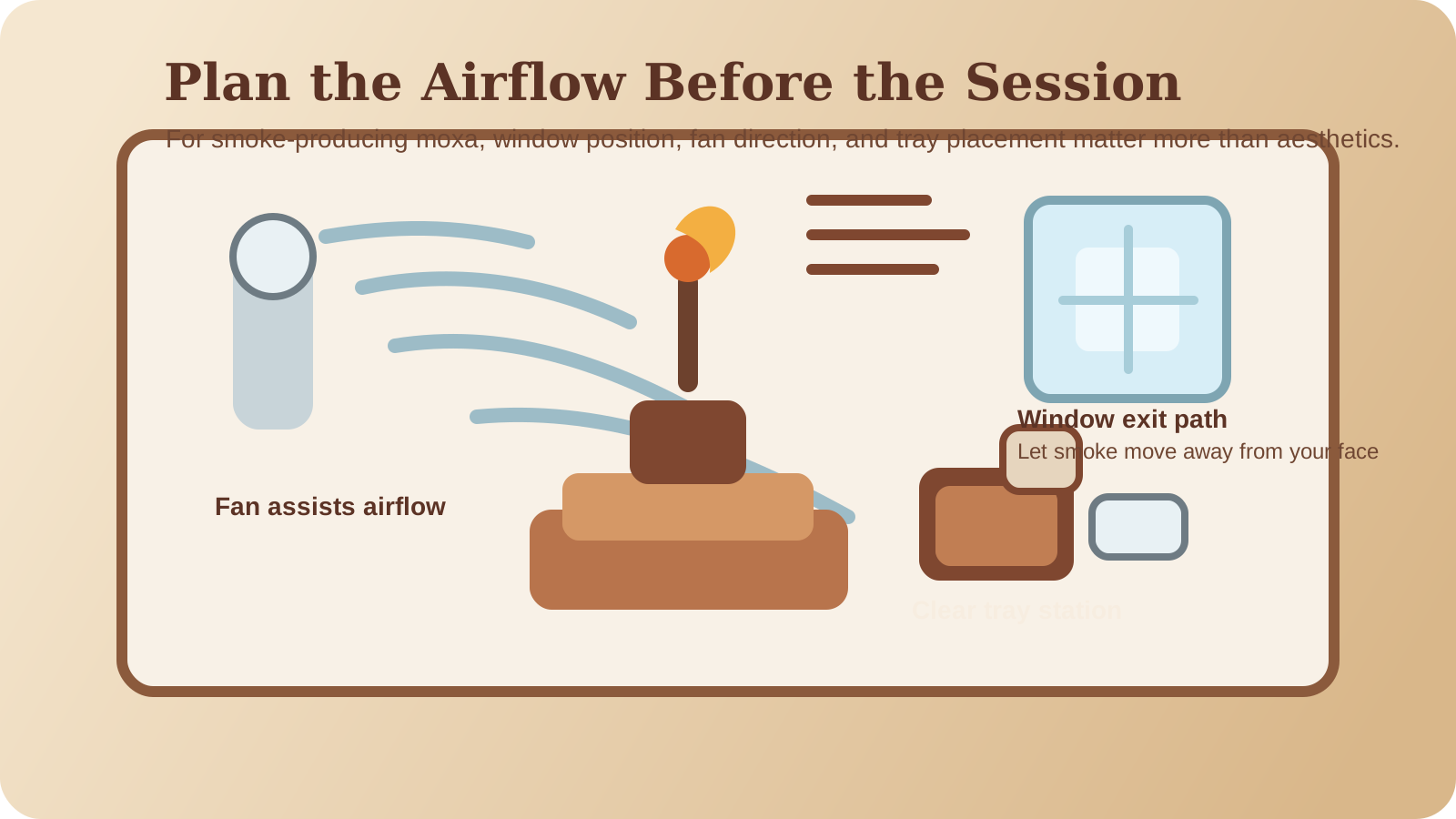
Open the ventilation path before ignition, not halfway through the session. That usually means opening the window you intend to use, checking that curtains are not drifting into the work area, and placing a fan so smoke moves away from your face instead of straight across the glowing tip. If you need a room-prep checklist, moxa stick indoor ventilation tips and how to reduce moxa smoke at home cover the airflow logic in more detail.
Beginners also underrate how much household context matters. Bedrooms with bedding, sofas with loose throws, cramped desks, and rooms with smoke detectors directly overhead all add friction. That does not mean moxa is impossible indoors; it means the room must be selected as carefully as the stick. If smoke alarms are part of your concern, can moxa smoke set off a smoke detector is a better next read than guessing.
Keep the heat mild enough to monitor honestly
Burns remain one of the clearest moxibustion risks. NCCIH notes that moxibustion can cause allergic reactions, burns, and infections, and safety reviews indexed on PubMed have described burns, blistering, smoke-related complaints, and other adverse events when sessions are poorly controlled. That is why the safest beginner rule is not “hold on longer for better results.” It is “keep the warmth comfortable enough that you never need to recover from the session.”
In practice, that means the stick keeps moving, the distance stays easy to adjust, and the treated area is one you can actually observe. Mild to moderate warmth is enough for a beginner. Sharp heat, repeated flinching, or the feeling that you need to endure it are all signs the setup is already off course. If you are still learning basic handling, read how long should you use a moxa stick as a session-length guide rather than confusing duration with quality.
This is also why reduced sensation matters. If you have neuropathy, impaired temperature awareness, or any other reason you might not feel heat accurately, self-directed home moxa becomes harder to monitor safely. The same caution applies to broken, inflamed, or recently irritated skin. You do not need heroic tolerance; you need reliable feedback.
Build a shutdown routine before the session starts
Many preventable problems happen after the active warming part is over. A beginner feels finished, gets distracted, and leaves cleanup to “just a second later.” That is exactly when embers, ash, or half-extinguished tips become household problems.
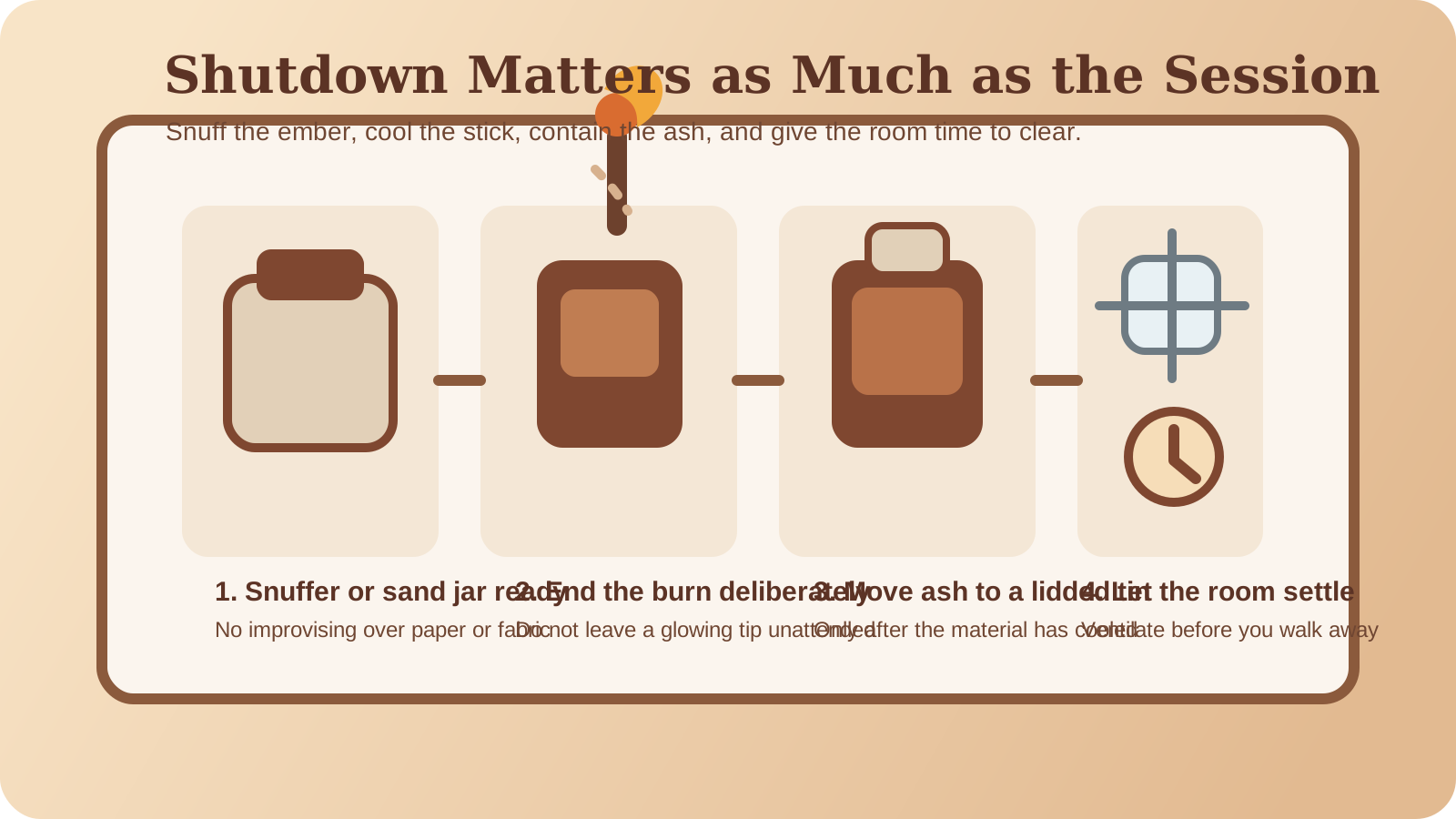
Prepare the shutdown tools in advance: a stable holder, a ceramic or metal tray, and a fire-safe way to extinguish the stick fully, such as a proper snuffer or a sand-filled container used for that purpose. Used sticks should not roll on a plate, sit on paper packaging, or rest near towels while “cooling off.” The shutdown sequence should be simple enough that you can do it even when you are tired.
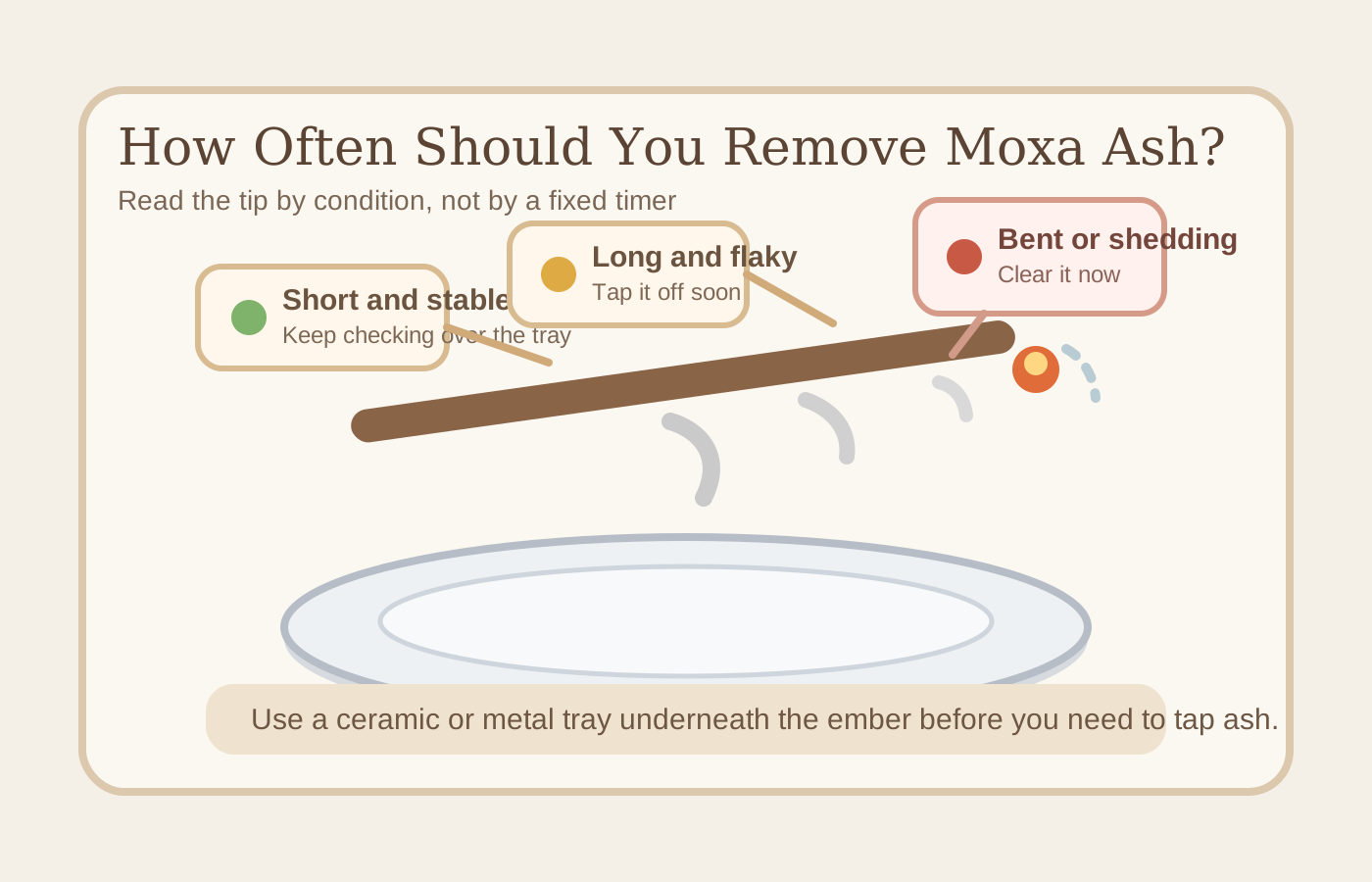
This is where how to extinguish a moxa stick safely, moxa stick fire safety checklist, and how often should you remove moxa ash fit together. One page covers extinguishing, one covers the room-level fire logic, and one covers ash habits. Together they explain why a beginner routine should feel repeatable, not dramatic.
Who should ask a clinician before trying home moxa
Home moxa is not the place to guess your way through a complicated health situation. NCCIH’s broader guidance is to discuss traditional Chinese medicine approaches with your health care providers, especially if you are pregnant or nursing, treating a child, or managing a health condition. For this topic, that advice translates into a conservative screening question: “Is this still a room-and-tool question, or has it become a medical question?”
It is wise to ask a qualified clinician first if:
- you are pregnant or nursing,
- you want to use moxa because of a diagnosed condition or a persistent symptom,
- you have reduced skin sensation or a condition that makes heat injuries harder to notice,
- you have a meaningful breathing condition or a household member who is smoke-sensitive,
- you have broken skin, active irritation, or recent burns in the area.
That list is not meant to frighten readers. It is meant to stop the common beginner mistake of treating a lit home session as a harmless experiment when the situation is actually less straightforward.
Stop signs that mean the session should end
The article-level answer is simple: if the session creates a problem that now needs recovery, it was too aggressive. Stop immediately if the heat becomes sharp, the skin stays intensely red, you notice blistering, the smoke makes you cough or wheeze, or you feel dizzy, unwell, or unable to supervise the setup calmly. Those are not cues to push through.
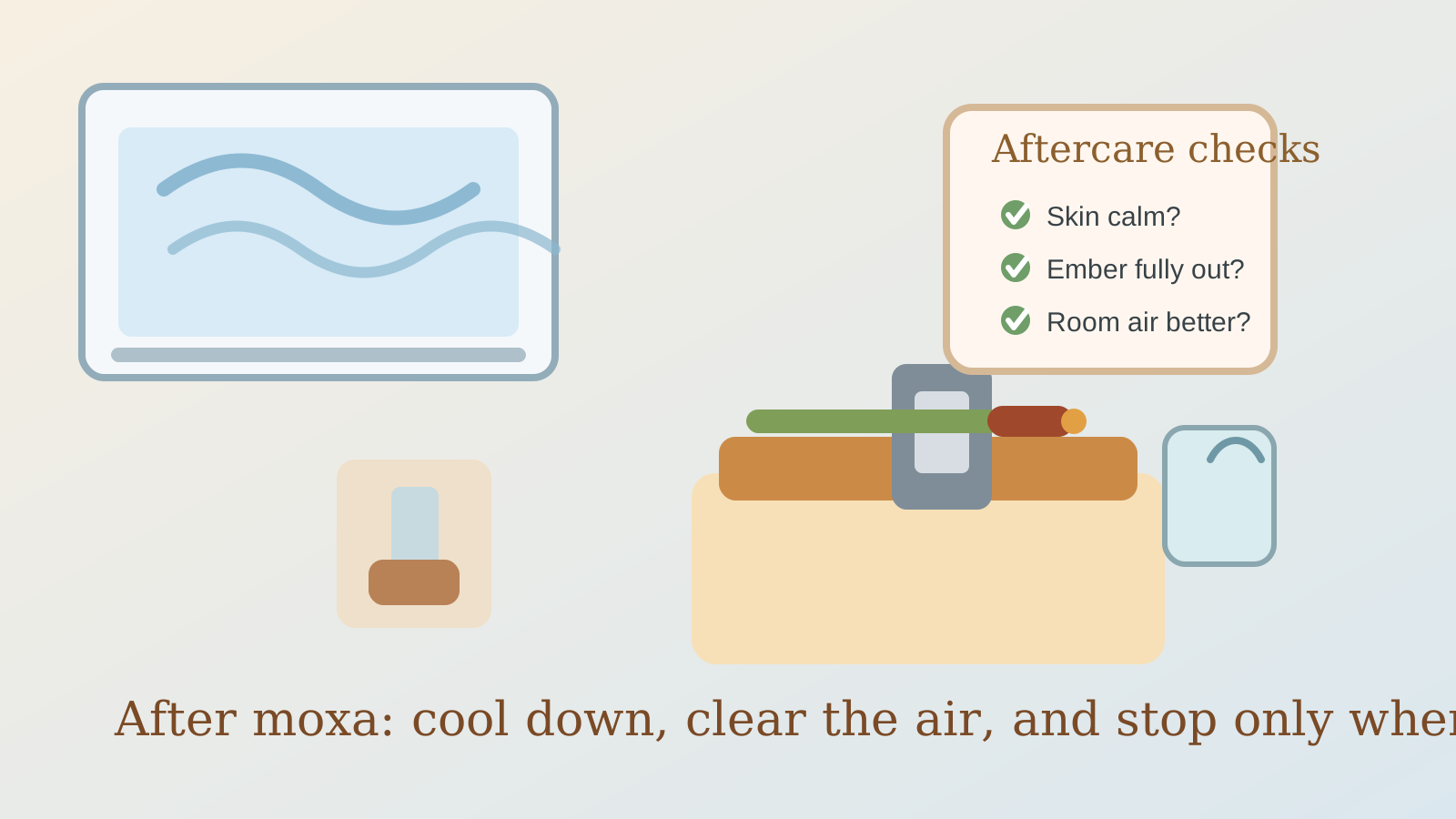
After the session, moxa stick aftercare is the right follow-up page for checking skin, airing out the room, and deciding whether the session was actually manageable. If you are looking for one rule to remember, use this one: only do home moxibustion when you can keep the whole routine mild, ventilated, supervised, and easy to stop.
Sources and further reading
Source tiers used here: A/B. The article uses U.S. government indoor-air guidance, NIH consumer safety guidance, and PubMed-indexed safety reviews to keep the home-use advice conservative.
- U.S. Environmental Protection Agency: Improving Indoor Air Quality
- National Center for Complementary and Integrative Health: Traditional Chinese Medicine: What You Need To Know
- National Center for Complementary and Integrative Health: Asthma and Complementary Health Approaches: What You Need To Know
- PubMed: Safety of moxibustion: a systematic review of case reports
- PubMed: Adverse events of moxibustion: a systematic review
Common questions
Is moxibustion at home safe for beginners?
Sometimes, but only in a conservative setup. A beginner session should keep the heat mild, the room ventilated, the stick supervised, and the shutdown simple enough that nothing is rushed.
What are the biggest home-use risks?
The main practical risks are burns from excessive heat, smoke irritation in poorly ventilated spaces, and ember or ash mistakes during shutdown.
Who should ask a clinician before trying home moxa?
People who are pregnant or nursing, have reduced skin sensation, diabetes, a meaningful breathing condition, broken skin, or a medical reason for using moxa should ask a qualified clinician before self-directing it at home.