Quick answer
There is no single minute-by-minute rule for moxa ash. The safer beginner approach is to clear ash by condition, not by habit: tap it off whenever it becomes long, flaky, bent, or likely to fall outside the tray, and keep all ash handling over a stable nonflammable surface.
Key takeaways
- You do not need a rigid timer for moxa ash; you need frequent visual checks and a tray that keeps loose ash contained.
- Remove ash whenever it becomes long, fragile, or starts dropping unpredictably instead of waiting for a full column to form.
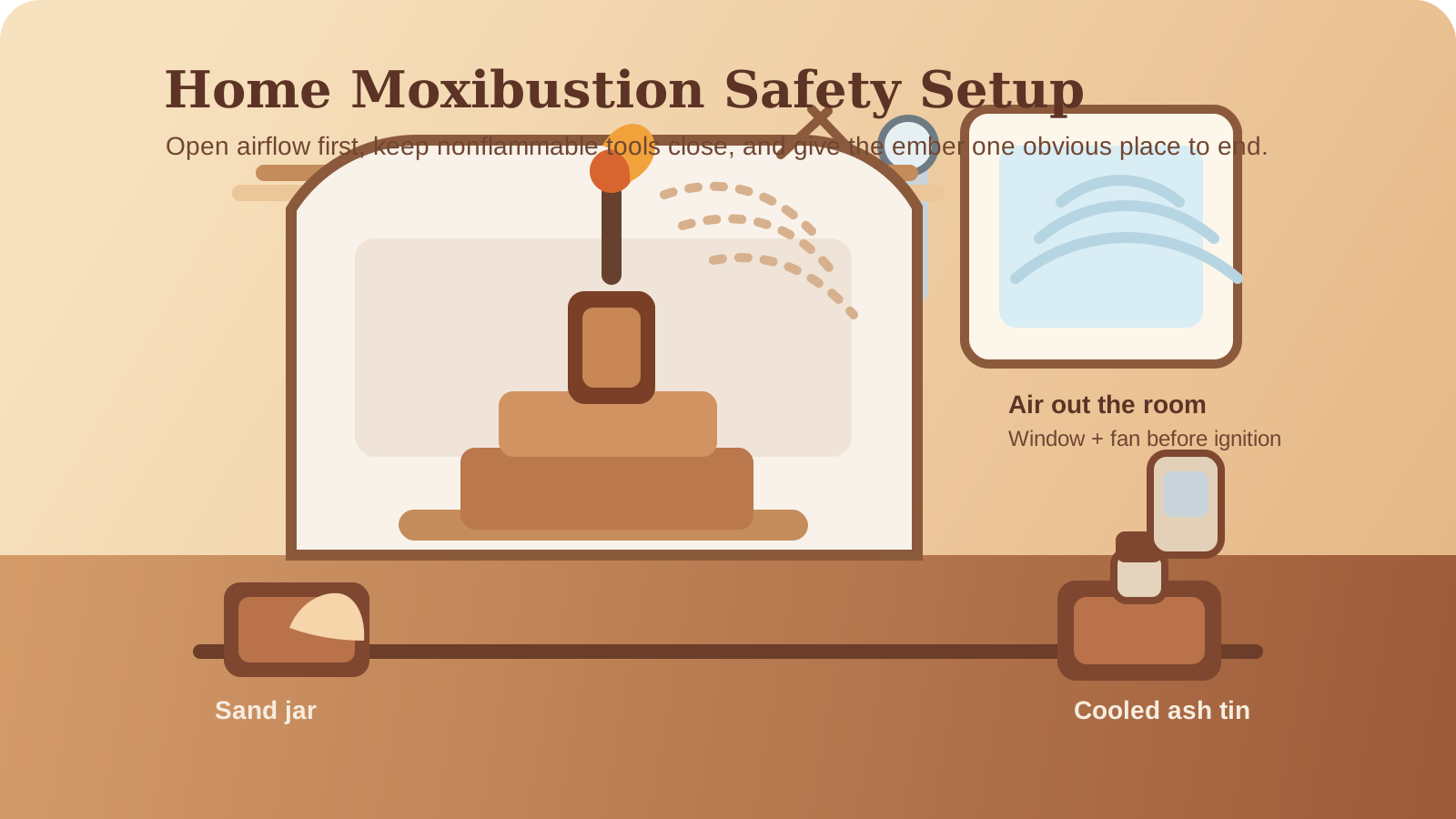
- Ash handling is part of fire safety, so cooled ash should still be moved into a tightly covered metal container before disposal.
There is no universal “every few minutes” rule for moxa ash, because ash length changes with stick density, airflow, angle, and how steadily the stick is burning. A better beginner answer is simpler: remove ash whenever it starts looking loose, long, bent, or likely to fall outside your tray.
That condition-based approach is safer than waiting for a dramatic ash column. The goal is not to let the ember grow as large as possible. The goal is to keep the burning tip predictable, the tray clean enough to work over, and the room easy to manage from start to finish.
The short answer: remove ash by condition, not by clock
If you are asking how often to remove moxa ash, the practical answer is “as soon as it stops looking stable.”
For beginners, that usually means tapping ash off when:
- the ash column gets long enough to wobble,
- the tip starts bending to one side,
- flakes begin dropping before you intend them to,
- airflow makes the ash look fragile,
- you are about to change position and want a cleaner tip first.
That is why a fixed timer is not very helpful. One stick may burn densely and stay compact for a while. Another may build a dry, crumbly ash column much faster. Watching the tip is more useful than counting minutes.
Why ash management matters
Ash control is a safety habit, not a performance trick. The U.S. Environmental Protection Agency explains that indoor pollutant levels increase when indoor sources release particles and ventilation does not clear them effectively. With moxa, loose ash and smoke are part of the same practical picture: a combustion source in a room that needs active control.
Ash also matters because it affects the ember itself. When the tip becomes messy or starts shedding unexpectedly, the session gets harder to manage. Instead of focusing on distance, warmth, and comfort, you start reacting to falling debris.
For a beginner, that is the real signal to clear the ash. You are trying to keep the session calm and deliberate, not to see how long the ash can get before it drops.
What a “good time” to tap ash looks like
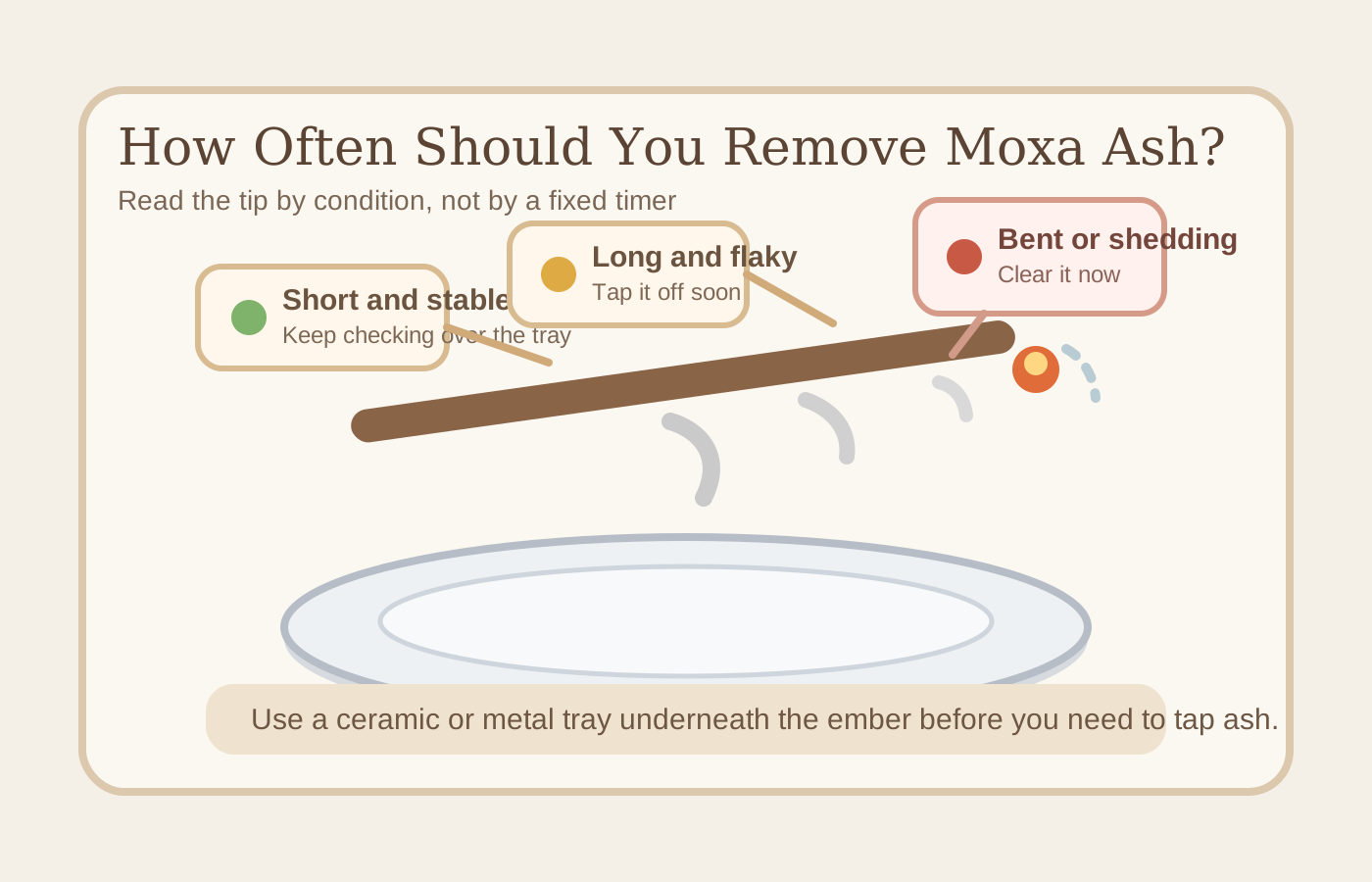
The easiest beginner cue is visual:
- The ash looks short and compact: keep going, but stay over the tray.
- The ash looks long, pale, and fragile: tap it off soon.
- The ash starts bending, cracking, or dropping by itself: stop and clear it immediately.
This is also why setup matters so much. If you are not already holding the stick above a ceramic or metal tray, you will be tempted to delay ash removal until you can move somewhere safer. That is backwards. The tray should already be underneath the ember before the session begins. The broader moxa stick guide hub can help you connect ash control with lighting, storage, ventilation, and shutdown habits.
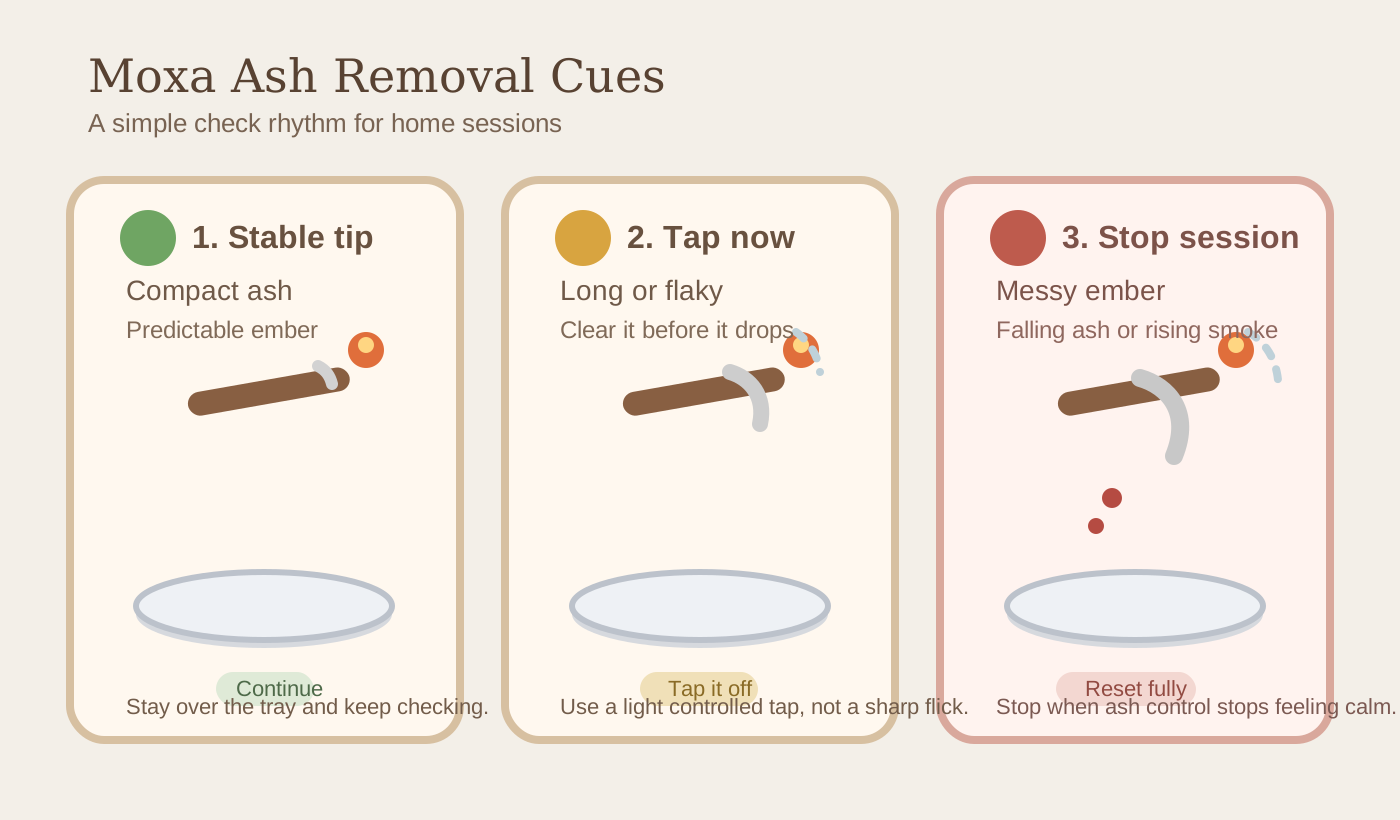
How to remove moxa ash more safely
Use a controlled motion instead of a sharp flick.
- Keep the burning tip directly over a nonflammable tray or ash dish.
- Tap or roll the stick lightly so the loose ash falls straight down.
- Recheck the ember before moving back toward the body.
- If the ember looks uneven or unstable, pause instead of pushing through.
Beginners usually do better with small, frequent ash clearing than with one large drop after the column has already become fragile. A lighter tap is easier to predict, and it reduces the chance of ash scattering onto clothing or soft furnishings.
If you are using a holder, the same rule applies: clear ash before buildup becomes awkward, and do it only when the holder is positioned above a safe catching surface.
When to clear ash more often
Some sessions need more frequent checks than others. Be more conservative when:
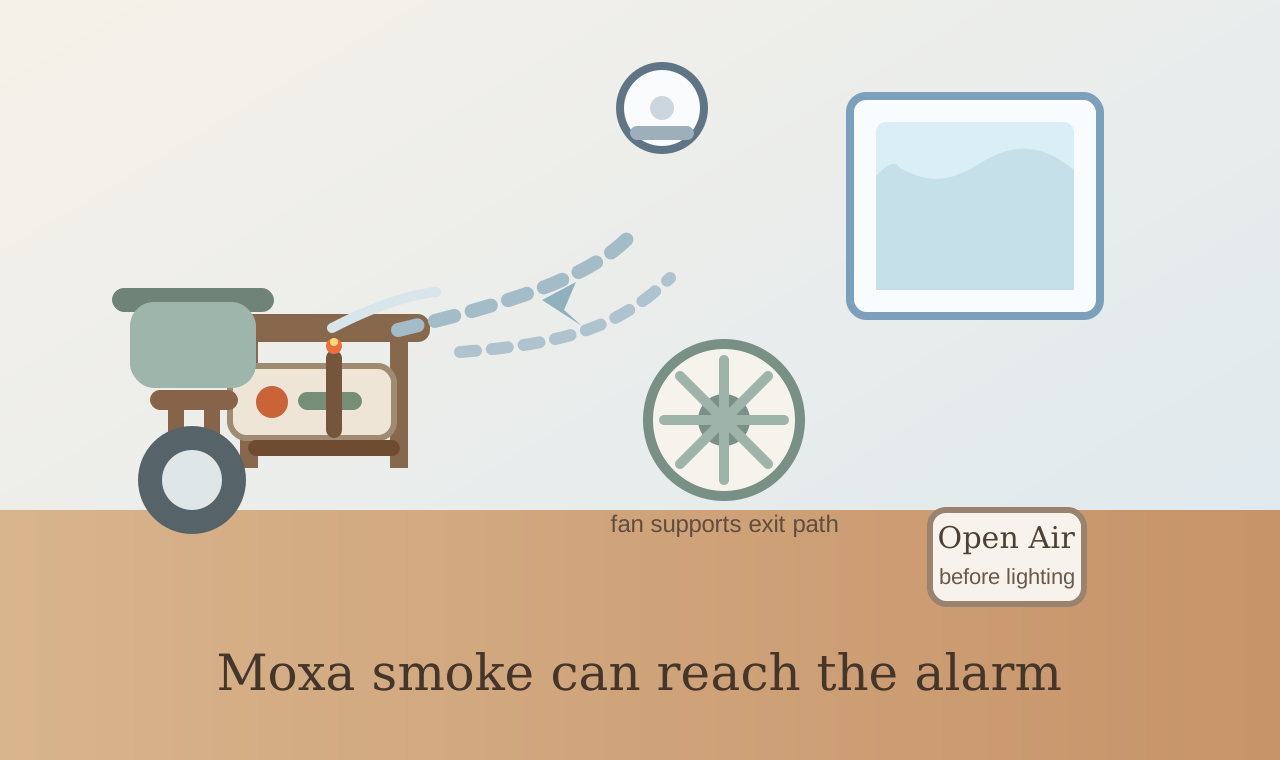
- the room has noticeable cross-breeze from a fan or open window,
- the stick is burning quickly,
- the wrapper or outer paper is getting messy near the tip,
- you are still learning the product and do not know how its ash behaves,
- the session angle makes a falling ash piece harder to catch cleanly.
In those conditions, it is reasonable to clear ash sooner rather than later. There is no prize for a longer ash column.
When to stop instead of tapping again
Do not keep treating ash removal like a fix for a generally unstable setup. End the session if:
- ash falls outside the tray more than once,
- the ember is shedding faster than you can manage calmly,
- smoke is building faster than the room can clear it,
- you keep adjusting around fabric, paper, bedding, or clutter,
- your hands feel rushed enough that you are no longer working methodically.
The National Center for Complementary and Integrative Health notes that people should tell their health care providers about complementary approaches they use, and its Traditional Chinese Medicine overview also warns that some approaches can cause harm when used inappropriately. For home moxa, that means staying conservative when the practical heat-and-ash routine stops feeling controlled.
What to do with the ash after you tap it off
Tapped ash is not harmless just because it has left the stick. The U.S. Fire Administration advises letting ashes cool before disposal, placing them in a tightly covered metal container, keeping that container at least 10 feet away from the home and other buildings, and never emptying warm ashes directly into a trash can.
That guidance is written broadly for household ash, but it fits moxa cleanup well:
- Tap ash into the tray during the session.
- Let the tray contents cool completely.
- Move cooled ash into a tightly covered metal container.
- Keep that container away from the house until disposal is clearly safe.
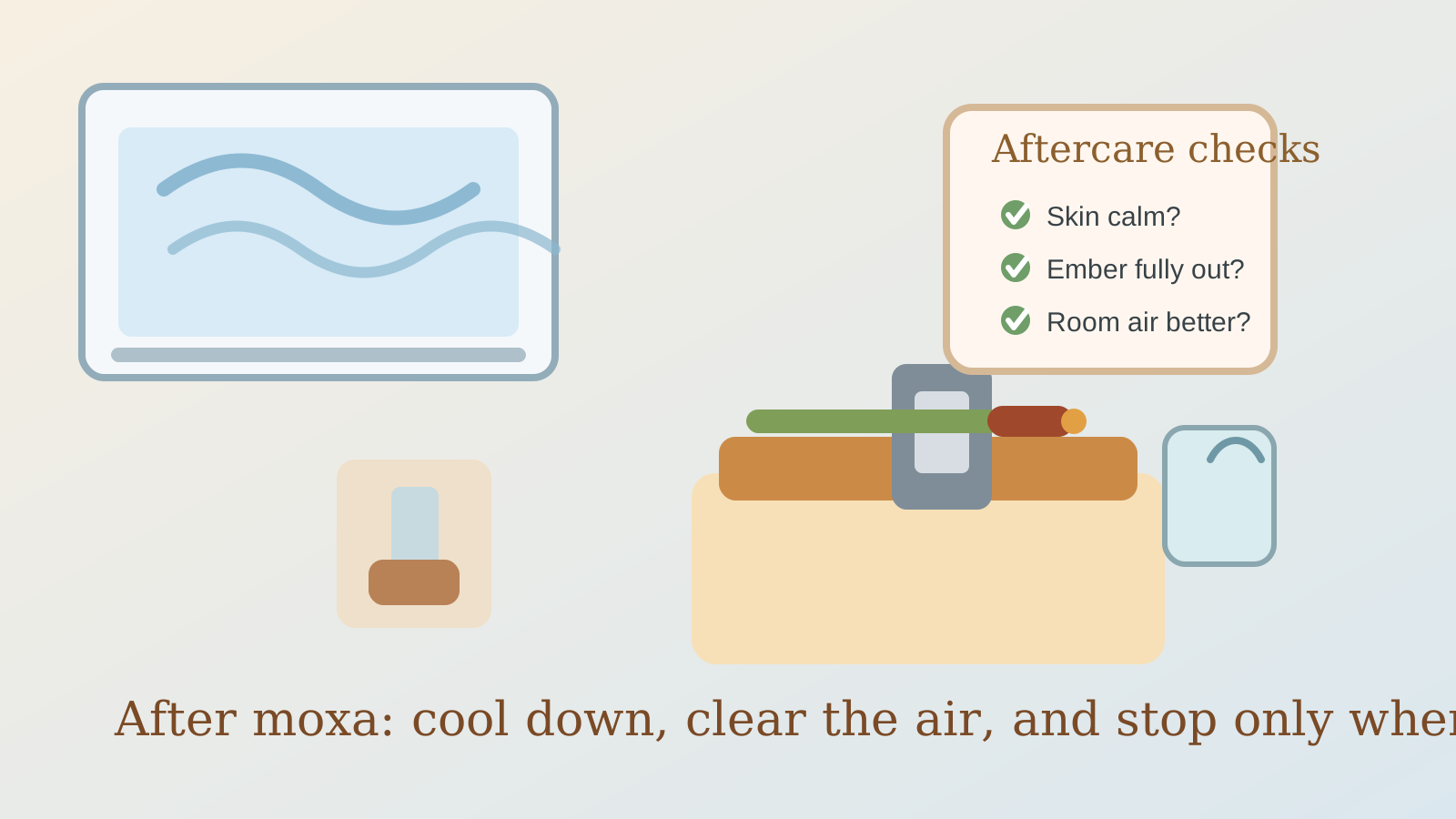
If you want a wider setup routine around this step, pair this guide with moxa stick fire safety and how to extinguish a moxa stick safely.
A simple beginner rule to remember
Clear ash early enough that it feels boring.
That sounds small, but it is the best habit in this article. When ash handling becomes routine, the whole session gets easier to control. When you wait too long, ash removal turns into a rescue move, and that is when beginners start making messy decisions.
So if you need one sentence to remember, use this: tap off moxa ash whenever the tip stops looking compact and reliable, not when it has already become dramatic.
Sources and further reading
- U.S. Environmental Protection Agency: Introduction to Indoor Air Quality
- U.S. Fire Administration: Pictograph - Discard Ashes Safely
- National Center for Complementary and Integrative Health: Traditional Chinese Medicine - What You Need To Know
- PubMed: Safety of moxibustion: a systematic review of case reports
Common questions
Does a longer ash column mean the moxa stick is working better?
No. A longer ash column mainly means more loose material is collecting at the tip. For beginners, a shorter controlled ash tip is usually easier to manage.
Can I tap moxa ash into a sink or household trash can?
It is safer to tap ash into a ceramic or metal tray first, let it cool fully, and only then move it into a tightly covered metal container for disposal.
How do I know it is time to stop instead of removing more ash?
Stop if the ash keeps dropping unpredictably, the ember feels hard to control, or the room setup is cramped enough that you cannot manage ash calmly over a proper tray.