Quick answer
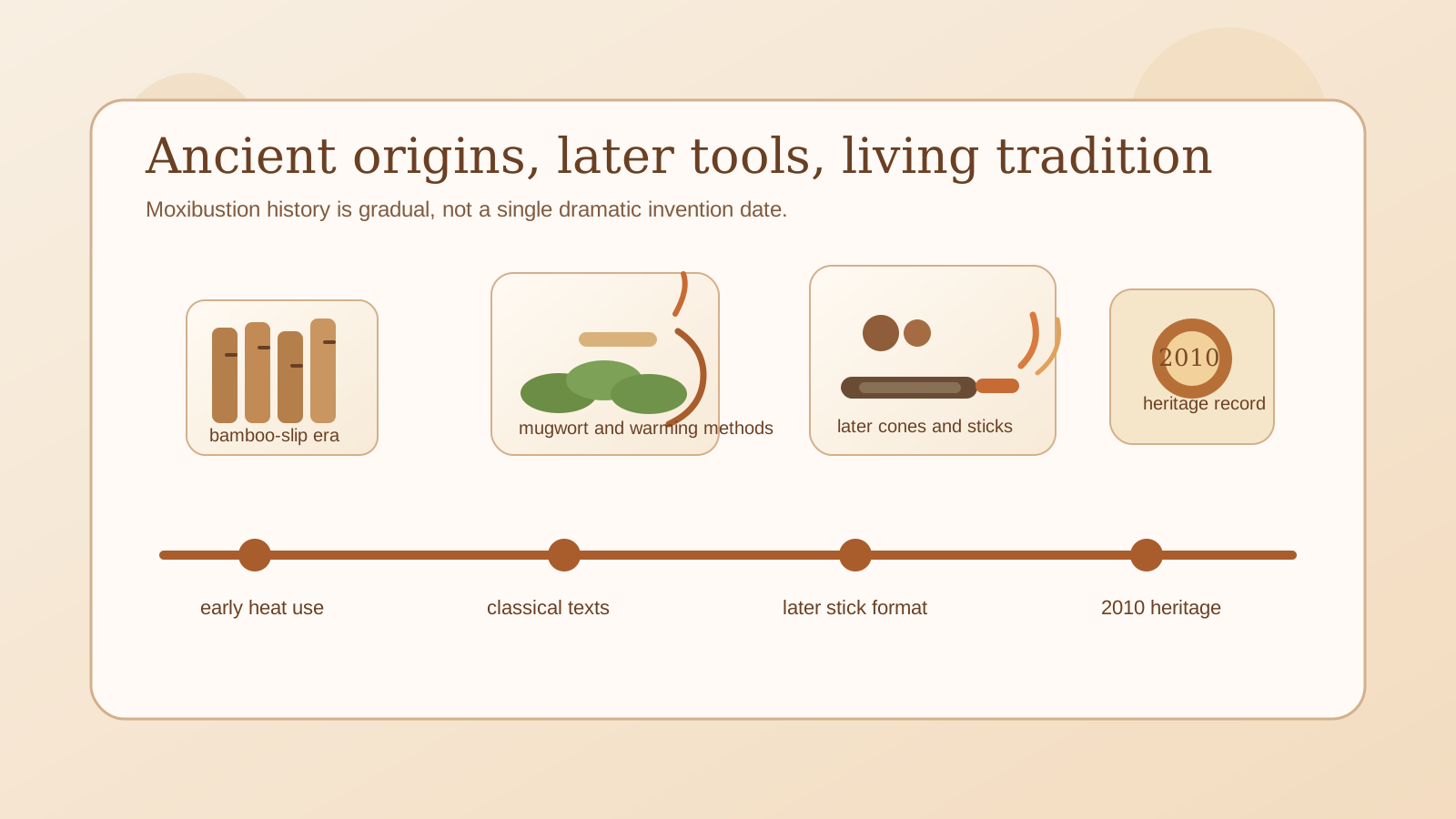
Moxa therapy began in ancient China, but it did not appear all at once in its modern stick form. The clearest historical picture is a gradual one: early warming practices, early medical texts and excavated manuscripts, later classical organization, then wider regional spread and modern heritage recognition.
Key takeaways
- The origin of moxa therapy is generally traced to ancient China, but there is no single provable invention date.
- Excavated manuscripts and classical Chinese medical texts show that moxibustion was established long before modern retail moxa sticks became common.
- A long history explains cultural importance, not automatic proof for modern medical claims.
If you want the direct answer first, here it is: moxa therapy began in ancient China, but no responsible source gives one exact invention day or year. The historical record points instead to a gradual origin. Early Chinese communities used heat and burning plant material, later medical texts described moxibustion more clearly, and only much later did the familiar stick format become common. For beginners, that is the most useful way to understand the history.
This article treats moxibustion as cultural and historical knowledge. It does not claim that history alone proves modern medical effectiveness.
What “origin of moxa therapy” actually means
When readers ask about the origin of moxa therapy, they often imagine one neat founding moment. The sources are not that tidy. A better question is: when do we start seeing recognizable moxibustion in the historical record?
The answer is earlier than the modern product market and earlier than the paper-wrapped stick most beginners recognize today. Official Chinese cultural-heritage materials describe acupuncture and moxibustion as long-standing parts of Chinese medical tradition. Academic reviews of excavated literature go further by showing that early moxibustion writing appears in manuscripts connected with the Han era and even earlier textual traditions.
That means “origin” should be read in layers:
- the practical discovery that heat could be used in care routines,
- the selection of mugwort and related combustible materials,
- the appearance of moxibustion in early medical writing,
- the later standardization of techniques, terminology, and teaching.
This layered view is more honest than a dramatic single-date origin story.
Early evidence before the modern era
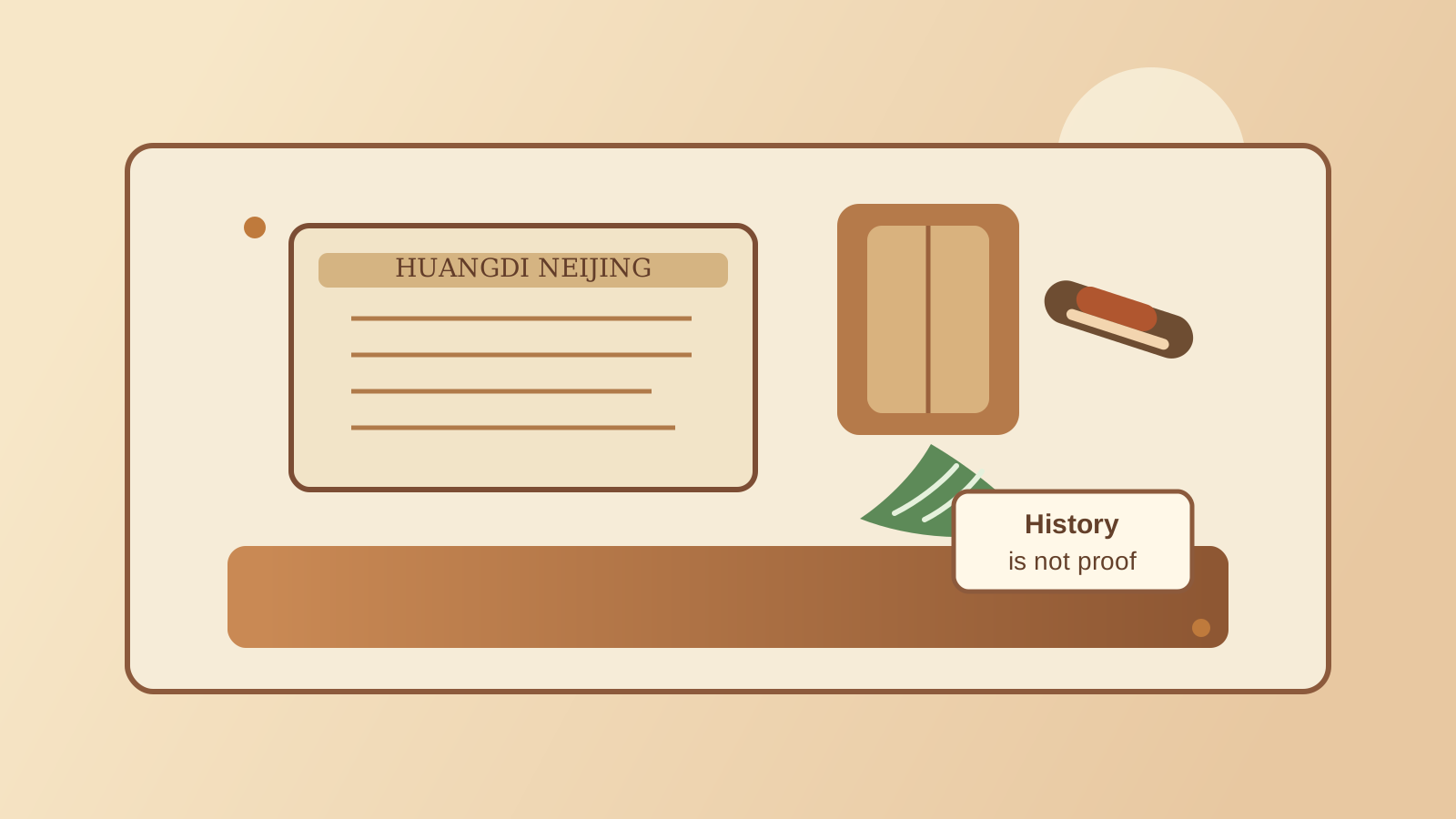
One reason historians speak cautiously is that the oldest evidence comes from different kinds of material. Some later summaries connect the roots of moxibustion with very early Chinese writing and with the practical use of fire after it became part of daily life. The official China Intangible Cultural Heritage entry on acupuncture and moxibustion says the moxibustion side of the tradition formed after the discovery and use of fire, then links later development to the Qin and Han periods and to the Huangdi Neijing.
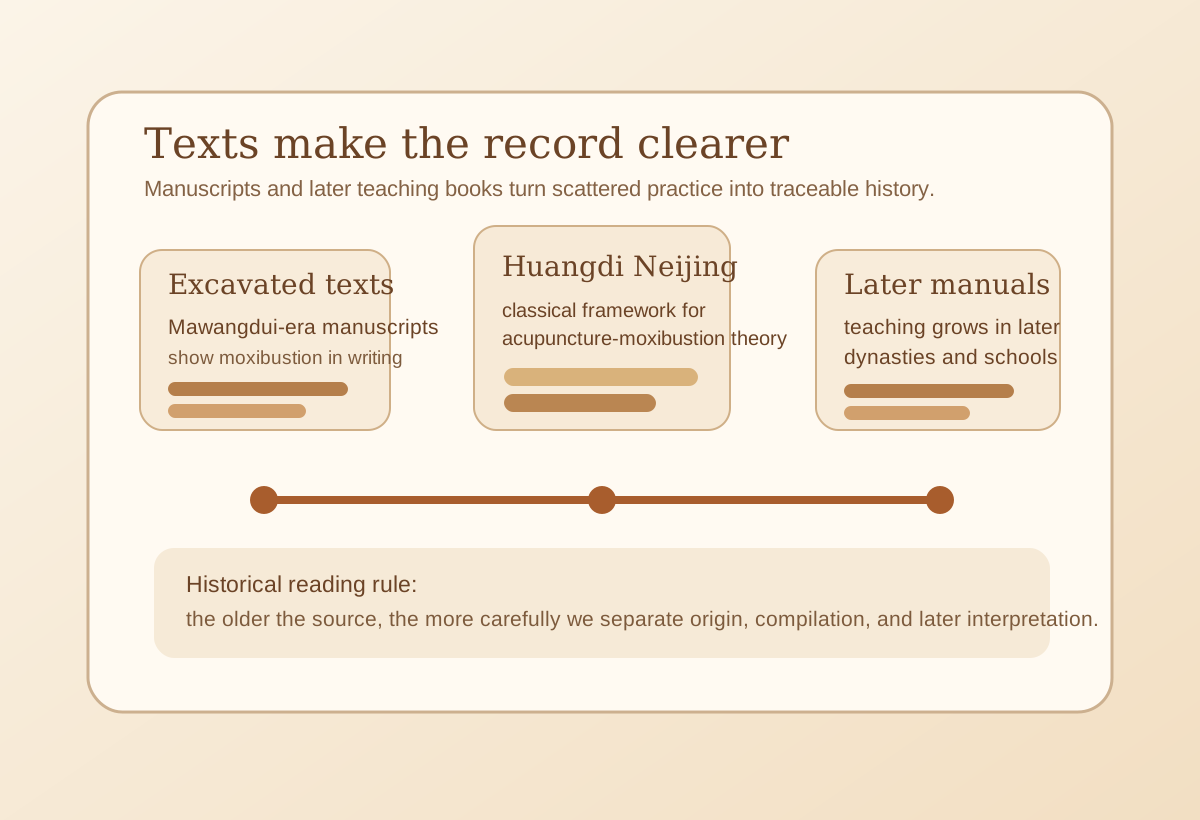
Academic reviews add a more specific layer. A 2017 PubMed Central article on early Chinese medicine says excavated texts from Mawangdui include the Moxibustion Canon of the Eleven Yin and Yang Vessels and the Moxibustion Canon of the Eleven Vessels of the Foot and Forearm. That matters because those manuscripts show moxibustion was already important enough to be described in writing, not just passed along as an unnamed folk habit.
The safest conclusion is modest but meaningful: by the time early Chinese medical manuscripts were being compiled and buried, moxibustion was already part of a recognizable treatment tradition.
How classical texts turned practice into a system
A tradition becomes easier to document once texts start organizing it. The Huangdi Neijing is one of the key reference points here. Official heritage materials and later academic reviews both treat it as a major classical source for acupuncture-moxibustion theory, even though the text itself reflects compilation across time rather than a single author writing on a single date.
That distinction matters. It is historically safer to say that the Huangdi Neijing shows moxibustion had entered the classical Chinese medical framework than to claim the book marks a single moment of invention.
Later texts made the system more teachable. The Chinese heritage record points to the growth of specialized acupuncture-moxibustion learning by the Sui and Tang periods, then to the expansion of teaching materials in later dynasties. A 2022 PMC review also notes that by the end of the 2nd century BCE, acumoxa theory was already highly developed, which supports the idea that the practice had moved well beyond simple warming with fire.
If you want the broader foundation first, read what is moxibustion, then compare it with the timeline view in moxibustion timeline.
When the modern moxa stick appeared
This is where many beginners get confused. Moxibustion is ancient, but the modern stick format is not the oldest form of moxa use.
The 2017 PMC review on early Chinese moxibustion says moxa stick moxibustion had not yet appeared in the Qin and Han dynasties and that the earliest record of moxa stick use appears in Waitai Miyao during the Tang dynasty. A 2022 history review reaches a similar conclusion and describes the moxa stick as a later arrival within the much longer history of moxibustion.
That is an important practical correction for product-focused readers. When you buy a moxa stick today, you are not buying the entire history of moxibustion in one object. You are buying one later, portable format within a broader material tradition that also included loose moxa, cones, and many indirect methods.
That is also why the material vocabulary matters. If you need the plant-to-product path, continue with Ai Ye and mugwort in Chinese medicine history, what is moxa, and what is mugwort used for in moxa.
How the practice spread and changed
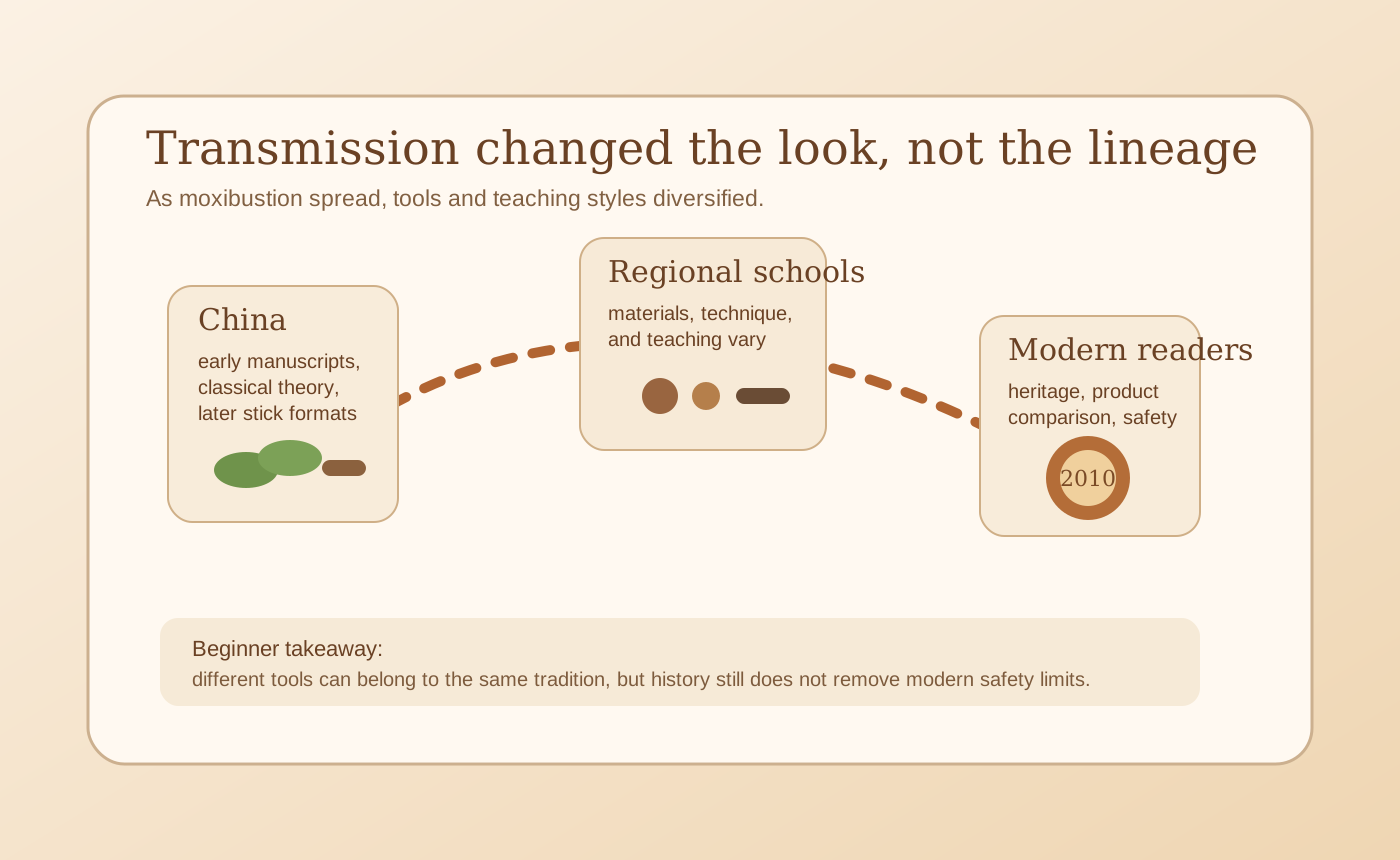
The history of moxibustion is not only about age. It is also about transmission. UNESCO’s record for acupuncture and moxibustion describes the tradition as widely practiced in China and also found in parts of southeast Asia, Europe, and the Americas. The same record distinguishes direct and indirect moxibustion and notes that moxa cones and sticks are made from dried mugwort leaves.
That tells us two useful things. First, moxibustion survived because it was teachable. It moved through family instruction, master-disciple relationships, and later formal education. Second, it changed as it moved. Different regions emphasized different tools, teaching styles, and technique preferences. The broad idea remained recognizable, but the visible format did not stay frozen in one century.
For beginners, this explains why modern English-language pages can show several different-looking moxa products without necessarily contradicting one another. They may be describing different branches of the same older tradition.
What this history means for a modern reader
The most useful beginner takeaway is simple. The history of moxibustion supports cultural understanding, not hype.
It tells you that:
- moxa therapy is rooted in ancient Chinese practice,
- mugwort became central through a long material tradition rather than a branding decision,
- the now-familiar stick is one later format, not the original whole story,
- cultural longevity does not remove the need for modern safety language.
That final point matters most. Respecting history does not mean making stronger claims than the evidence allows. A careful reader can appreciate the origin of moxa therapy, understand how the tradition developed, and still keep modern home-use questions separate from historical prestige.
If you want the next step after this page, the cleanest path is moxibustion as Chinese cultural heritage, then moxibustion in traditional Chinese medicine, then moxa vs moxibustion.
Sources and further reading
Source tiers used here: B/C. The article relies on cultural-heritage records and academic historical reviews, then paraphrases them into original English.
- UNESCO: Acupuncture and moxibustion of traditional Chinese medicine
- China Intangible Cultural Heritage: Acupuncture and moxibustion project page
- PubMed Central: Moxibustion in Early Chinese Medicine and Its Relation to the Origin of Meridians
- PubMed Central: The Case for Moxibustion for Painful Syndromes: History, principles and rationale
Common questions
Where did moxa therapy originate?
Moxa therapy is generally understood to have originated in ancient China. The exact starting date is uncertain, but early Chinese texts and excavated manuscripts show that moxibustion was already an established part of early medical thought.
Is moxibustion older than the modern moxa stick?
Yes. Historical sources describe moxibustion long before the now-familiar paper-wrapped moxa stick became a common format.
Does the history of moxibustion prove modern health claims?
No. History shows cultural continuity and long use. It does not replace modern evidence standards, safety guidance, or qualified medical advice.