Quick answer
The Huangdi Neijing matters to moxibustion because it shows the practice had entered classical Chinese medical theory early on. It is best read as historical and cultural context, not as a modern proof page or a home-use instruction manual.
Key takeaways
- The Huangdi Neijing is a foundational classical Chinese medical compilation, not a simple modern how-to book for home moxa.
- It matters because it helps show moxibustion had already entered organized medical theory in early China.
- Classical authority can explain history and terminology, but it does not replace modern evidence standards or safety guidance.
If you want the plain answer first, here it is: the Huangdi Neijing matters to moxibustion because it shows the practice had entered an organized classical Chinese medical framework early in history. It is not a beginner instruction manual, and it does not prove modern medical claims by itself. The most useful way to read it is as historical and cultural context for how moxibustion was understood, discussed, and later taught.
This page keeps the topic educational and conservative. It explains why the text is famous, what it contributes to moxibustion history, and what modern readers should avoid over-claiming.
What the Huangdi Neijing actually is
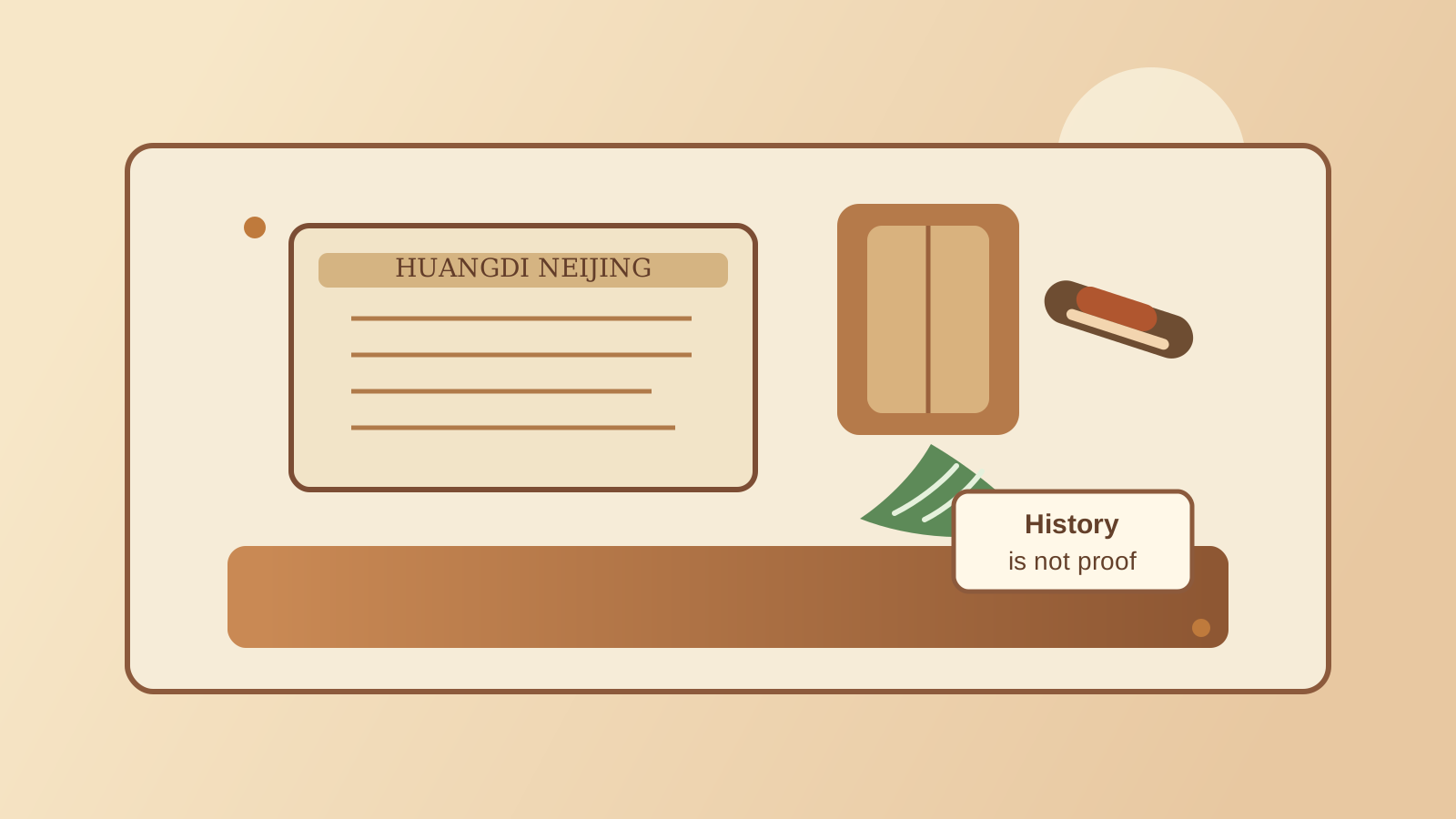
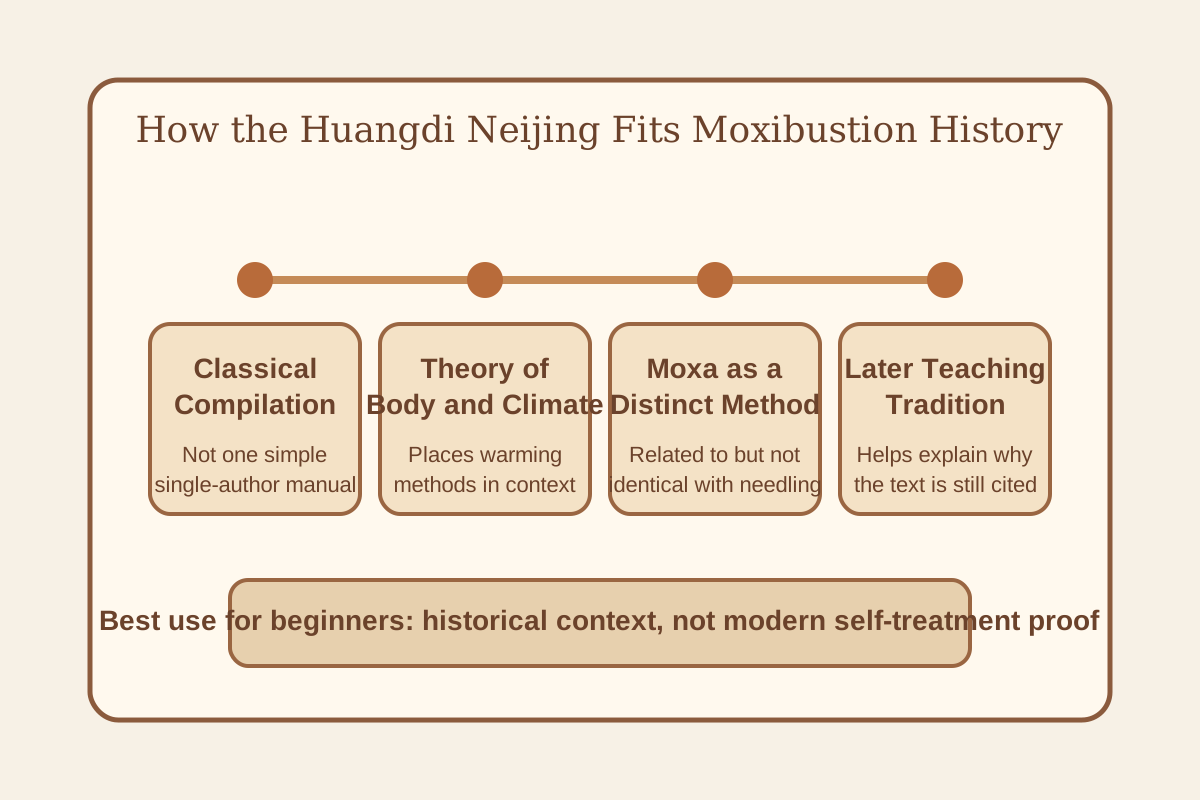
The Huangdi Neijing, often translated as the Yellow Emperor’s Inner Classic, is one of the foundational medical compilations in Chinese history. Beginners sometimes imagine it as one neat book written by one person at one moment. That is too simple. Modern scholarly summaries usually describe it as a classical work compiled across time, then transmitted as part of the larger Chinese medical tradition.
That distinction matters for search readers. If you type “Huangdi Neijing moxibustion” into a search bar, you are usually not looking for a literal ancient recipe to copy. You are asking a historical question: why does this text keep appearing whenever people explain the roots of acupuncture and moxa?
The short answer is that the text helps anchor moxibustion inside early theory. It tells us the practice was not merely an isolated folk habit. By the time the Huangdi Neijing was being compiled, moxibustion had become part of a broader conversation about the body, climate, channels, and therapeutic method.
If you want the basic practice definition before the history, start with what is moxibustion and what is moxa.
Why the text matters in moxibustion history
The Huangdi Neijing matters because it is one of the clearest classical reference points showing that moxibustion had entered a recognizable medical framework in early China. Historical reviews on PubMed Central discuss the text when tracing how acumoxa ideas developed, while heritage summaries from UNESCO and official Chinese cultural sources treat acupuncture and moxibustion as long-standing parts of Chinese medical tradition.
That does not mean the book marks a single invention date. It means the text is evidence of maturity. A practice serious enough to appear in major theoretical discussions has already moved beyond casual experimentation.
For a beginner, this helps answer two common misunderstandings:
- the history of moxibustion is older than the modern retail moxa stick,
- the Huangdi Neijing is a milestone in theory and transmission, not a product-era manual.
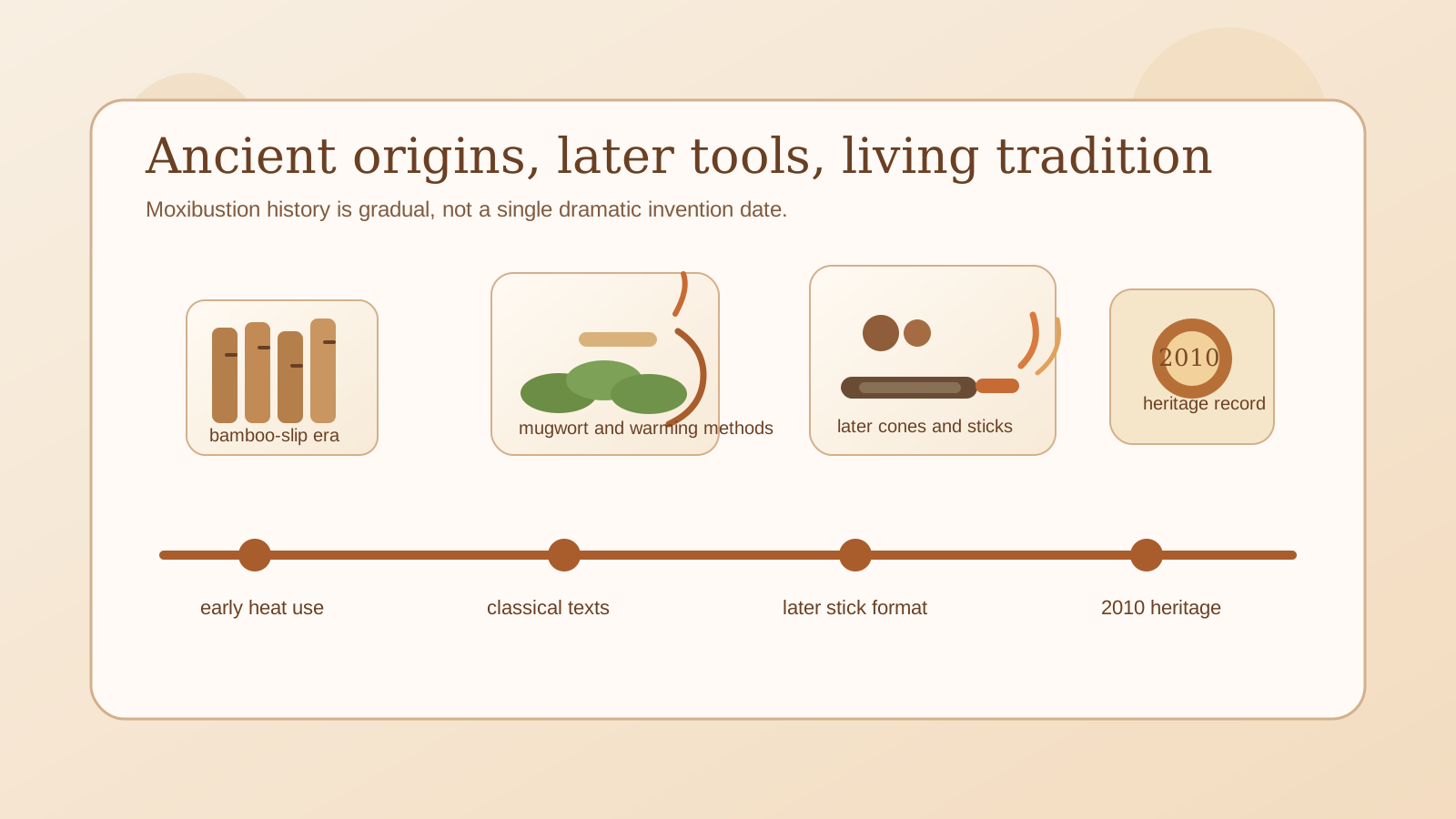
That is why this page complements, rather than replaces, history of moxibustion and moxibustion timeline. Those pages cover the wider chronology. This one focuses on why a single classical title appears so often in that story.
What the Huangdi Neijing says about moxa in broad terms
Responsible modern summaries are careful here. They do not treat the Huangdi Neijing as a set of direct home-use commands for today’s reader. Instead, they use it to show the kinds of ideas attached to moxibustion in the classical framework.
In broad terms, the text is associated with several themes that later shaped moxa education:
- warming methods as part of a larger therapeutic system,
- the relationship between climatic patterns and the body,
- the importance of point-based thinking rather than random heating,
- the idea that acupuncture and moxibustion belong to related but distinct techniques.
Those themes explain why modern historical articles keep citing the Huangdi Neijing even when they are not quoting it line by line. The text serves as an organizing landmark. It tells historians and educators that moxibustion already had conceptual depth, not just practical heat use.
Readers who want the plant-material bridge should continue with Ai Ye and mugwort in Chinese medicine history and what is mugwort used for in moxa. Those pages explain how the classical conversation about moxa connects to mugwort as a real material.
What modern readers should not infer from it
This is the most important section for search quality. A lot of weak content uses the Huangdi Neijing as a prestige shortcut. It gestures at an ancient classic and then jumps straight to strong modern health claims. That is exactly the move a careful article should avoid.
The Huangdi Neijing does not tell a modern beginner that:
- any specific home routine is safe for them,
- a symptom should be self-treated instead of medically evaluated,
- historical use automatically equals proven effectiveness,
- a product page is trustworthy just because it mentions classical roots.
The better lesson is narrower and more useful. Classical texts can explain why a practice became culturally durable. They cannot settle present-day questions about diagnosis, chronic disease, pregnancy, burns, or smoke sensitivity. Those belong to modern safety and evidence discussions.
That is why the safest reading order is historical first, practical second. Use pages like moxibustion in Traditional Chinese Medicine and moxibustion cultural heritage to build context before you move to hands-on beginner guides.
How this page fits into a beginner learning path
For most readers, the value of the Huangdi Neijing is not that it gives new instructions. The value is that it makes the rest of the topic easier to read accurately.
Once you know what the text represents, several other beginner questions become clearer:
- why moxibustion history is usually told as a gradual development instead of a one-day invention,
- why modern moxa sticks are later tools within a much older tradition,
- why terminology such as Ai Ye, moxa, and moxibustion needs to be separated carefully,
- why cultural respect should not turn into exaggerated medical promises.
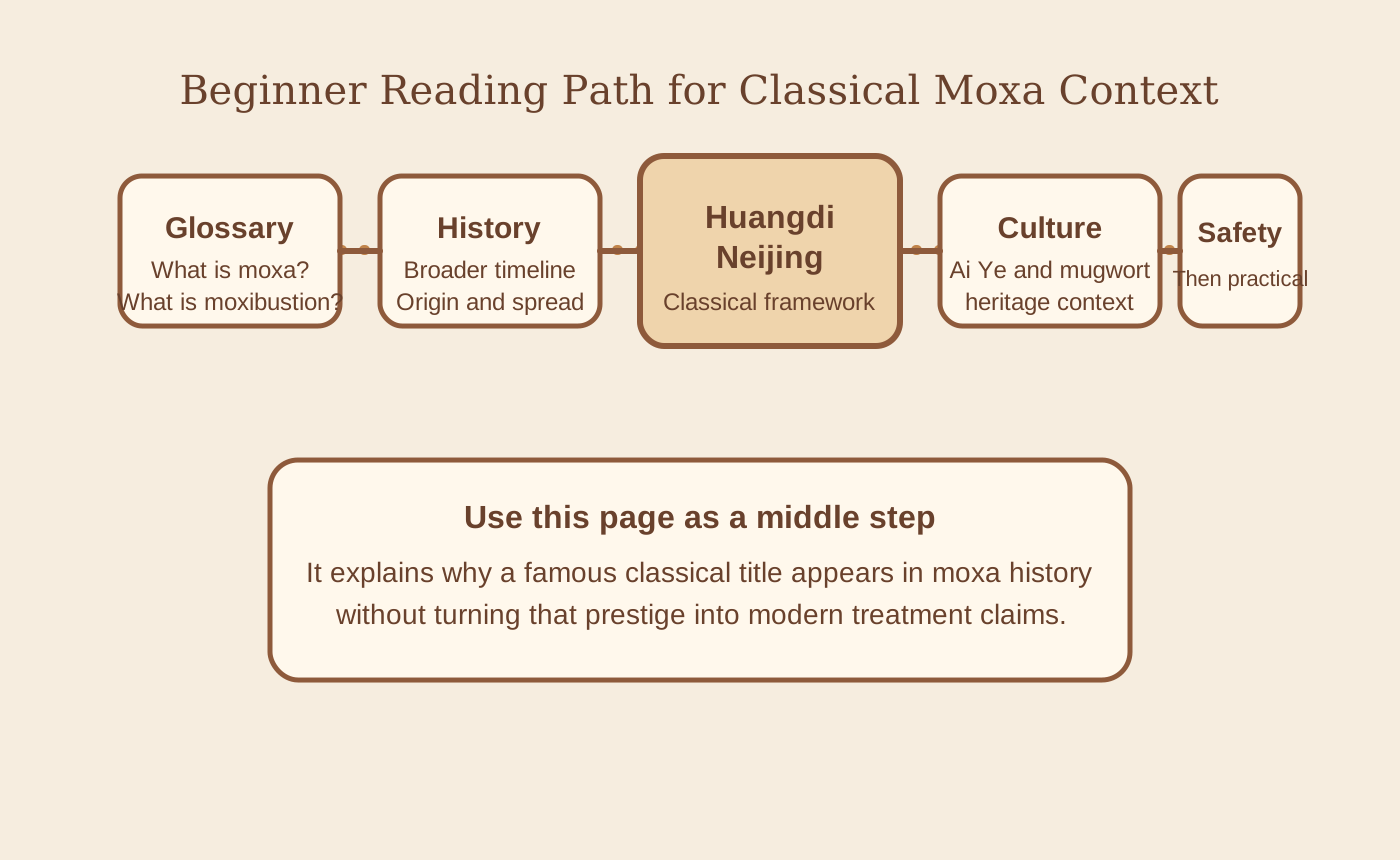
So if your goal is simple understanding, use this page as a checkpoint in the middle of the journey. Start with the glossary pages, read the broader history, then come here to understand the classical reference that ties those threads together.
Sources and further reading
Source tiers used here: B/C. The article relies on academic historical reviews and cultural-heritage references, then paraphrases them into original English.
- PubMed Central: Moxibustion in Early Chinese Medicine and Its Relation to the Origin of Meridians
- PubMed Central: The Yellow Emperor’s Classic of Internal Medicine
- UNESCO: Acupuncture and moxibustion of traditional Chinese medicine
- Britannica: History of medicine in China
Common questions
What is the Huangdi Neijing in relation to moxibustion?
It is one of the foundational classical Chinese medical texts often cited in moxibustion history. For beginners, its main value is showing that moxibustion was already part of an organized medical tradition, not providing a modern self-treatment manual.
Did the Huangdi Neijing invent moxibustion?
No responsible historical summary treats the text as a single invention moment. It is better understood as evidence that moxibustion had entered a classical framework by the time the text was compiled.
Does the Huangdi Neijing prove modern medical claims for moxibustion?
No. A classical text can show historical importance and long-standing theory, but it does not prove that a method is effective or appropriate for every modern health question.