Quick answer
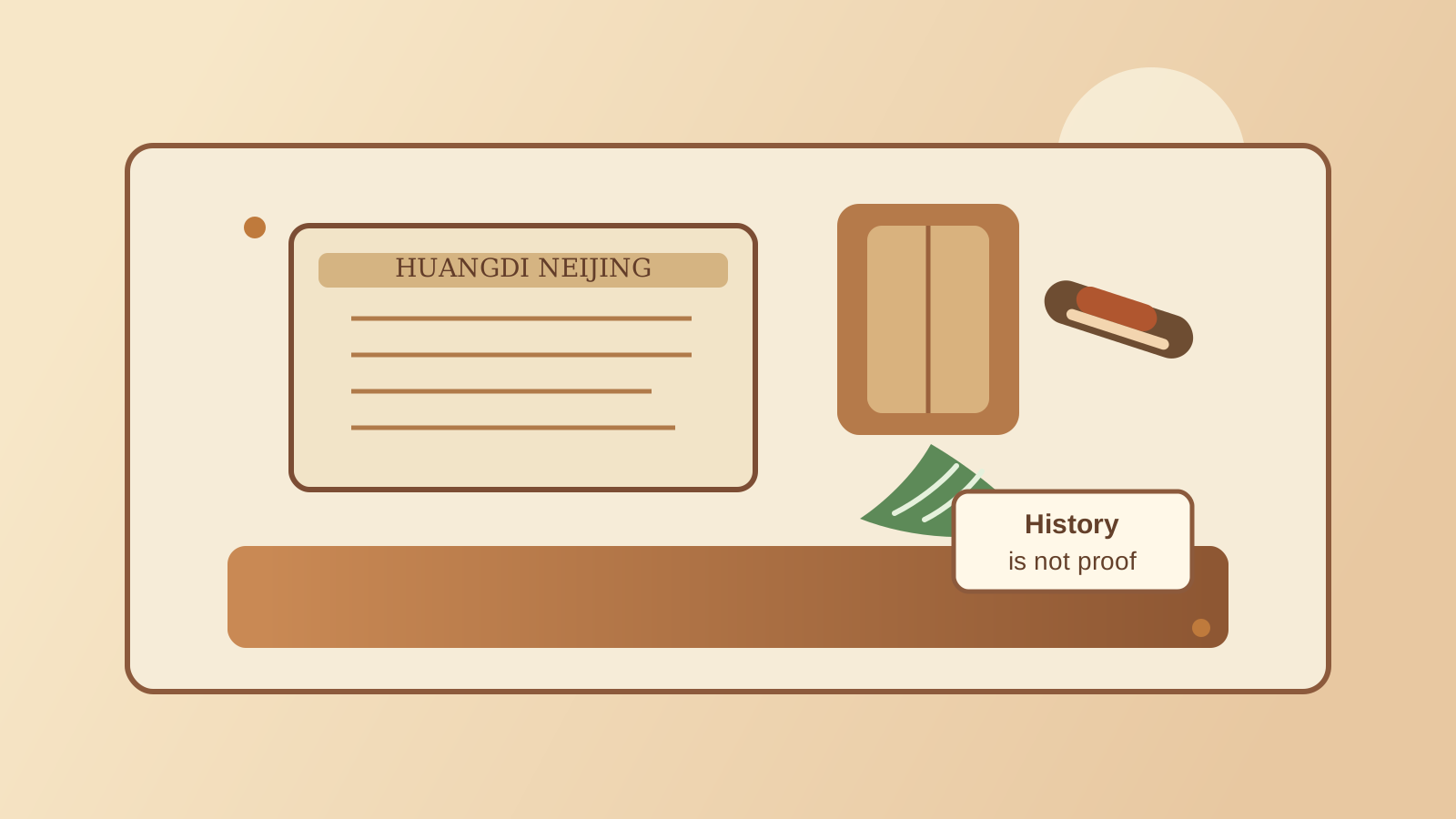
Moxibustion is part of a larger Chinese heritage story that includes classical learning, craft knowledge, clinic training, and household familiarity with mugwort and warming practices. The heritage framing explains why the practice still carries cultural meaning, but it does not turn tradition into proof of medical results.
Key takeaways
- Moxibustion is best understood as a living tradition with materials, teaching methods, vocabulary, and social meaning that extend beyond a single product listing.
- UNESCO's 2010 inscription recognized acupuncture and moxibustion of Traditional Chinese Medicine as intangible cultural heritage, which is a cultural designation rather than a medical guarantee.
- For beginners, the safest use of heritage context is to understand moxa more clearly while keeping modern safety and evidence questions separate.
Moxibustion is often explained through products, points, or safety questions. Those are useful entry points, but they are not the whole story. In China, moxibustion also belongs to a larger heritage conversation about how knowledge is learned, named, practiced, and carried forward across time.
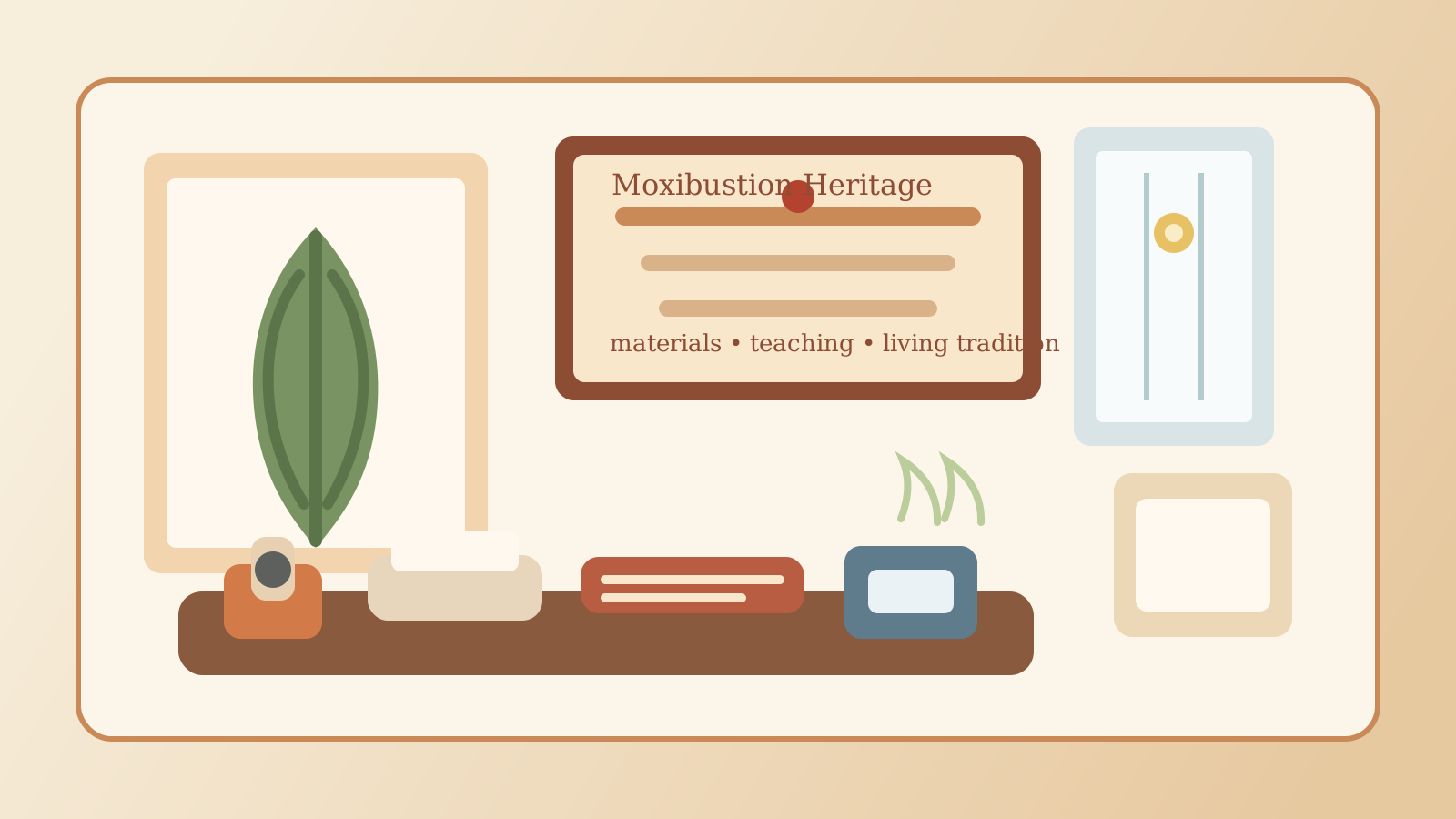
That is why the phrase “cultural heritage” matters here. It reminds beginners that moxibustion is not just a burning stick or a clinic technique. It is part of a living tradition shaped by mugwort materials, classical language, teaching lineages, public education, and household familiarity with seasonal wellness culture.
What “cultural heritage” means in plain English
When people hear “heritage,” they sometimes imagine something frozen behind glass. Intangible cultural heritage is different. It refers to living practices that are still taught, adapted, and recognized in public life.
Applied to moxibustion, that means several layers stay visible at once:
- the mugwort-based material tradition behind moxa,
- the classical and educational vocabulary used in Traditional Chinese Medicine,
- the clinic and apprenticeship methods used to pass skills on,
- the broader cultural setting that kept moxa familiar across generations.
This framing is useful because it shifts the beginner question from “What claim does this product make?” to “What tradition is this product coming from?”
Why 2010 matters
One concrete date helps anchor the heritage discussion. In 2010, UNESCO inscribed acupuncture and moxibustion of Traditional Chinese Medicine on the Representative List of the Intangible Cultural Heritage of Humanity.
That inscription matters because it recognized the practice as part of a living cultural system rather than as a narrow historical relic. UNESCO’s language places value on transmission, identity, and continuing practice. In other words, the question is not only whether moxibustion existed in the past. It is whether the knowledge around it continues to be learned and shared in the present.
For a beginner site, that distinction is important. Heritage recognition tells you why moxa remains culturally meaningful. It does not tell you that every modern health claim attached to moxa is proven or appropriate.
What gets passed down in a living moxa tradition
The heritage side of moxibustion is not only a matter of old texts. It also includes practical knowledge that has to be shown, repeated, and corrected.
Examples include:
- how mugwort is processed into moxa material,
- how different moxa formats are named and chosen,
- how direct and indirect methods are distinguished,
- how students learn traditional vocabulary around warmth, channels, and points,
- how safe handling habits are taught alongside the cultural theory.
That mix of theory and technique is why moxibustion is better described as a practice tradition than as a stand-alone object. A moxa stick on a shelf is only one small part of the broader inheritance.
If you want a background layer first, read history of moxibustion and moxibustion in Traditional Chinese Medicine. Those pages explain the longer timeline and the traditional vocabulary that the heritage framing builds on.
Mugwort, material culture, and recognition
Moxibustion would not carry the same heritage meaning without mugwort. The material chain from mugwort leaves to prepared moxa links household plant knowledge, craft processing, and traditional practice.
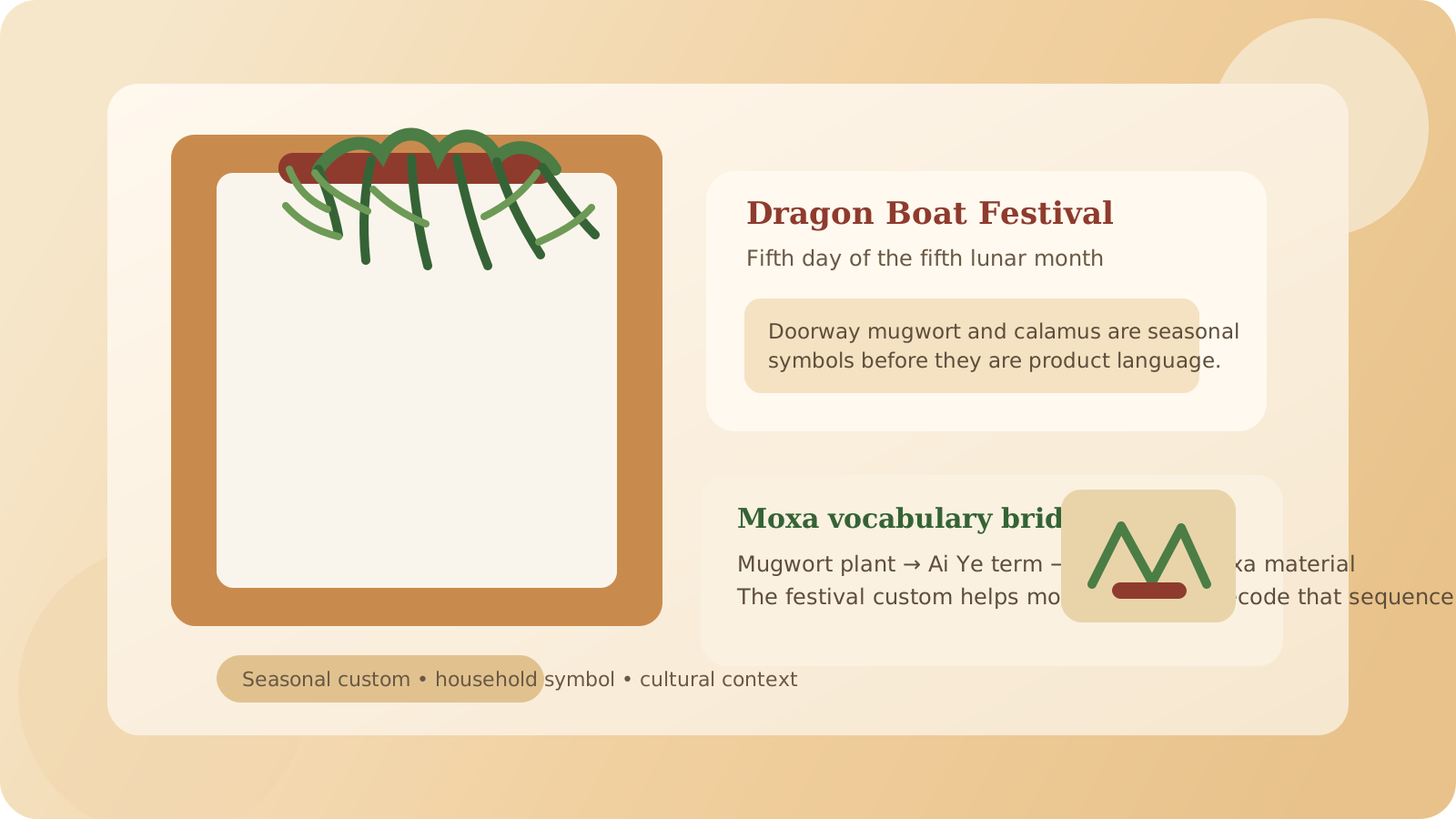
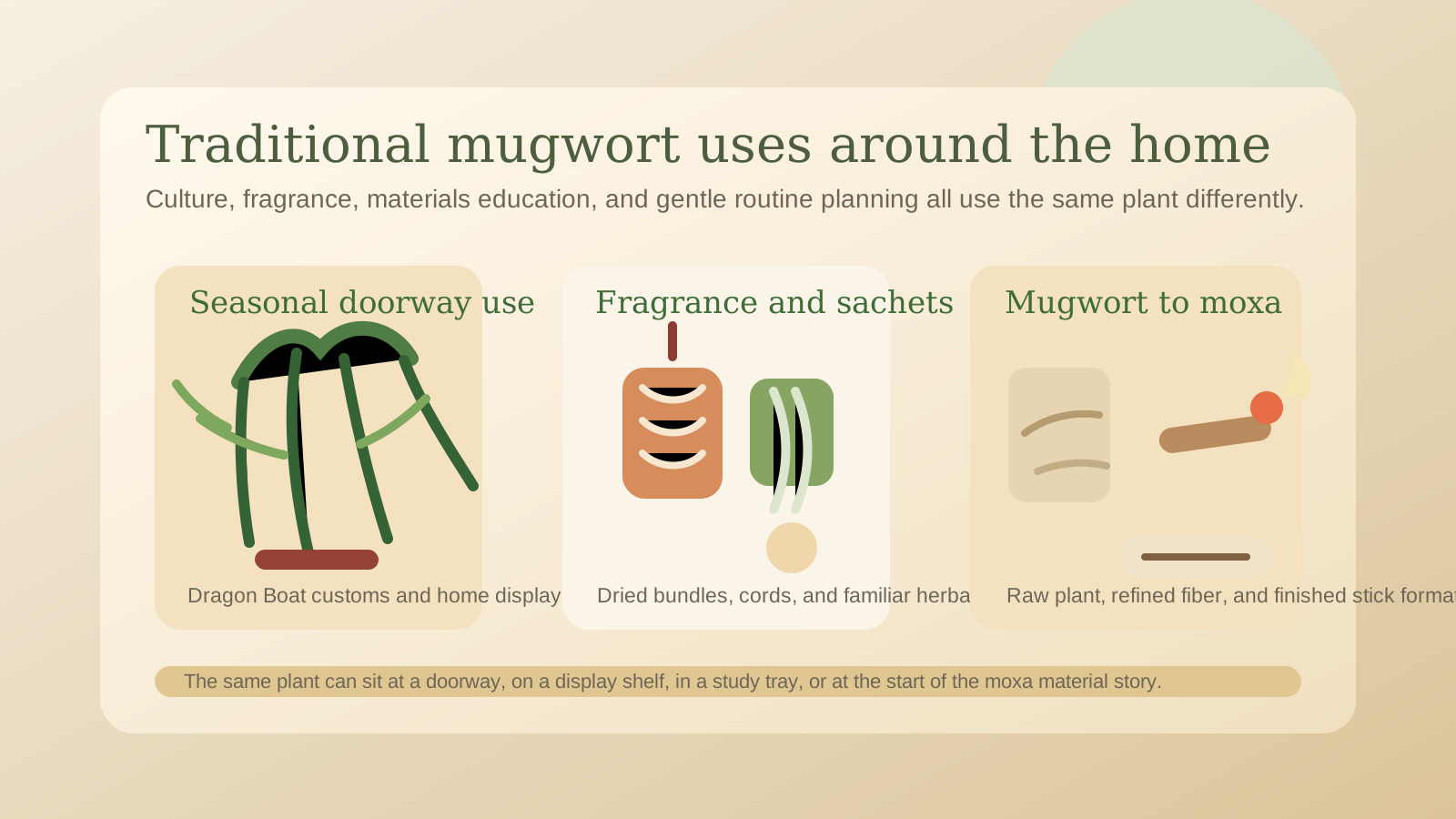
This is where the article connects back to Chinese cultural life more broadly. Mugwort appears in festival customs, seasonal household symbolism, and TCM language, while processed moxa becomes the practical material used in warming techniques. That is why a heritage article can talk about both plant culture and clinical education without collapsing them into one claim.
For English readers, the cleanest sequence is:
- mugwort is the plant source,
- moxa is the prepared material,
- moxibustion is the traditional warming practice,
- cultural heritage is the social and historical framework that kept the practice legible over time.
That sequence prevents a common mistake: assuming that a long cultural history automatically proves a modern medical promise.
Why this framing helps beginners
Many beginner questions come from mixed signals. A reader sees a moxa stick for sale, a chart with point names, and a sentence about ancient wisdom, then tries to combine them into one idea. The heritage lens slows that down.
It helps you separate:
- cultural continuity from clinical evidence,
- traditional terminology from modern diagnosis,
- product format from the older practice tradition,
- respect for heritage from overconfident marketing.
That separation is healthy. It makes the tradition easier to appreciate and the claims easier to judge.
What cultural heritage does and does not prove
The heritage framing supports several careful conclusions. It shows that moxibustion has long-standing cultural visibility. It shows that the practice is taught and recognized as part of a living tradition. It shows that the materials, names, and methods belong to a wider Chinese cultural context.
What it does not show is that home moxa is right for everyone, that every seller is trustworthy, or that heritage status answers modern evidence questions on its own.
For that reason, the most responsible beginner takeaway is simple: use heritage context to understand what moxa is and why it matters, then use separate safety and evidence standards when deciding what to do with a real product.
If you are reading with home use in mind, continue with what is moxa, what is a moxa stick, and moxibustion safety basics. That path keeps the cultural picture intact while staying practical.
Sources and further reading
- UNESCO: Acupuncture and moxibustion of Traditional Chinese Medicine
- UNESCO decision 5.COM 6.6
- National Administration of Traditional Chinese Medicine: Acupuncture and moxibustion listed as intangible cultural heritage
- Britannica: Moxibustion
Common questions
What does it mean to call moxibustion cultural heritage?
It means the practice is being discussed as a living tradition with history, teaching, tools, vocabulary, and community transmission, not only as a modern retail product.
Did UNESCO recognize moxibustion on its own?
UNESCO inscribed acupuncture and moxibustion of Traditional Chinese Medicine together on the Representative List of the Intangible Cultural Heritage of Humanity in 2010.
Does cultural heritage status prove health benefits?
No. Heritage status recognizes cultural continuity and public significance. It does not prove that any product or home routine will diagnose, treat, cure, or prevent disease.