Quick answer
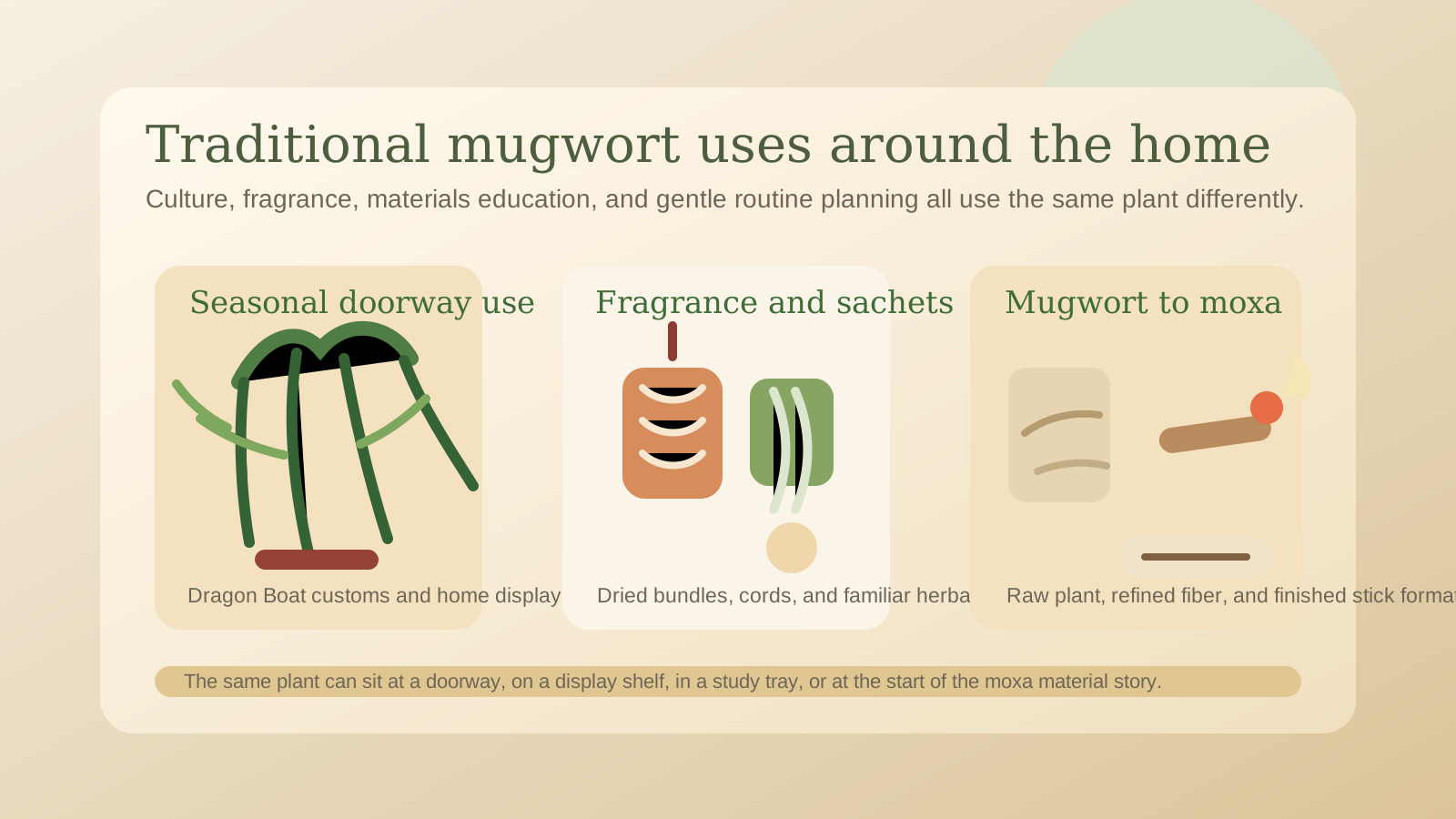
During the Dragon Boat Festival, mugwort is part of a visible seasonal custom in many Chinese communities. For beginners, the most useful takeaway is cultural literacy: the tradition explains doorway bundles, festival symbolism, and later moxa vocabulary without turning the holiday into a medical claim.
Key takeaways
- Mugwort appears at the Dragon Boat Festival mainly as a seasonal household custom, not as a stand-alone treatment instruction.
- In many Chinese settings, mugwort and calamus are hung near the doorway as part of an early-summer ritual tied to fragrance, protection symbolism, and seasonal change.
- For modern moxa readers, the festival tradition is most valuable as cultural context that explains why mugwort and Ai Ye remain so visible in later moxibustion language.
If you searched for moxa and the Dragon Boat Festival, the short answer is this: mugwort is linked with the festival because many communities hang it with calamus at the doorway as part of an early-summer custom. For modern readers, that matters mainly as cultural context. It helps explain why mugwort appears in festival imagery and later moxa vocabulary, but it should not be turned into a stand-alone medical instruction.
That background is useful because English-language readers often meet mugwort in reverse order. They start with moxa sticks, then notice the same plant in Dragon Boat customs, Ai Ye terminology, and traditional Chinese medicine reading. A good article should slow that sequence down. The festival custom comes first as lived culture. The product vocabulary comes later.
Why mugwort appears at the Dragon Boat Festival
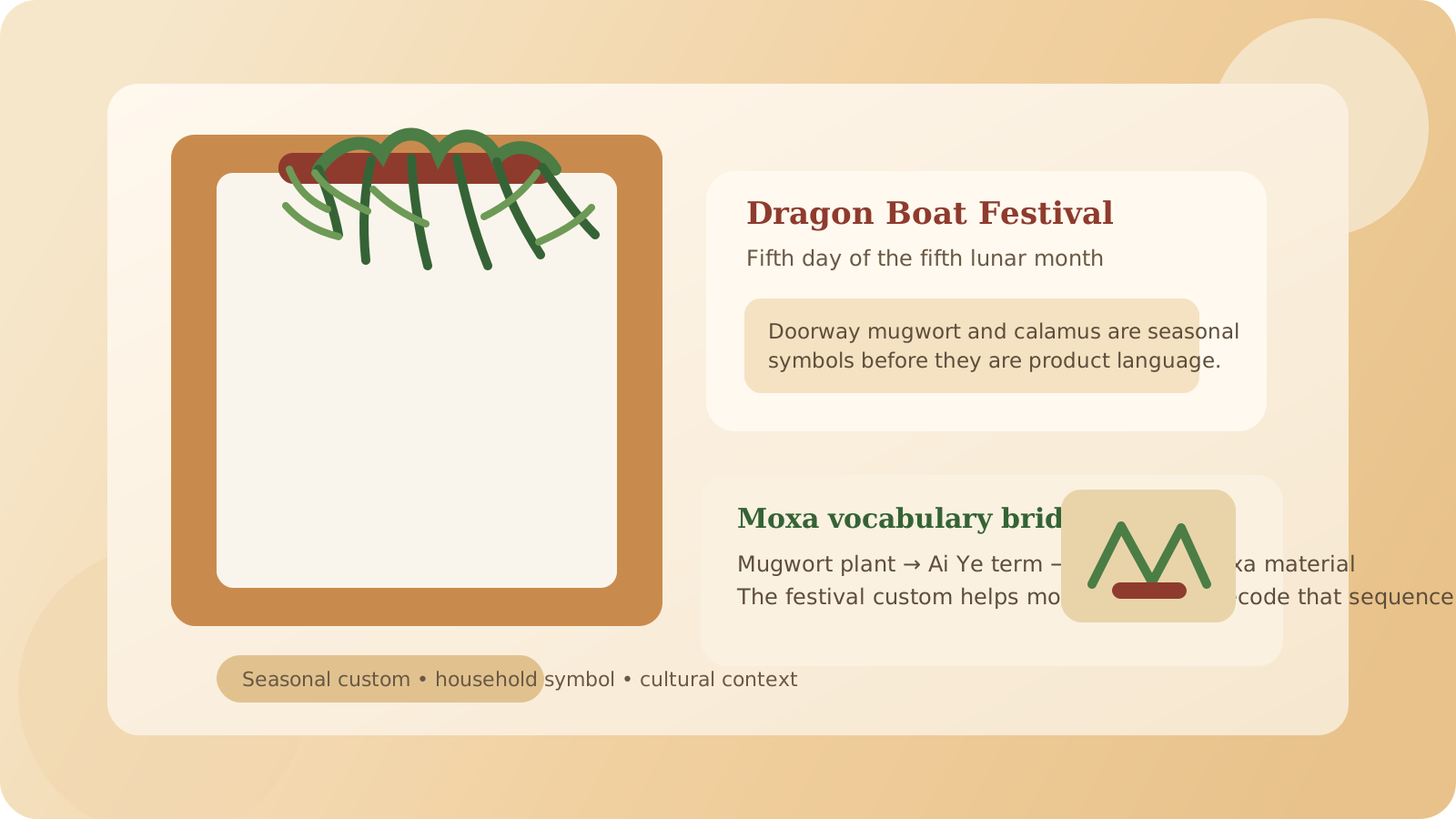
Official cultural-heritage material describes the Dragon Boat Festival as a major living tradition observed on the fifth day of the fifth lunar month. Chinese intangible-heritage pages on the festival regularly list hanging mugwort and calamus, carrying sachets, and other seasonal customs alongside dragon-boat racing and festival food. That detail matters because it places mugwort in public, household, and seasonal life before any moxa product discussion begins.
For beginners, that answers the primary question directly. Mugwort is associated with Dragon Boat not because a shop invented a story around it, but because the plant already had a visible role in seasonal observance. If you want the broader cultural view beyond this holiday, mugwort in Chinese culture gives the bigger picture.
The safest interpretation is also the most useful one: a long cultural history explains meaning, continuity, and symbolism, but it does not automatically prove modern medical outcomes.
What the doorway bundle usually means
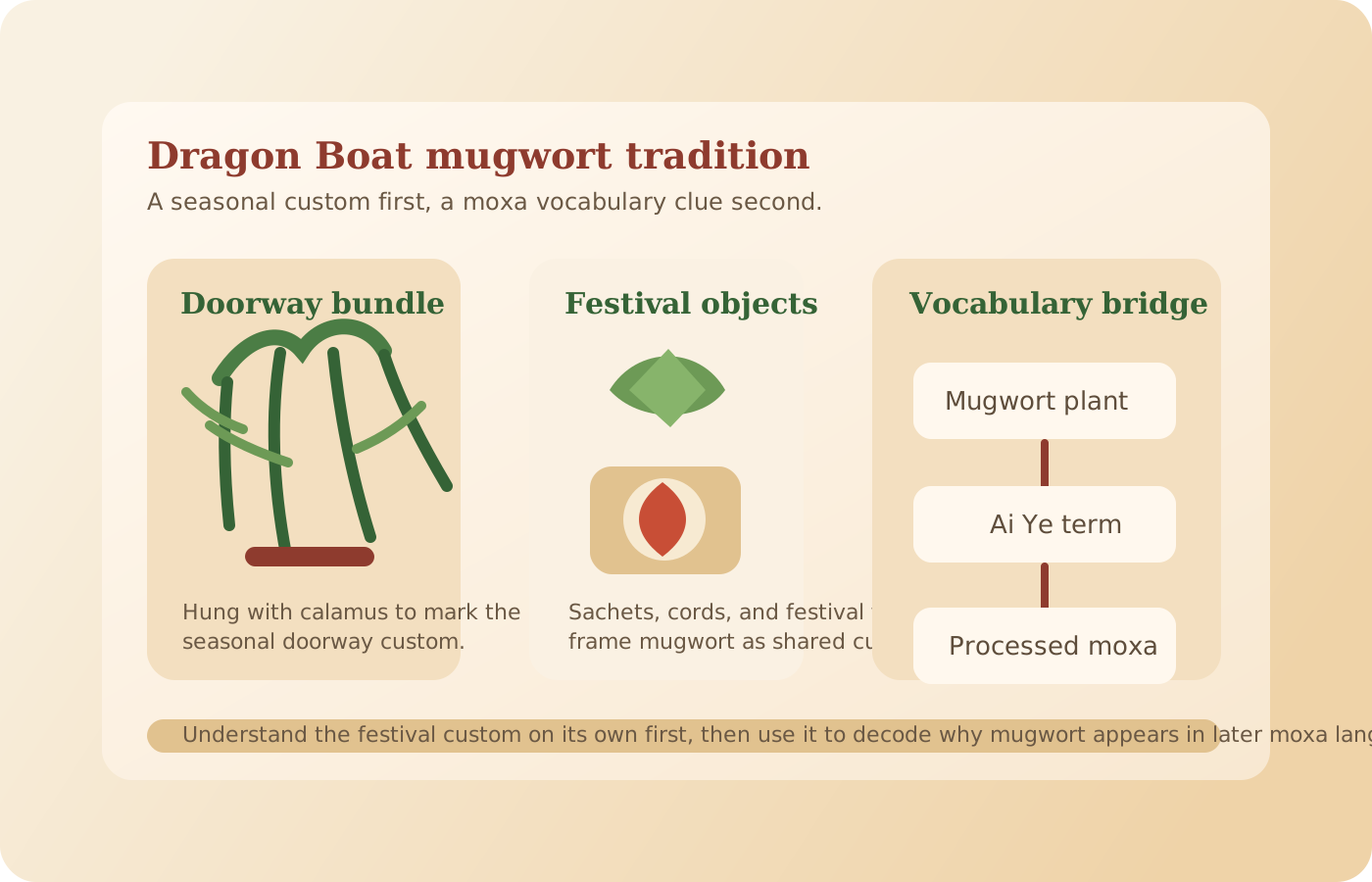
The most familiar Dragon Boat mugwort custom is the doorway bundle. Mugwort is often paired with calamus and placed near the entrance. In plain English, the bundle works like a seasonal household marker. It says the home is entering the festival period and the early-summer transition with a visible, fragrant, recognizable plant.
That doorway custom usually carries several meanings at once:
- it marks the festival in a way neighbors and family can recognize,
- it uses fragrance and plant imagery to shape household atmosphere,
- it reflects older symbolic language about protection, order, and good wishes.
Other familiar Dragon Boat objects such as sachets, five-color cords, and zongzi belong to the same scene. Mugwort makes sense inside that group because of its strong smell, visible shape, and long presence in seasonal custom. If you see mugwort drawn beside festival cards or doorway decorations, that is usually a cultural reference before it is a product reference.
How festival mugwort connects to moxa
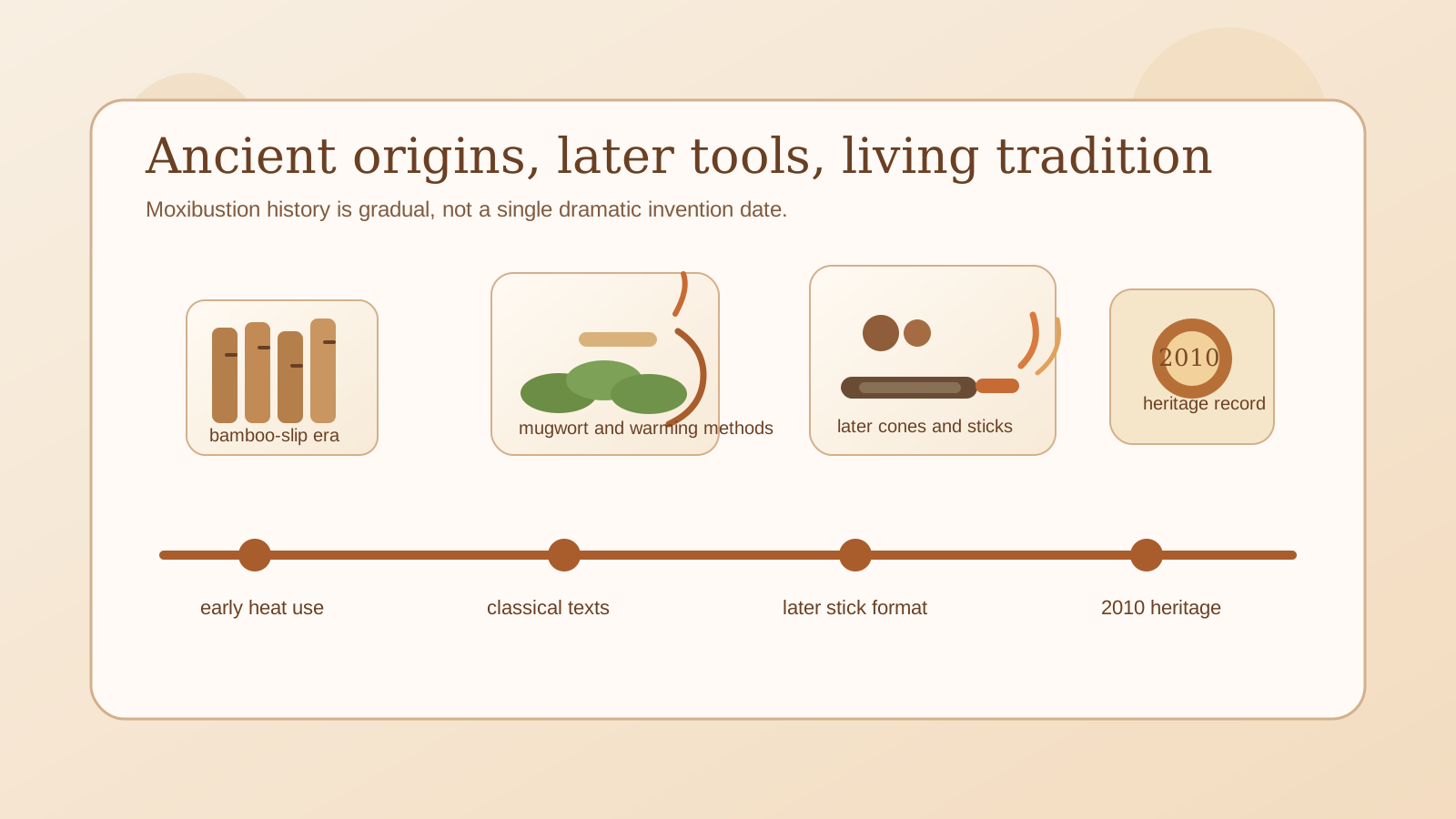
This is where the topic becomes especially relevant for moxasticks.store readers. Mugwort in Dragon Boat culture is not the same thing as a finished moxa stick, but it helps explain why mugwort became so familiar in later moxibustion language. Traditional Chinese medicine and acupuncture-moxibustion heritage material describe moxa sticks and cones as processed forms made from mugwort leaves. The festival custom does not create moxa, but it makes the plant culturally legible long before a reader sees a retail package.
The clean sequence is:
- mugwort is the plant,
- Ai Ye is the Chinese term readers often encounter in TCM and moxa contexts,
- processed mugwort becomes moxa material,
- moxibustion is the warming practice that uses that material.
When readers already know mugwort from festival customs, the later jump into moxa vocabulary makes more sense. If you want the material side next, read what is mugwort used for in moxa, Ai Ye and mugwort in Chinese medicine history, and what is moxa.
What “modern use” should mean for readers now
The phrase “modern use” can easily drift in the wrong direction on a moxa site. A careful reader should treat it as a literacy question, not as a shortcut to home treatment. In practice, modern use here means a few concrete things:
- understanding why mugwort appears in Dragon Boat imagery,
- recognizing that festival mugwort and processed moxa are related but not identical,
- reading product claims more critically because you know the cultural backstory.
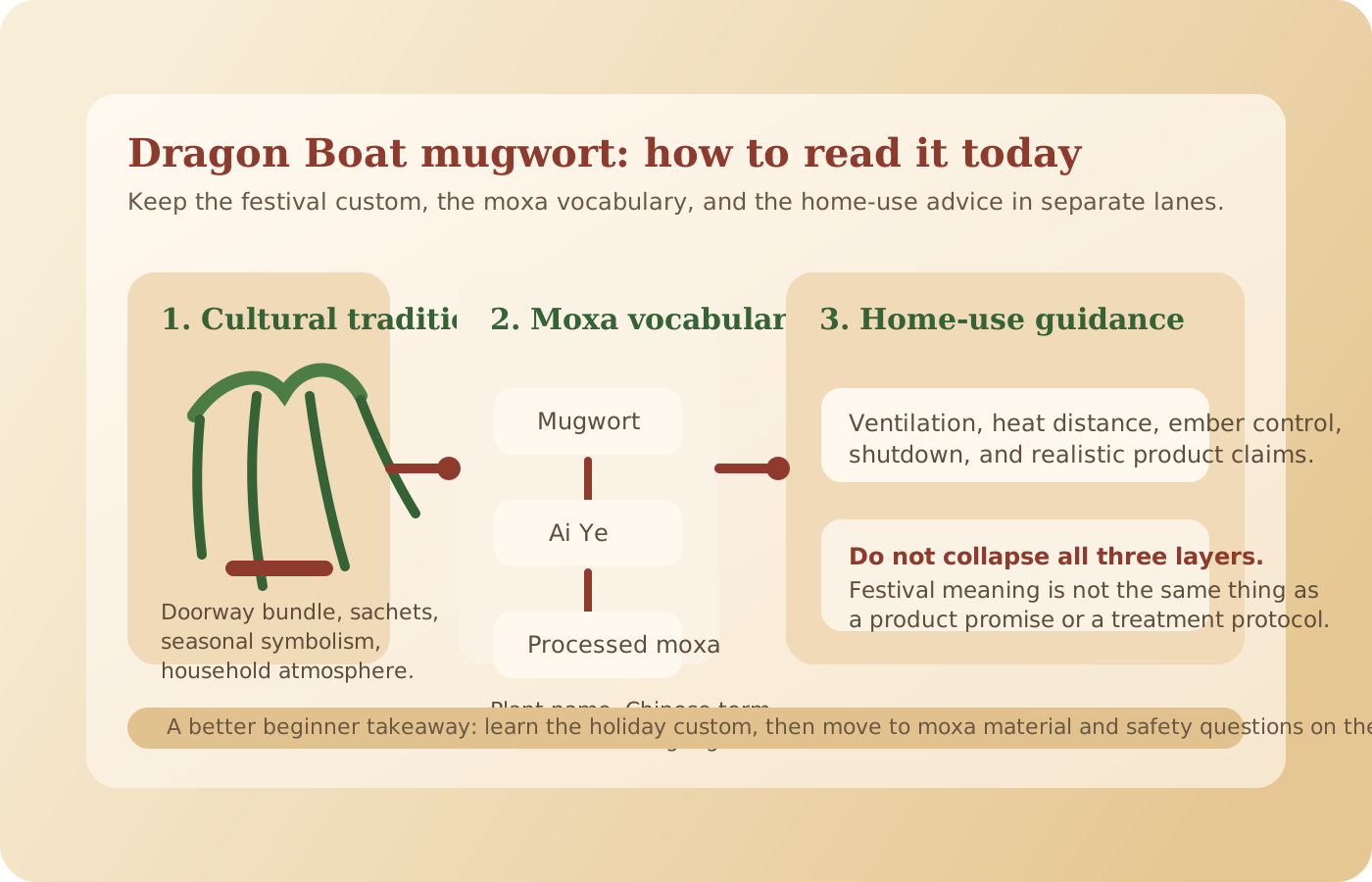
That third point is especially important. Once you know the holiday custom, you can separate three different layers that online content often mixes together:
- cultural tradition,
- traditional material vocabulary,
- modern home-use product advice.
That separation protects search intent. Someone looking up Dragon Boat mugwort usually wants cultural meaning first. Someone comparing smoke, heat, and shutdown is really asking a different question, better answered by what is a moxa stick or moxibustion safety basics.
What not to infer from the tradition
It is important not to overread the Dragon Boat Festival mugwort tradition. The custom can support careful cultural conclusions:
- mugwort has visible seasonal importance in Chinese life,
- its symbolism overlaps with household care and early-summer observance,
- it helps explain why mugwort remains prominent in moxa language and imagery.
But the custom does not prove that every mugwort product is high quality, that every moxa routine is appropriate for home use, or that traditional symbolism answers modern safety questions. It also does not turn a festival article into guidance for symptoms, diagnosis, pregnancy, or chronic-condition care. Those are different categories of questions and should stay separate.
That is why this site keeps culture and home-use guidance distinct. If you want the tradition side next, continue with history of moxibustion and moxibustion as Chinese cultural heritage. If you want practical product guidance, move instead to how to use moxa sticks at home or how to choose good moxa sticks.
A practical beginner takeaway
If you searched for the Dragon Boat Festival mugwort tradition, the shortest useful answer is still this: mugwort is part of a living seasonal custom, and that custom provides cultural background for understanding moxa. The page is most valuable when it helps you read later product language more accurately.
That is also the safest way to respect the tradition. Learn the symbolism, the festival setting, and the vocabulary link to Ai Ye and moxa. Then evaluate modern products, smoke, handling, and safety with a separate set of practical standards instead of asking one holiday custom to answer every modern question.
Sources and further reading
- UNESCO: Dragon Boat Festival
- China Intangible Cultural Heritage: Dragon Boat Festival project page
- China Intangible Cultural Heritage: Dragon Boat Festival customs overview
- National Administration of Traditional Chinese Medicine: Acupuncture and moxibustion heritage page
Common questions
Why is mugwort associated with the Dragon Boat Festival?
Because many Dragon Boat customs include hanging mugwort and calamus, carrying fragrant sachets, and marking the seasonal change at the start of summer.
Is Dragon Boat Festival mugwort the same as moxa?
No. Festival mugwort refers to the plant in a seasonal cultural setting, while moxa is processed mugwort material prepared for moxibustion.
What should 'modern use' mean here?
For most readers, modern use should mean understanding the tradition, vocabulary, and product context more clearly, not treating the festival itself as proof of medical benefit.