Quick answer
Moxibustion and acupuncture are often discussed together in Traditional Chinese Medicine, but they are not the same thing. Moxibustion uses controlled heat from burning moxa, while acupuncture uses needles. For beginners, the practical differences involve tools, sensation, smoke, setup, and whether the method belongs in guided clinical care or cautious home product education.
Key takeaways
- Moxibustion uses burning moxa for warmth, while acupuncture uses needles, so the beginner safety questions start from different tools.
- Traditional Chinese Medicine often pairs the two methods in the same vocabulary of points and channels, but that does not make them interchangeable.
- If you are reading as a beginner, moxibustion raises fire, smoke, and ash questions, while acupuncture raises training and practitioner-guidance questions.
Moxibustion and acupuncture are often mentioned in the same sentence, which makes many beginners assume they are basically the same method. They are not. In plain language, acupuncture uses needles and moxibustion uses controlled heat from burning moxa, usually made from processed mugwort.
That shared wording comes from Traditional Chinese Medicine, where both methods are discussed through points, channels, and a long teaching history. But once you move from theory to practical handling, the difference becomes obvious very quickly.
Quick answer for beginners
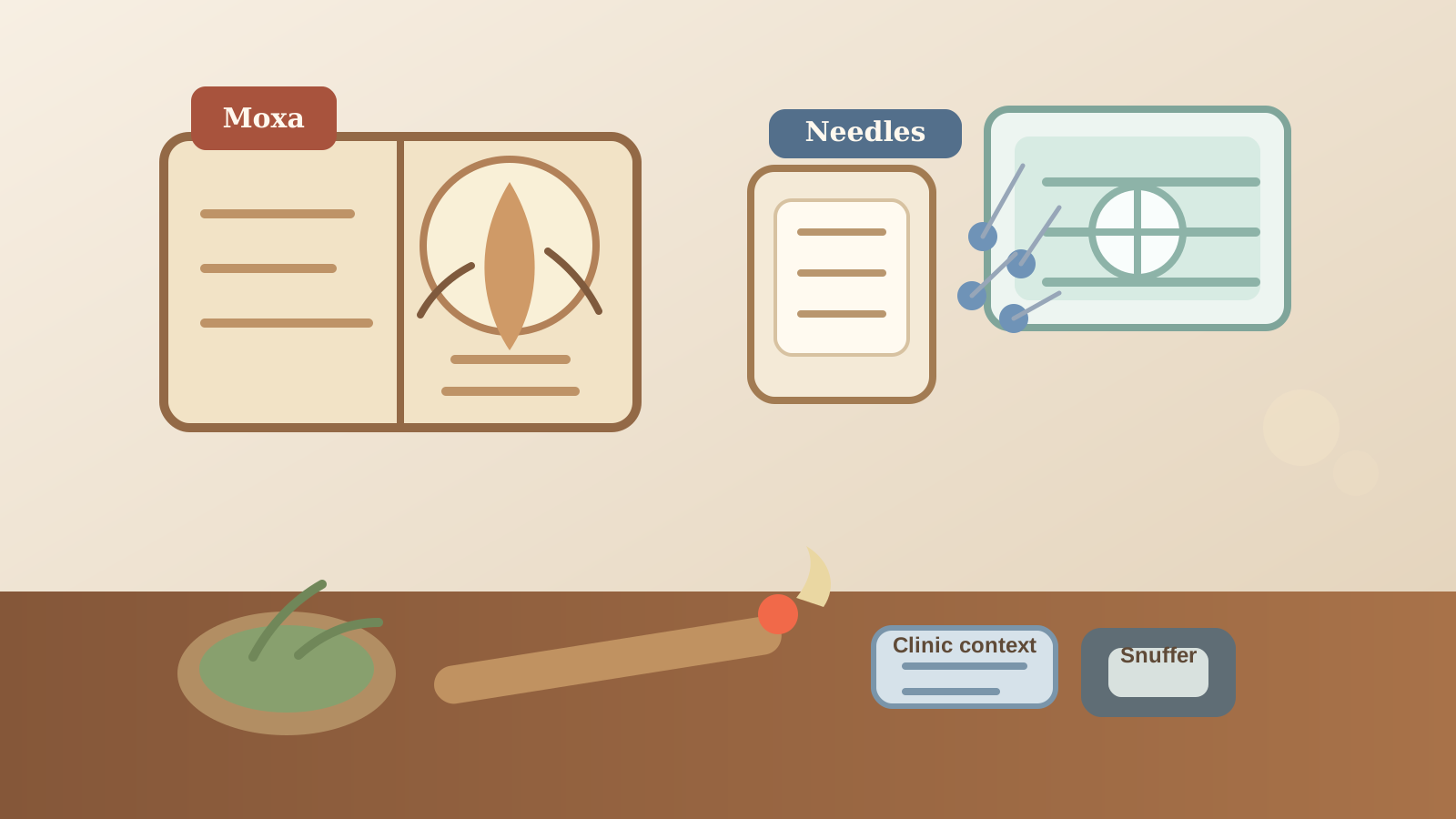
If you want the shortest useful answer, acupuncture and moxibustion can target similar traditional points, but they do it with different tools:
- acupuncture uses needles,
- moxibustion uses heat from burning moxa,
- acupuncture is usually learned in a practitioner setting,
- moxibustion often appears to beginners as a product or home-use question.
That last point matters. Many English-speaking beginners first meet moxibustion through moxa sticks, holders, and smoke questions. They usually meet acupuncture through clinics, practitioner bios, and treatment menus. The overlap is real, but the first practical decision is different.
What moxibustion uses
Moxibustion uses moxa, a combustible material commonly made from processed mugwort leaves. Depending on the method, the moxa may be shaped into sticks, cones, loose wool, or other formats. Official Traditional Chinese Medicine descriptions often divide the practice into direct and indirect forms, but most consumer-facing beginner content focuses on indirect formats such as handheld sticks or holder-based tools.
Because moxa burns, the first practical questions are ordinary physical ones:
- How close is the heat?
- Where will the ash fall?
- Can the room handle smoke and odor?
- How will the product be extinguished fully?
That is why moxibustion articles for beginners spend so much time on ventilation, nonflammable surfaces, ash control, and stopping early when the setup stops feeling controlled.
What acupuncture uses
Acupuncture uses needles placed at selected points by a trained practitioner. The experience is therefore shaped less by smoke and more by technique, point selection, and clinical context. Even when people describe a dull, heavy, tingling, or brief pinching feeling, the practical comparison still starts with the tool itself: a needle is being used, not a burning product.
For beginners, that changes the safety frame immediately. Acupuncture is not mainly a question of ash, odor, or how to put something out at the end. It is a question of training, technique, and whether the person performing it is appropriately qualified for the setting.
That does not mean moxibustion is automatically casual or risk-free. It means the risks arise from different handling problems.
Why the two are grouped together in Traditional Chinese Medicine
UNESCO and official Chinese Traditional Chinese Medicine references describe acupuncture and moxibustion together because the two methods share part of the same cultural and teaching tradition. Both are discussed through points, channels, and classical theory, so English readers often encounter them as a pair.
The safest way to understand that pairing is this: they share a traditional framework, but they are not interchangeable. A sentence that makes sense for acupuncture does not always describe moxibustion well, and a shop page about moxa sticks does not tell you much about needle-based practice.
This is where confusion often starts. Someone reads that both methods are part of TCM and then assumes they are merely stronger or weaker versions of the same action. In practice, one introduces a heat-and-combustion setup and the other introduces a needle-and-practitioner setup.
How the beginner experience differs
The comparison is easier when you stop asking which method is “better” and start asking what the beginner must actually manage.
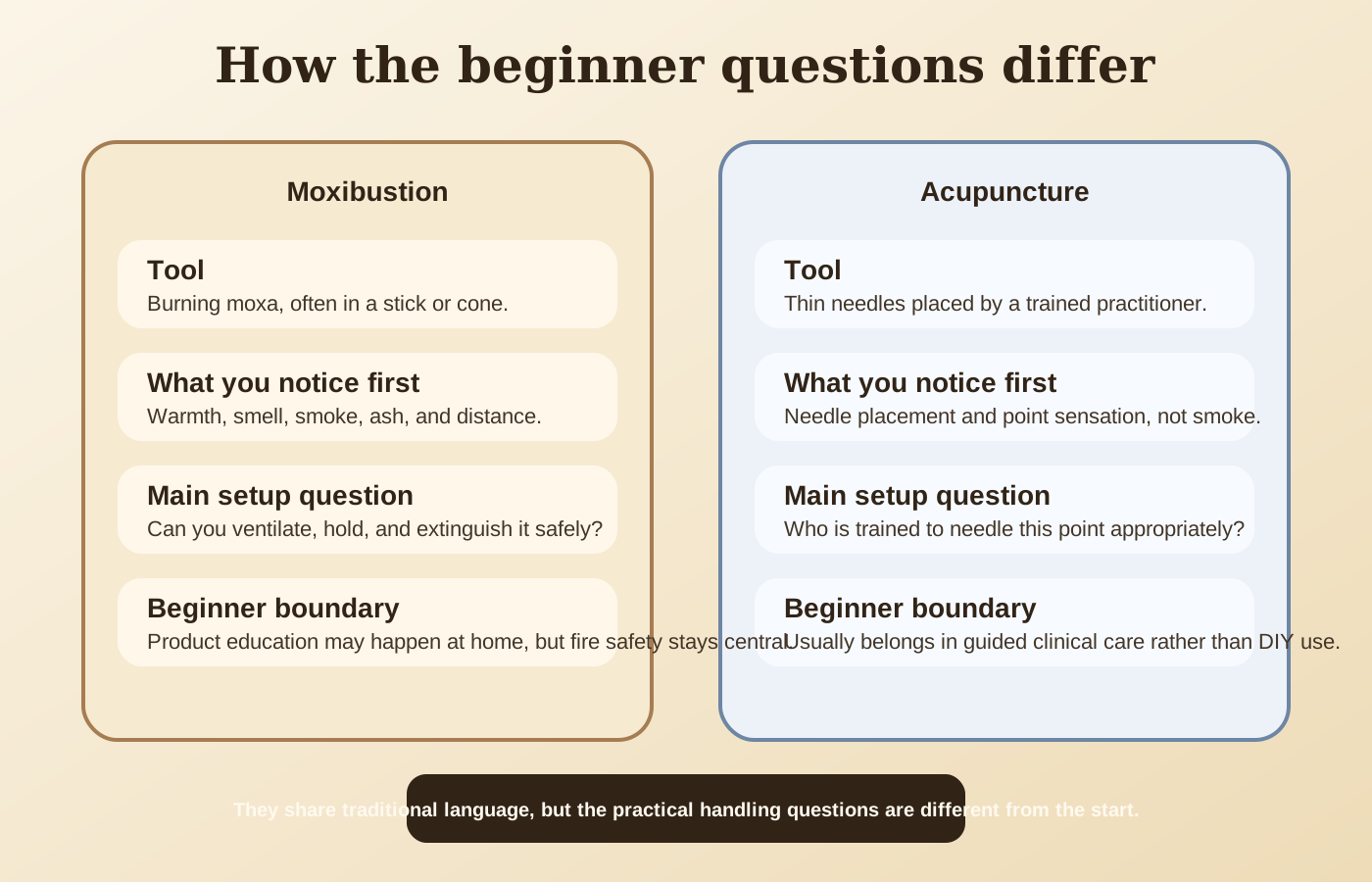
- With moxibustion, the beginner manages warmth, smoke, ash, smell, and extinguishing.
- With acupuncture, the beginner mainly manages provider choice, expectations, and communication about the session.
That difference affects almost every follow-up question. If you ask, “Can I do this in a small apartment?” you are probably asking about moxibustion. If you ask, “What should I ask the practitioner before the session?” you are probably asking about acupuncture.
Which one is more realistic for home beginners to read about?
Home readers usually find moxibustion easier to understand at the product level because the items are visible: sticks, holders, trays, snuffers, and room setup. That still does not make home use right for everyone, and it does not turn moxa into a disease-treatment shortcut. It only means the beginner learning curve often starts with concrete household questions.
Acupuncture is different. Even if the theory overlaps, it is not usually introduced as a retail home product. A beginner can read about acupuncture, but the method itself is more closely tied to practitioner training and session context than to a shopping checklist.
So if your question is “What is the difference between these two things I keep seeing together?” the clean answer is:
- Moxibustion is the heat-based method.
- Acupuncture is the needle-based method.
- Both may be discussed through the same traditional map, but the beginner handling and safety questions are not the same.
A useful rule when you are reading claims
When you see acupuncture and moxibustion grouped together on a page, separate three layers before you assume too much:
- Traditional explanation: shared TCM vocabulary, cultural history, and point language.
- Practical method: needles for acupuncture, burning moxa for moxibustion.
- Personal decision: whether you need a qualified practitioner, a safer home setup, or neither.
That separation helps you avoid two common mistakes. The first is flattening both methods into one vague wellness idea. The second is treating traditional language as proof that either method is appropriate for every person or condition.
When to ask a qualified clinician instead of comparing articles
If you want either method for a specific health concern rather than general education, move beyond comparison content and ask a qualified clinician. The same applies if you are unsure about smoke tolerance, heat sensitivity, skin safety, or whether a point-based method fits your situation at all.
For site navigation, the best next steps are usually narrower:
- read what is moxibustion for the broad overview,
- read moxa vs moxibustion for the vocabulary distinction,
- read moxibustion safety basics if your real question is home setup,
- read what is a moxa stick if you are trying to decode product language.
Sources and further reading
- National Center for Complementary and Integrative Health: Acupuncture - Effectiveness and Safety
- National Center for Complementary and Integrative Health: Traditional Chinese Medicine - What You Need To Know
- UNESCO: Acupuncture and moxibustion of traditional Chinese medicine
- National Administration of Traditional Chinese Medicine: acupuncture and moxibustion heritage overview
- PubMed Central: The Safety of Moxibustion
Common questions
Is moxibustion the same as acupuncture?
No. They are often discussed together in Traditional Chinese Medicine, but moxibustion uses heat from burning moxa and acupuncture uses needles.
Can beginners do moxibustion at home more easily than acupuncture?
Beginners can learn basic product and safety concepts for moxa at home, but that does not remove the need for ventilation, burn caution, and a clear extinguishing plan. Acupuncture is generally not a beginner DIY practice.
Why are moxibustion and acupuncture mentioned together so often?
They share part of the same Traditional Chinese Medicine teaching history and are often discussed through the same language of points and channels, even though the tools and handling are different.