Quick answer
Moxa wool ratio usually describes how much mugwort leaf was processed to make a given amount of finished moxa wool, so a higher number generally points to a more refined material rather than an automatic better experience. For beginners, the ratio is useful buying vocabulary, but it should be weighed alongside dryness, smell, storage, format, and how realistic the product is for your setup.
Key takeaways
- A ratio such as 10:1 or 15:1 usually refers to how much mugwort leaf was used to produce one part of finished moxa wool.
- Higher ratio labels are commonly sold as finer or more refined, but they do not guarantee better results or make basic product checks less important.
- Beginners should read ratio labels together with storage quality, smell, format, smoke expectations, and whether the product fits a manageable home setup.
If you have seen moxa wool listed as 5:1, 10:1, 15:1, or 30:1, the ratio is usually a material-refinement label, not a promise about health outcomes. In plain English, it tells you how much mugwort leaf was processed to make a smaller amount of finished moxa wool.
That matters because beginners often assume the number works like a universal score. It does not. The ratio can help you understand how the product is being marketed, but it does not replace ordinary checks such as smell, dryness, storage, format, and whether the seller explains the product honestly.
What the ratio usually means
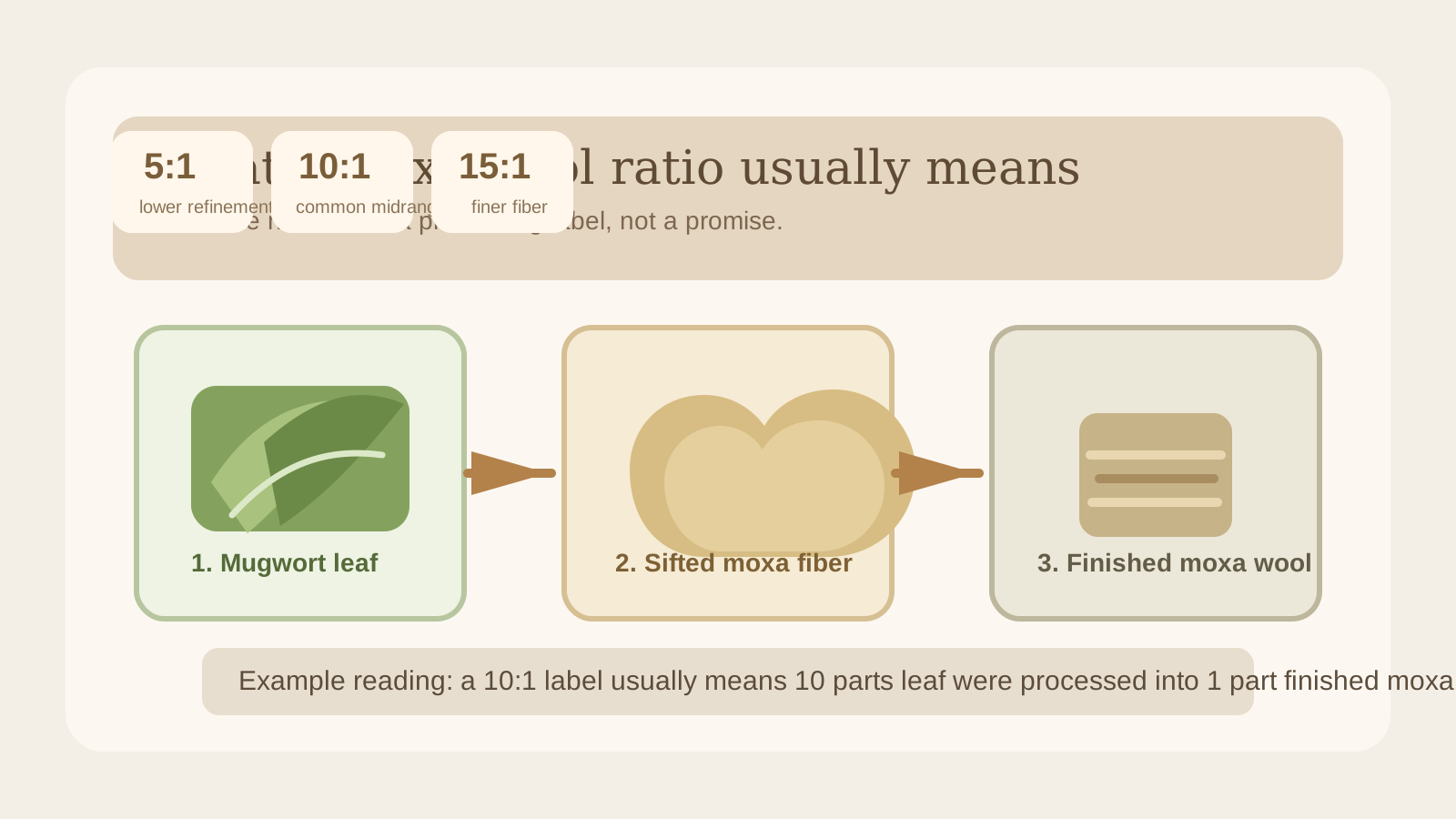
Government explainers in Beijing and Guangzhou describe moxa wool purity as a ratio showing how many kilograms of mugwort leaf are used to produce one kilogram of finished moxa wool. That is why common labels look like 5:1, 8:1, 10:1, 15:1, or higher.
Using that system:
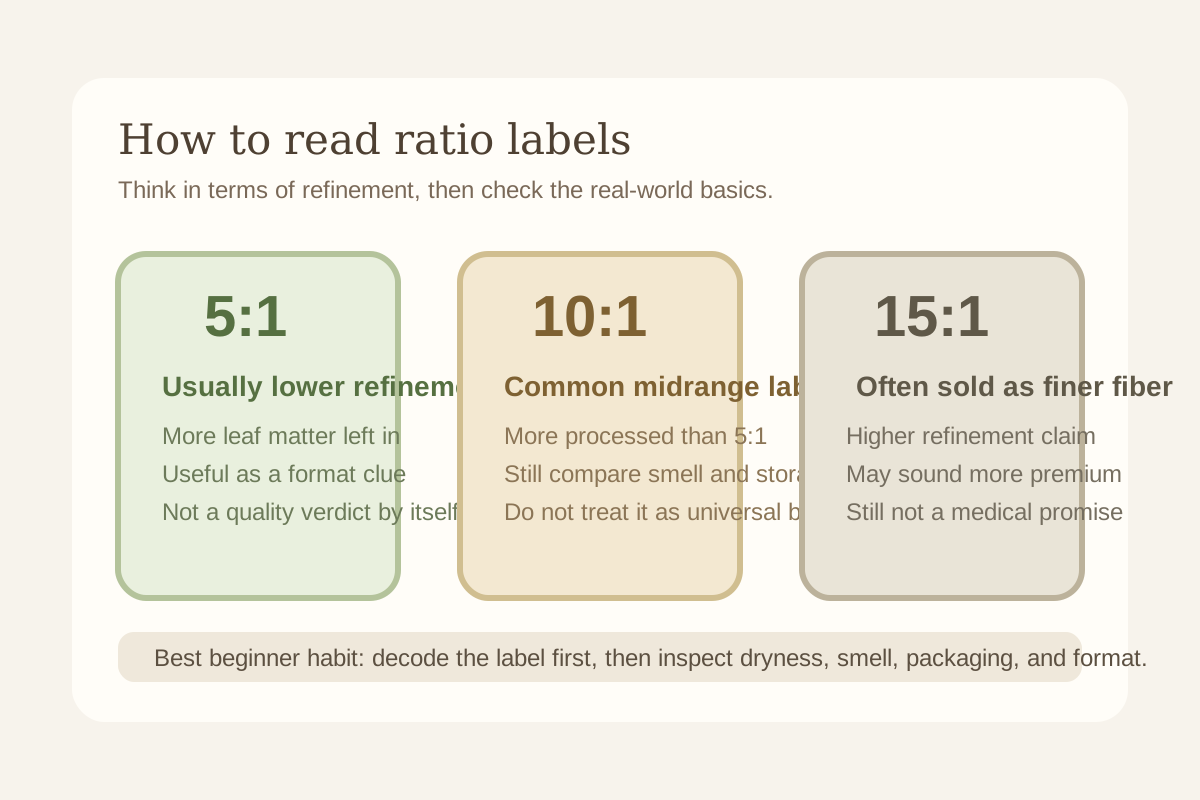
- 5:1 usually means less leaf refinement than a higher-ratio product.
- 10:1 usually means more processing and separation.
- 15:1 or above is often sold as finer, softer, or more premium.
The useful beginner point is simple: the number is usually talking about processing yield, not about an assured user experience.
Why sellers talk about higher ratios
Higher ratio labels are commonly used to suggest that more coarse plant matter was removed and that the remaining fiber is more refined. Official public explainers sometimes group the ratios into broad quality bands, and some sellers use color terms such as golden moxa wool for higher-purity material.
That does not mean every higher-ratio listing is automatically trustworthy. It means the label has a traditional product-language background that many shops continue to use.
For a beginner, the label is helpful when it answers a vocabulary question:
- Is this loose moxa wool or a finished stick made from that wool?
- Is the seller explaining ratio as a material property or using it as hype?
- Is the product page clear about storage, size, and format, or only about prestige?
If a listing leans heavily on the number but says very little about storage or handling, the ratio is doing marketing work that product details should be doing.
What a ratio does not tell you
The ratio does not tell you everything a beginner needs to know before buying.
It does not fully answer:
- whether the product stayed dry,
- whether the smell is clean or musty,
- whether the wrapper or packaging protects the material well,
- whether the finished product fits your holder or extinguisher,
- whether the smoke level suits your room,
- whether the seller is making exaggerated promises.
That is why this topic belongs next to how to choose good moxa sticks and how to spot fake or low-quality moxa sticks. Ratio is one buying clue, not the whole decision.
Does higher ratio always mean better for beginners?
Not necessarily.
A higher-ratio moxa wool may be marketed as finer or cleaner, but “better” depends on what you are actually trying to buy. A beginner usually benefits more from a product that is:
- clearly described,
- dry and well stored,
- realistic about smoke and smell,
- easy to inspect on arrival,
- easy to pair with a safe setup.
That is especially true because published research on moxa wool purity has explored laboratory ways to distinguish different purities and compositions, which suggests that ratio labels sit inside a broader quality discussion rather than acting as a single universal standard. In other words, the number matters, but it is not the only thing that matters.
A practical way to read ratio labels
If you want a simple beginner rule, read the ratio in this order:
- First, treat it as a material-processing clue.
- Second, check whether the seller explains the product format clearly.
- Third, confirm the product still passes basic quality checks such as dry storage, clean smell, and realistic claims.
That order helps prevent a common buying mistake: chasing the highest number before checking whether the listing itself is credible.
For example, a plainly described 10:1 product with dry storage guidance may be more useful than a vague “premium 30:1” listing that hides the actual format, size, or storage conditions.
When this topic matters most
This topic matters most when you are still learning the language of moxa products. Once you understand that ratio usually refers to the yield from leaf to finished wool, many product pages become easier to read.
You can then ask better questions:
- Is this ratio attached to loose wool, a stick, or a cone?
- Does the seller explain what the number means?
- Is the listing helping me judge the product as a real object, not as a miracle claim?
That is a stronger buying habit than assuming a higher number guarantees a better outcome.
If you want to keep building the basics, continue with what is moxa, moxa wool vs moxa stick, and what is aged moxa. Those guides make the product language easier to compare without turning labels into medical promises.
Sources and further reading
- National Administration of Traditional Chinese Medicine: Mugwort industry background article
- Beijing Municipal Medical Products Administration: Moxa and moxibustion explainer
- Guangzhou Municipal Government: Moxa and moxibustion explainer
- PubMed: Moxa Wool in Different Purities and Different Growing Years Can Be Classified by Colorimetric Features and Microscopic Images
Common questions
Does a higher moxa wool ratio always mean better quality?
Not automatically. A higher ratio usually means the material was refined further, but dryness, storage, honest labeling, and practical handling still matter.
What does 10:1 mean on a moxa product?
It usually means sellers are describing the product as made from ten parts mugwort leaf to one part finished moxa wool by weight.
Should beginners buy the highest ratio they can find?
No. The highest number is not a shortcut to the best beginner purchase. A clearly described, well-stored product that fits your room and safety habits is usually more useful.