Quick answer
A noticeable herbal smoky smell is normal with traditional moxa, but an unusually harsh, musty, damp, or synthetic odor is a reason to pause and check the product, storage, and room setup.
Key takeaways
- Traditional moxa usually smells herbal, smoky, and noticeable, especially in a small room or during a longer session.
- A very sharp, musty, damp, moldy, or perfume-like odor is not something to ignore just because moxa is supposed to smell strong.
- Before blaming the product alone, check ventilation, ash handling, burn time, wrapper condition, and storage dryness.
If your first reaction to a moxa stick is “that smells stronger than I expected,” the short answer is: maybe normal, maybe not. Traditional moxa is burned mugwort, so a clear herbal smoke smell is part of the product. But “strong” by itself is not the whole question. The more useful question is whether the smell seems like ordinary burning mugwort or like something off about the product or the room.
That distinction matters because beginners sometimes make two opposite mistakes. One is assuming any strong smell means the stick is poor quality. The other is assuming every harsh smell must be normal because moxa is supposed to be smoky. A safer middle ground is to compare the odor with the product condition, the storage history, and the setup around it.
What a normal moxa smell is usually like
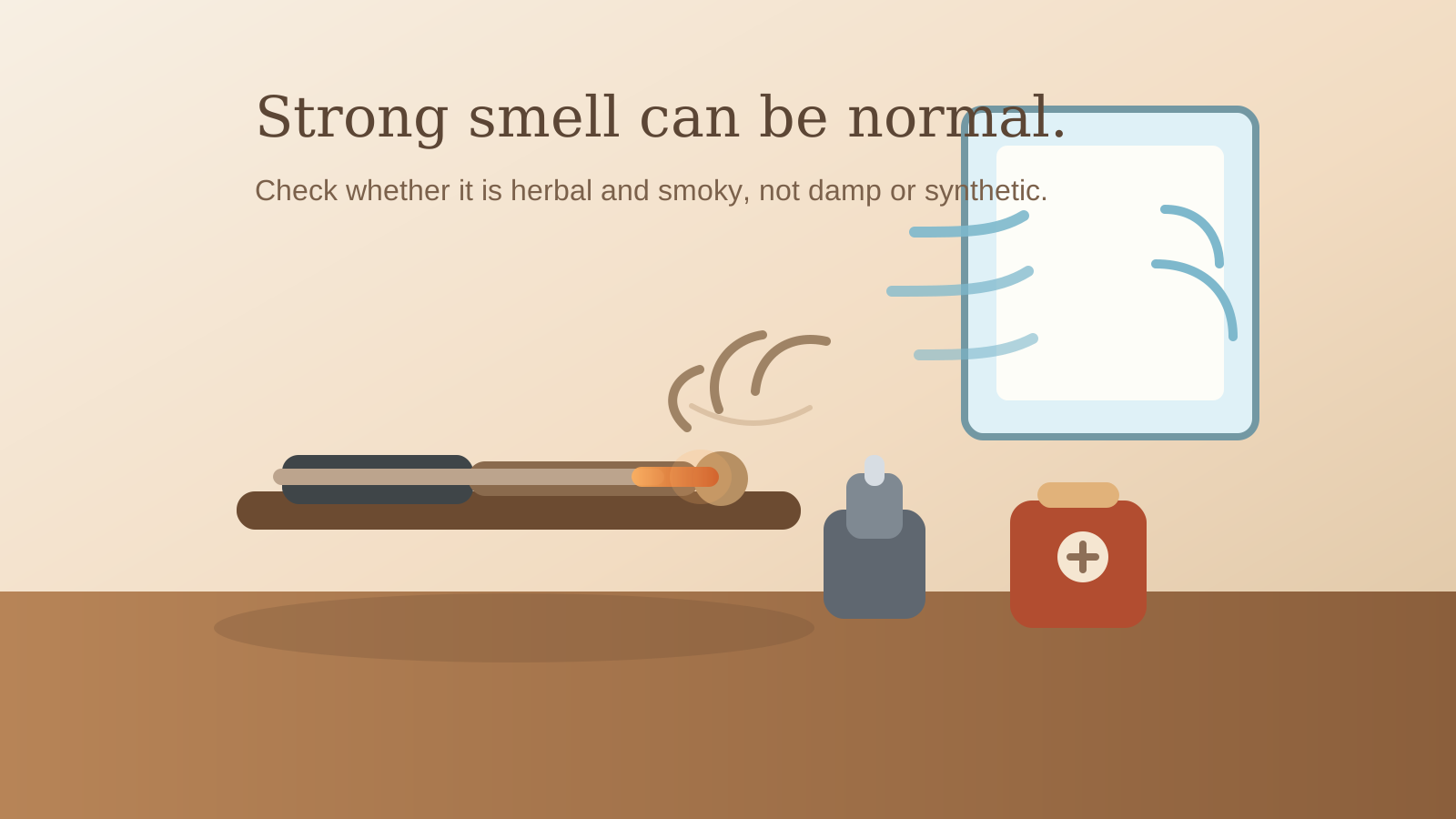
Traditional moxa sticks usually smell herbal, smoky, earthy, and a little bitter. That is consistent with what beginners already notice on pages like do moxa sticks smell: moxa is a burned plant product, not a neutral household item.
Official Chinese medicine education sources also describe a smell difference between newer and more aged mugwort material. A Beijing Hospital of Traditional Chinese Medicine explainer says fresh mugwort can smell more sharp and irritating, while more aged moxa is often described as milder and purer in aroma. That traditional product language is useful for beginners, but it should stay in the material-and-handling category, not become a promise that one smell profile is automatically better for everyone.
So yes, a strong herbal smoke smell can still be normal. What matters is the character of the smell:
- herbal and smoky can be normal,
- earthy and dry can be normal,
- sharper than expected can still be normal in fresh or enclosed setups,
- damp, moldy, chemical, or artificially perfumed should be treated more cautiously.
Why one person’s “normal” smells too strong to someone else
Moxa smell is not controlled by the stick alone. It is shaped by the whole setup:
- room size,
- open or closed windows,
- cross-ventilation,
- how long the stick burns,
- how much ash stays exposed,
- whether fabrics nearby keep holding the odor,
- whether the product was stored dry.
The U.S. Environmental Protection Agency notes that indoor pollution sources releasing gases or particles are a primary cause of indoor air quality problems. That is a useful reminder here because moxa is still a combustion source, even when the tradition around it is old. A perfectly normal stick can smell overwhelming in a small room with still air and soft furnishings.
That is why a strong smell does not always mean a bad stick. Sometimes it means the room is doing a poor job clearing smoke and odor.
Smell cues that deserve a closer look
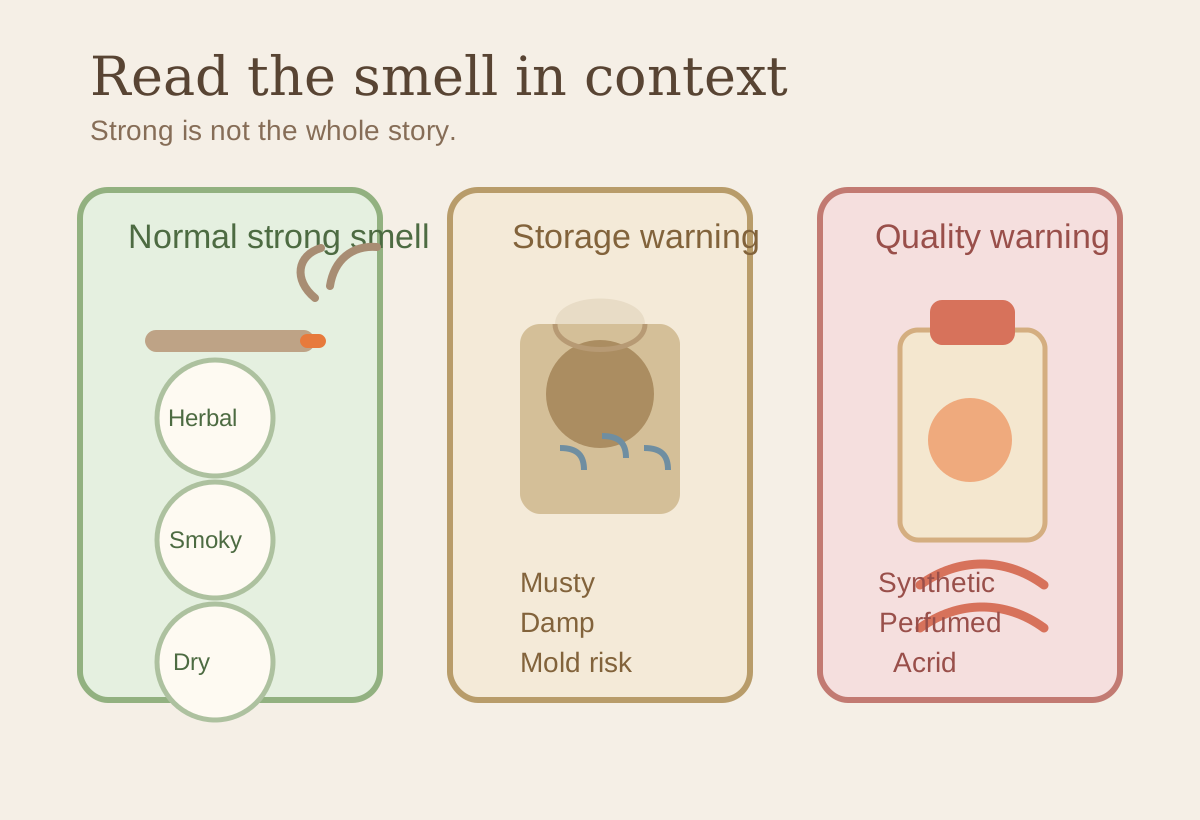
The easiest way to think about this is to separate strong but ordinary from strong and suspicious.
Ordinary strong smell may include:
- herbal smoke that fades with ventilation,
- a dry earthy aroma from the unlit stick,
- stronger odor during longer use,
- lingering smell on curtains or towels after a session.
Suspicious smell may include:
- musty or basement-like odor,
- obvious dampness,
- moldy smell,
- sharp chemical or plastic-like notes,
- heavy added fragrance that seems to cover something else,
- a smell that feels more acrid after the wrapper darkens unevenly or the stick crumbles badly.
Those cues do not diagnose the exact problem, but they are practical reasons to stop and inspect the product rather than keep burning through it.
Check storage before you blame the material
Storage problems can change how a moxa stick smells long before you finish a session. Moxa is a dry herbal product, so humidity, nearby household odors, and poor sealing all matter.
Before using the stick again, inspect a few basics:
- Does the wrapper feel dry rather than soft or damp?
- Does the stick smell strange even before lighting it?
- Is there visible discoloration, spotting, or clumping?
- Has it been stored near bathroom moisture, kitchen smells, or perfume-heavy products?
- Does the cut end look evenly packed, or does it seem crumbly and stale?
If the product already smells musty when unlit, the safer move is to pause and review moxa stick storage rather than assume the burn will somehow improve it. If you suspect mold or clear moisture damage, do not use the stick.
Ventilation can change how the same stick smells
EPA indoor-air guidance is useful because it brings the topic back to ordinary room physics. Combustion byproducts build up more when the room is closed, the burn is long, and the air has nowhere to go.
That means the same moxa stick can smell:
- manageable in a ventilated room,
- sharp in a closed bedroom,
- lingering when ash is left exposed,
- much stronger around curtains, bedding, rugs, and upholstered furniture.
Before deciding the product is bad, try a more controlled setup:
- open a window before lighting,
- create a second air path if possible,
- keep the session shorter,
- extinguish the stick fully instead of letting it smolder,
- move cooled ash into a lidded container,
- keep fabrics farther from the burn area.
If the smell improves a lot after those changes, the main issue may have been the room rather than the stick.
What about fresh moxa, aged moxa, and smokeless moxa?
Material language can influence what beginners expect from smell.
Fresh versus aged moxa labels usually describe how mugwort material is said to change over storage time. As noted above, hospital and TCM educational sources often describe fresher material as sharper and more pungent, while aged material is described as milder. That may help explain why one product feels more aggressive in smell than another, but it still does not override the need to check dryness and storage honesty.
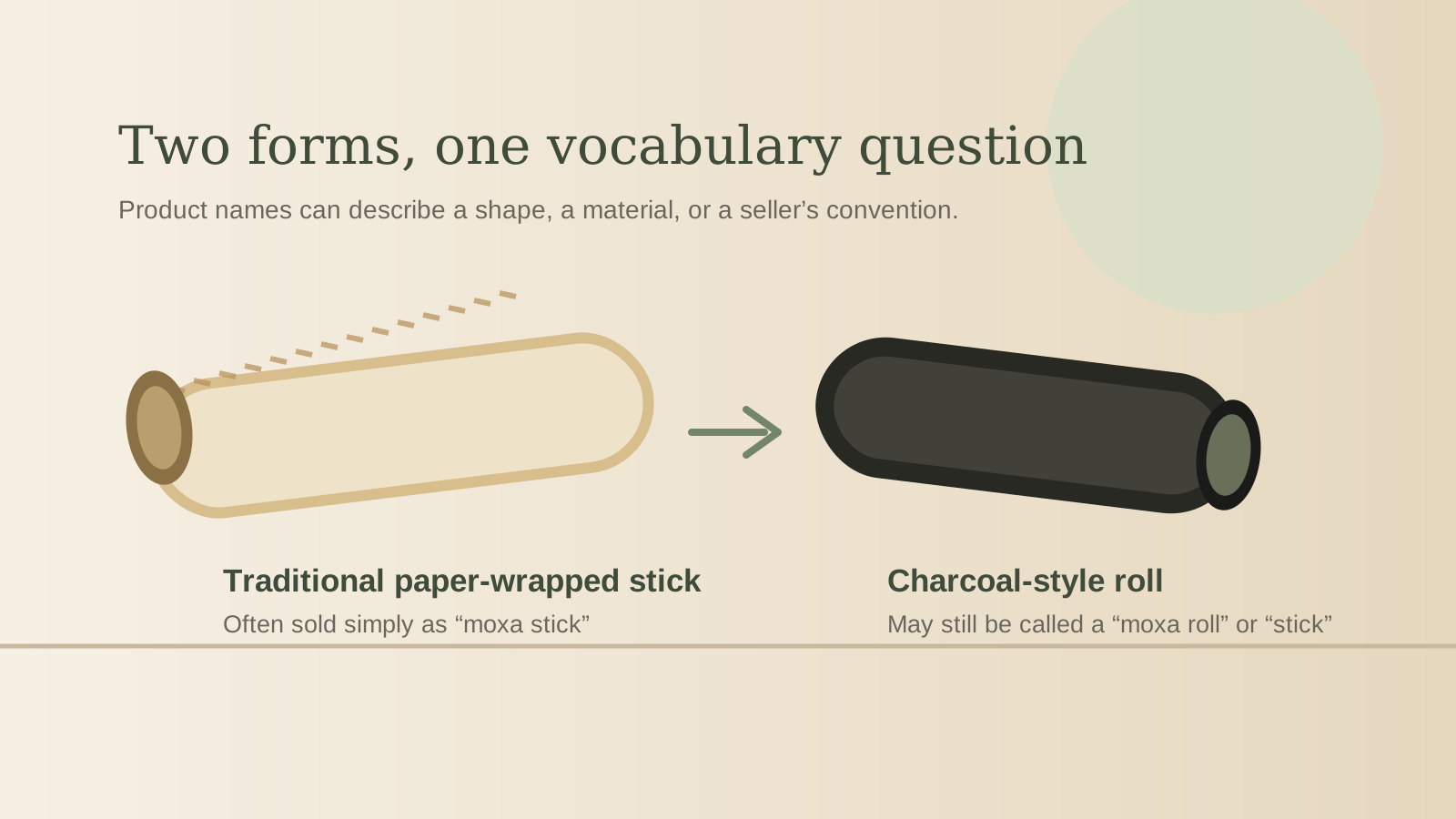
Smokeless moxa is a different question. As smokeless moxa sticks explains, “smokeless” usually means less visible smoke, not no odor. If you are highly sensitive to strong smells, a lower-smoke product may help somewhat, but it does not remove ventilation or cleanup needs.
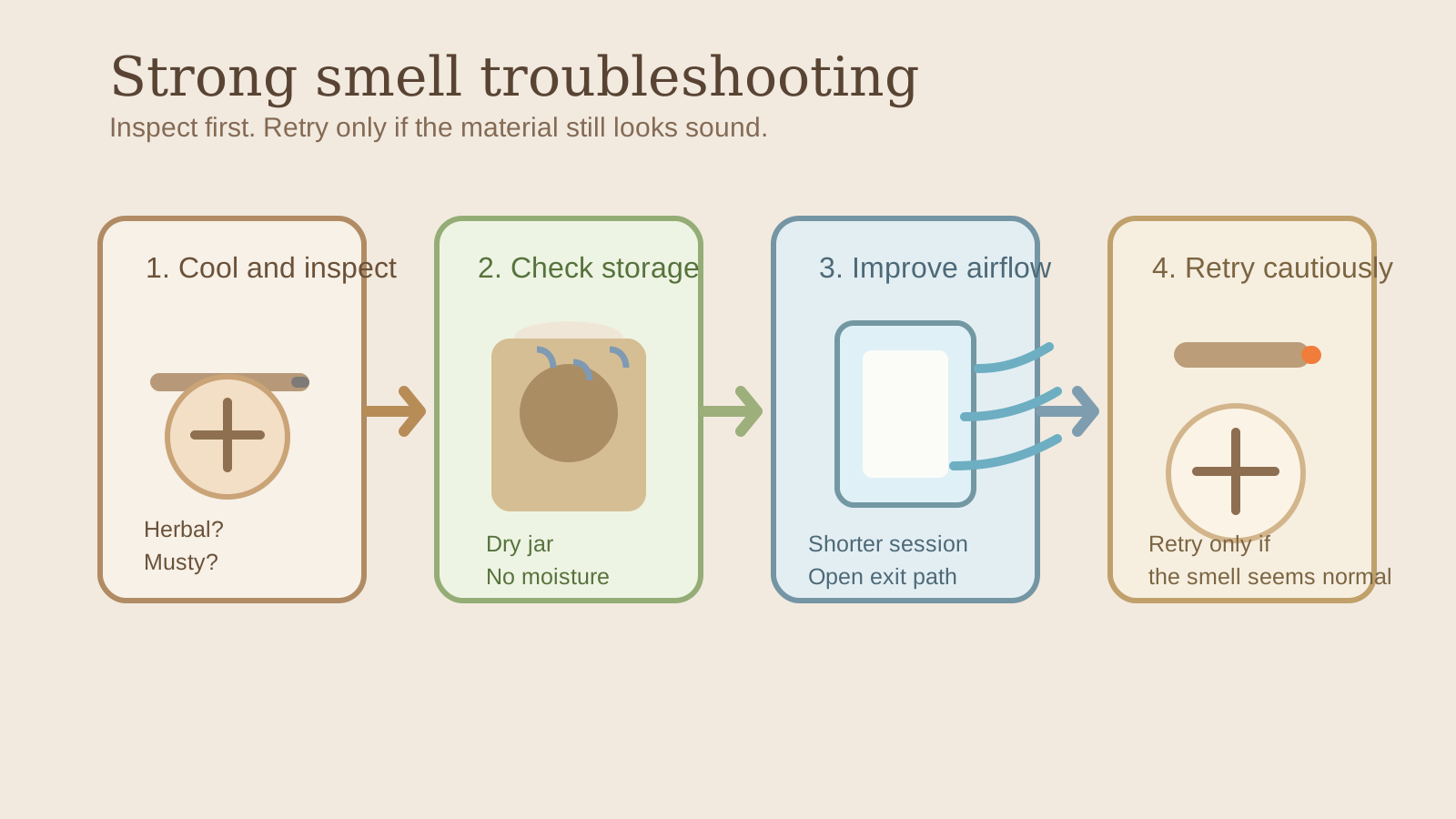
A simple troubleshooting sequence
If a moxa smell feels unusually strong, work through this order:
- Stop and move the stick to a safe extinguisher setup.
- Smell the unlit product once it is cool enough to inspect.
- Check whether the odor seems herbal or obviously musty, damp, synthetic, or perfumed.
- Look at storage conditions, wrapper dryness, and visible product condition.
- Retry only in a better-ventilated room and with a shorter session if the product itself seems normal.
This sequence keeps you from overreacting to normal smoke while also keeping you from excusing a poor-quality or badly stored product.
When strong smell is a reason to stop
Stop the session and move to fresh air if the smoke or odor causes coughing, eye irritation, headache, dizziness, nausea, or breathing discomfort. Strong smell is also a reason to stop using that specific product if you suspect mold, moisture damage, or unusual additives.
This is where practical judgment matters more than product hype. You do not need to prove exactly why a stick smells wrong before deciding not to use it.
If you want the next step, read how to choose good moxa sticks, how to reduce moxa smoke at home, and how to remove moxa smell from a room. Together, those pages help you separate normal product character from avoidable indoor-use problems.
Sources and further reading
- U.S. Environmental Protection Agency: Indoor Pollutants and Sources
- U.S. Environmental Protection Agency: Indoor Air Quality
- Beijing Hospital of Traditional Chinese Medicine: Dragon Boat Festival moxa explainer (Chinese)
- PubMed: Safety of moxibustion: a systematic review of case reports
Common questions
Is it normal for moxa to smell strong?
Yes, traditional moxa often has a clear herbal smoke smell, especially in a small room. What matters is whether the odor still feels like burning mugwort rather than damp, moldy, chemical, or heavily perfumed material.
What kind of moxa smell is a warning sign?
Pause and inspect the product if the smell seems musty, moldy, damp, sharply chemical, plasticky, or strangely perfumed. Those cues can point to storage, contamination, or product-quality problems.
Do smokeless moxa sticks solve the smell problem?
Not completely. Smokeless sticks may reduce visible smoke, but they can still create odor, heat, ash, and indoor-air burden.