Quick answer
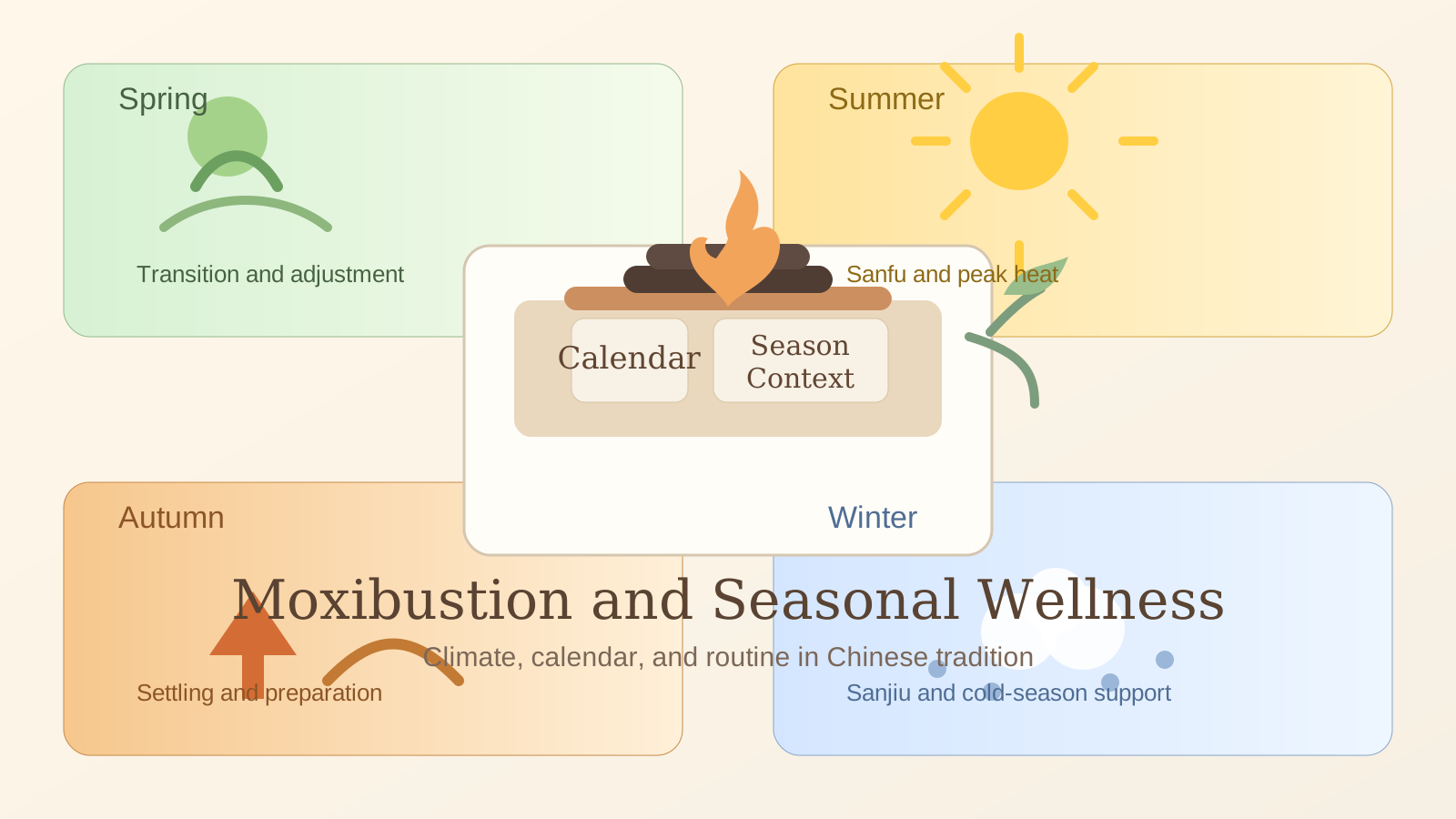
Summer vs winter moxibustion usually refers to two traditional seasonal ideas, not a rule that one season is universally best. Summer writing often emphasizes Sanfu timing and the idea of using the year's hottest period for warming methods, while winter writing highlights Sanjiu timing and support during the coldest stretch. For beginners, the safest takeaway is cultural and scheduling context, not self-prescription.
Key takeaways
- Traditional summer and winter moxibustion language describes seasonal timing ideas such as Sanfu and Sanjiu, not a promise that one season works best for every person.
- Summer articles usually stress peak external warmth, while winter articles stress support during the coldest part of the year and continuity with earlier seasonal routines.
- Seasonal tradition can help you understand moxa culture, but it does not replace individualized safety review or medical advice.
If you are comparing summer vs winter moxibustion, the short answer is that traditional Chinese sources usually treat them as different seasonal ideas, not as a simple contest over the “best” month to use moxa. Summer discussions often focus on Sanfu timing, the hottest stretch of the year. Winter discussions often focus on Sanjiu timing, the coldest stretch after the winter solstice. For a beginner, that is best understood as cultural and scheduling context, not as a guarantee of results.
What people usually mean by summer vs winter moxibustion
Most beginners do not actually want a philosophical answer. They want to know why one article says summer is important, while another says winter is important too. The confusion comes from two different traditional frames being compressed into one search query.
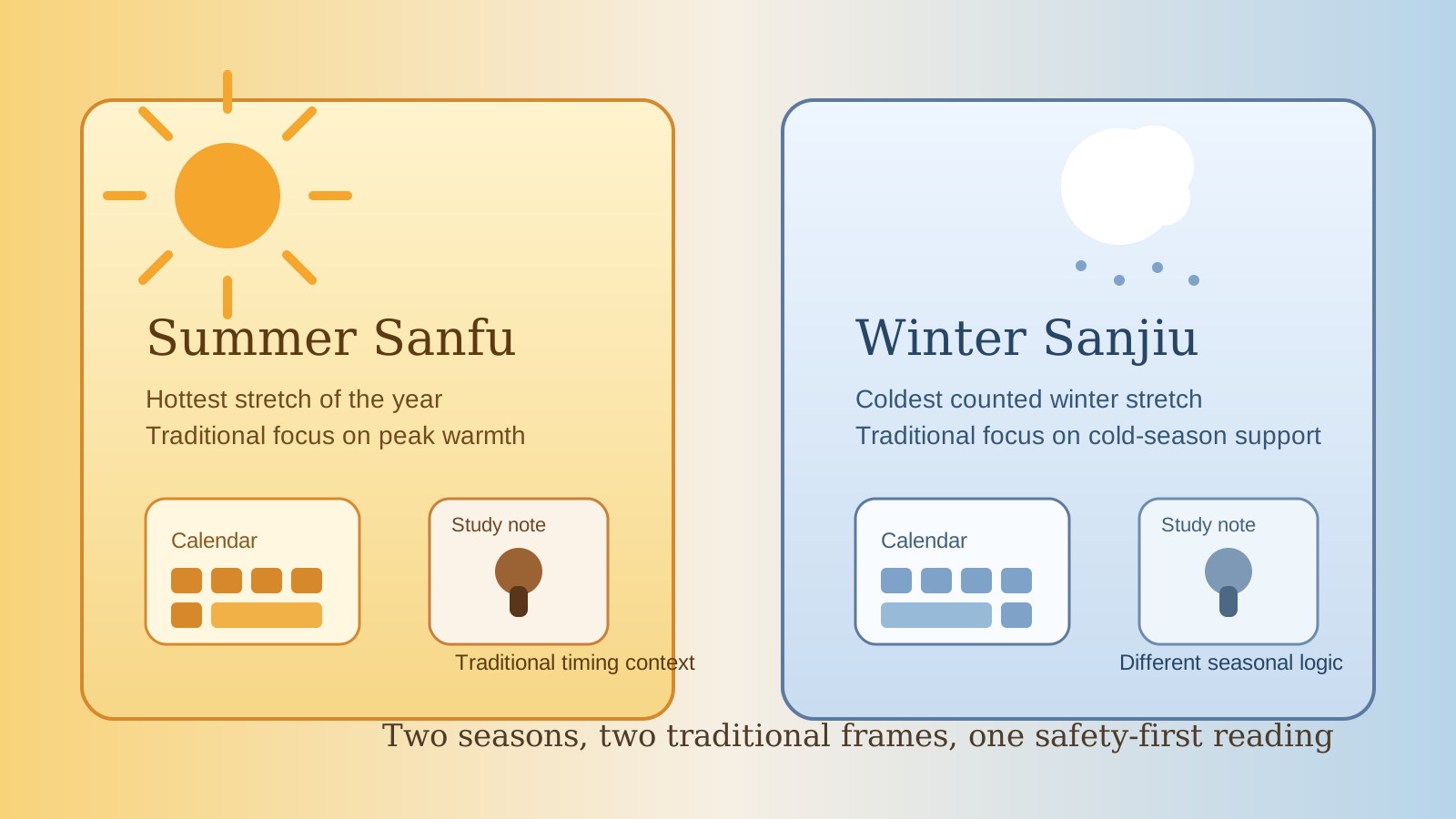
In plain English, summer moxibustion content usually leans on the idea that the external environment is at its warmest, so traditional writers describe that season as favorable for warming methods. Winter moxibustion content uses a different seasonal logic: the weather is cold, the body needs more protection from cold exposure, and some traditions emphasize the counted winter period known as Sanjiu.
That is why the safest reading is not “summer good, winter bad” or the reverse. It is “traditional sources attach different meanings to each season.” If you need broader background first, start with what is moxibustion and moxibustion in Traditional Chinese Medicine.
Why summer gets special attention in traditional writing
Official TCM-administration public education pages often connect summer moxa with the traditional idea that some winter-linked patterns are best addressed during summer. The reasoning is seasonal: during the hottest part of the year, external warmth is abundant, people are less guarded against cold, and warming practices are discussed as working in harmony with that climate logic.
This is where the term Sanfu moxa appears. Sanfu refers to the hottest days in the traditional calendar, and many official summer explainers present it as a notable time for warming routines. That does not mean everyone should automatically do moxa in midsummer. It means the season has a recognized place in the traditional story.
For readers in the United States or other places where home moxa is treated more like a product and less like a seasonal custom, this point matters because it explains why so much summer marketing exists. Some of that language has a real traditional background. But background is not the same as proof. A seasonal theory does not tell you whether home heat, smoke, or skin exposure is appropriate for you personally.
What winter moxibustion means in the same tradition
Winter writing does not cancel the summer story. It adds another one. Public education pages about Sanjiu moxa describe the coldest counted period after the winter solstice as a special time for warming, protection, and supporting the body’s response to winter cold.
The key distinction is that winter pages usually talk less about peak external heat and more about cold-season support. In other words, the logic shifts. Summer emphasizes borrowing from the year’s strongest heat. Winter emphasizes navigating the year’s most demanding cold period.
That is why winter moxibustion is often presented as either its own seasonal practice or as a continuation of a broader annual rhythm. Some sources explicitly pair the two seasons together: summer Sanfu, winter Sanjiu, each with its own timing language. Understanding that pairing helps beginners read seasonal claims more calmly instead of assuming that two articles are contradicting each other.
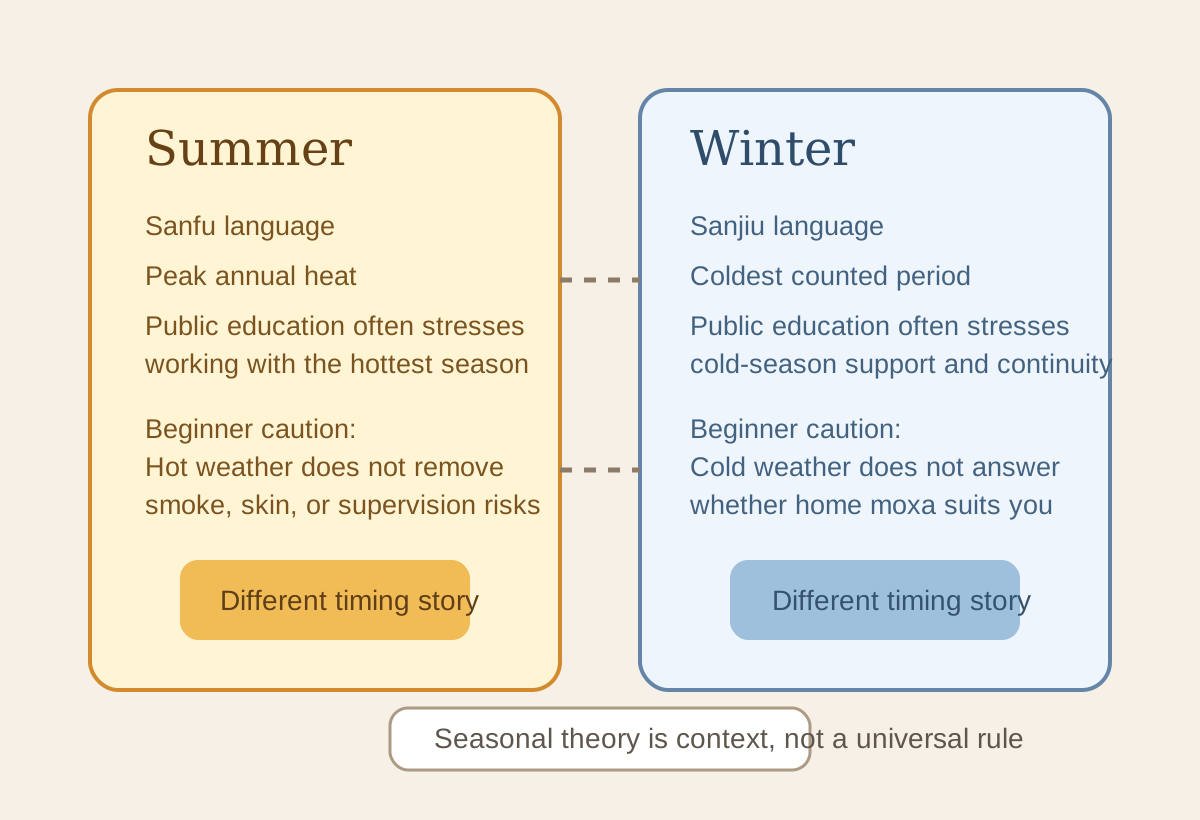
Summer and winter are not universal best-season rules
This is the part many short articles skip. Traditional seasonal logic is not a substitute for good beginner judgment. Even if a source says summer is ideal in one context or winter is useful in another, that still does not answer the practical questions that matter in real home use:
- Can you manage smoke and ventilation?
- Are you likely to overheat the area?
- Do you understand shutdown and fire safety?
- Are you trying to use a seasonal article to answer a personal health question it was never written to answer?
That is why seasonal articles should stay in their lane. They are good for understanding timing concepts, festival-adjacent language, and the broader tradition described in moxibustion as Chinese cultural heritage and history of moxibustion. They are not enough, by themselves, to justify an unsupervised home routine for a symptom, chronic condition, pregnancy question, or skin problem. For those topics, read moxibustion safety basics and the site’s medical disclaimer.
How a beginner should use this information
The most practical beginner approach is to treat season as context, not command. If you are learning about moxa for cultural literacy, summer vs winter moxibustion is a helpful topic because it shows how closely traditional writing follows the calendar. If you are deciding whether to use moxa at home, the more important filters are still safety, supervision, smoke tolerance, and common sense.
One useful way to think about it is this:
- Summer articles explain why warming methods are often discussed during the hottest stretch of the year.
- Winter articles explain why warming methods are also discussed during the coldest stretch of the year.
- Neither article type proves that a beginner should copy a routine without personal review.
That perspective keeps the topic readable without flattening it into hype. It also prevents another common mistake: assuming that because seasonal moxa has deep traditional roots, any modern product page using those terms is automatically trustworthy. Seasonal vocabulary can be authentic while a product claim is still exaggerated.
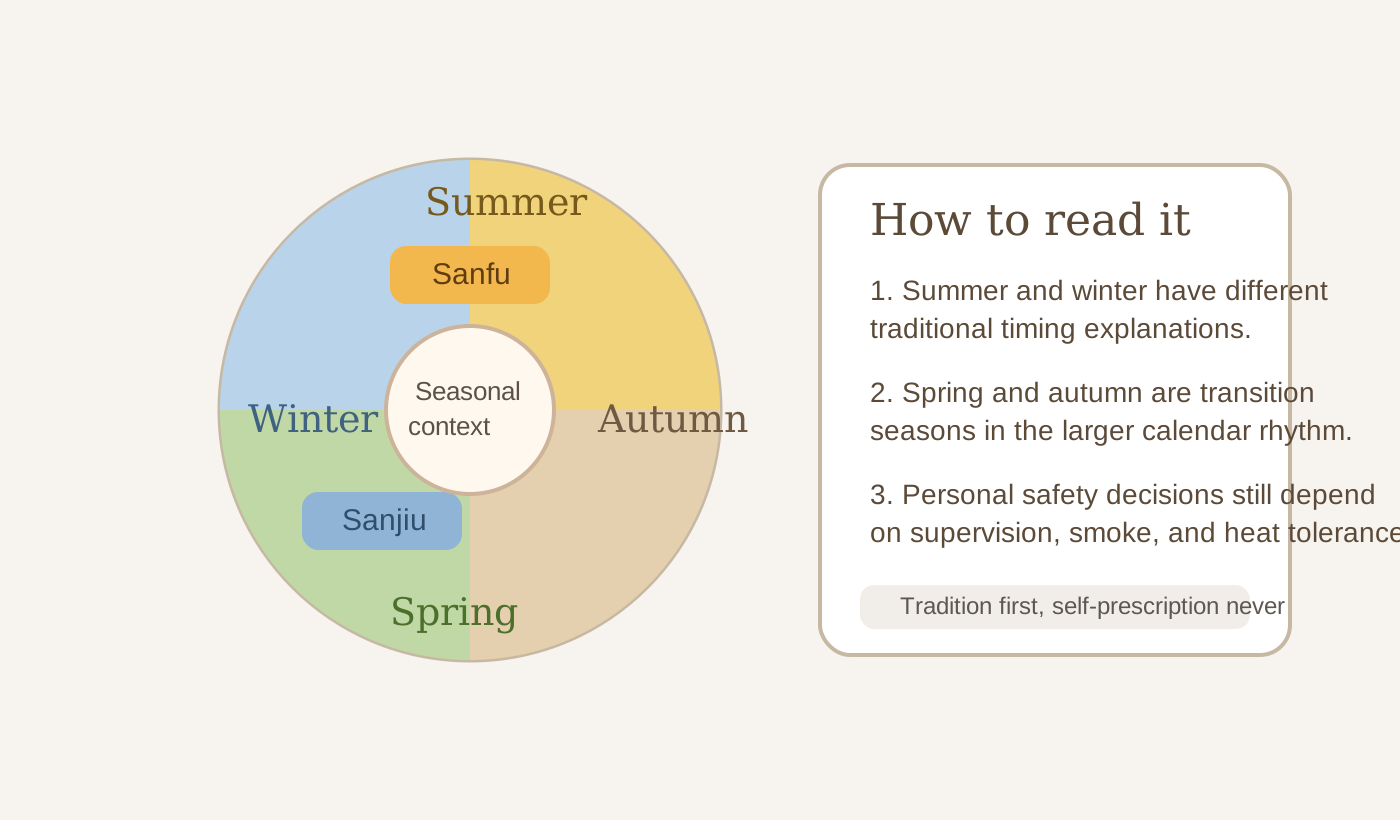
A simple bottom line
If you searched for summer vs winter moxibustion, the cleanest answer is this: summer and winter are both meaningful in traditional moxa language, but they are meaningful for different reasons. Summer moxa is usually framed through Sanfu and peak heat. Winter moxa is usually framed through Sanjiu and cold-season support. Neither one should be treated as a universal rule or a promise of medical benefit.
That makes this a strong topic for cultural understanding and search clarity, but only a partial answer for real-world use. Timing matters in the tradition. Safety still matters more.
Sources and further reading
Source note: the official Chinese sources below use public-education language about traditional seasonal theory. This article paraphrases that material into original English for cultural and educational use only.
- National Administration of Traditional Chinese Medicine: spring-summer nourish yang, autumn-winter nourish yin briefing
- Beijing Administration of Traditional Chinese Medicine: Sanfu moxa explainer
- Beijing Administration of Traditional Chinese Medicine: Sanjiu moxa explainer
- UNESCO: Acupuncture and moxibustion of traditional Chinese medicine
Common questions
Is summer better than winter for moxibustion?
Traditional sources do not reduce the topic to one universal best season. They describe different seasonal ideas, with summer often linked to Sanfu routines and winter linked to Sanjiu routines.
What are Sanfu and Sanjiu in plain English?
Sanfu refers to the hottest period of summer in the traditional calendar, while Sanjiu refers to the coldest counted stretch after the winter solstice. Both are used in seasonal moxa language.
Should a beginner choose timing based only on the season?
No. Season is only one part of the traditional discussion. A beginner still needs to think about smoke, heat tolerance, skin comfort, supervision, and whether a qualified clinician should be involved.